
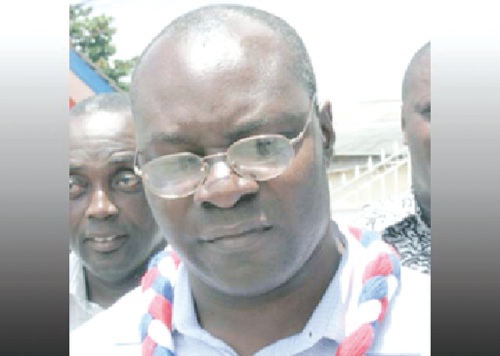
A leading member of the New Patriotic Party (NPP), Dr Arthur Kobina Kennedy, has called for a more consistent and non-partisan approach to tackling corruption in the country, saying the country’s two major political parties,must match their public commitment to accountability with action.
The Ghanaian US-based physician, in an interview with the Daily Graphic, said recent developments following the conviction and sentencing of NPP Ashanti Regional Chairman, Bernard Antwi-Boasiako, popularly known as Chairman Wontumi, in connection with illegal mining-related offences, had reignited discussions about the country's commitment to the rule of law.
According to Dr Kennedy, reactions by both the NPP and the National Democratic Congress (NDC) to corruption-related cases over the years suggested that political parties often viewed accountability differently depending on whether those involved belonged to their own ranks.
He said while the NPP had raised concerns about due process in recent cases, similar concerns were not always expressed when the party was in government.
He also observed that the NDC had, at different times, discontinued some cases involving members of the party while pursuing accountability measures against political opponents.
Judicial independence
Dr Kennedy said the independence of the judiciary remained central to the country's fight against corruption and expressed the hope that the courts would continue to administer justice without fear or favour.
He referred to landmark cases in Ghana's legal history, including the Kulungugu, Sallah and 31st December cases, which he said demonstrated the ability of the courts to uphold the rule of law.
He said public confidence in the justice system would be strengthened if judicial decisions were seen as being free from political considerations.
Strengthening integrity
The one-time NPP flag bearer aspirant also cautioned against attempts to justify corrupt practices on cultural grounds, arguing that integrity was a personal responsibility.
While acknowledging calls for value-based education to promote ethical conduct, he said such efforts would have limited impact unless they were reinforced by transparency, accountability and ethical leadership.
He quoted former United Nations Secretary-General Kofi Annan's observation that transparency was an important part of addressing corruption and stressed that public conduct often had a greater influence on society than public pronouncements.
Proposed reforms
Dr Kennedy recommended the wider use of electronic procurement systems, citing international studies which showed that they reduced costs and improved efficiency by limiting opportunities for corruption.
He further called for sanctions against public officials found guilty of corruption and urged state anti-corruption institutions, including the Commission on Human Rights and Administrative Justice (CHRAJ), the Economic and Organised Crime Office (EOCO), the Office of the Special Prosecutor (OSP) and the Police to effectively discharge their constitutional responsibilities.
He maintained that while Ghana had adequate laws and institutions to combat corruption, stronger enforcement and a sustained commitment to integrity were essential to achieving meaningful progress.
