
Ghana and intra-African governance
Ghana serves as a cornerstone of intra-African governance, deeply rooted in its legacy as the first sub-Saharan African nation to achieve independence.
Ghana is central to continental initiatives: hosting the headquarters of major institutions such as Afrobarometer and the African Continental Free Trade Area (AfCFTA), serving to solidify its central role in regional policy and economic integration.
Ghana’s importance to Africa’s governance network comprises three major pillars.
First, Ghana exhibits democratic consistency, manifested since the adoption of the 1992 constitution, with nine rounds of free elections and peaceful power alternation between the two main political parties, setting a vital standard for stability in a region often challenged by military coups.
Second, Ghana consistently exhibits pan-African leadership, dating back to the post-independence period dominated by Kwame Nkrumah.
Ghana is a historic engine for Pan-Africanism: a premier contributor of troops for African Union peacekeeping missions and an active champion of institutional reforms as part of the African Peer Review Mechanism.
Third, Ghana is central to economic diplomacy.
Building on the hosting of the AfCFTA Secretariat, Ghana leads efforts to harmonise continental trade regulations, enhance anti-corruption frameworks, and push for debt sustainability under the guidance of the IMF Governance Framework.
4th African Inter-Parliamentary Conference on Family and Sovereignty
Ghana’s central role in intra-African governance is further underlined by a forthcoming international conference.
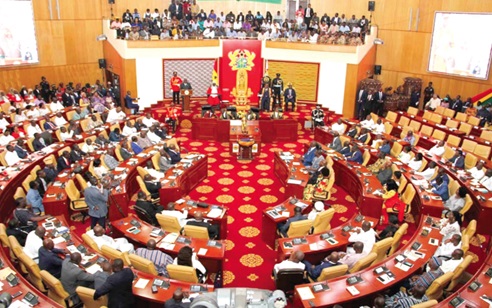
Parliament hosts the 4th African Inter-Parliamentary Conference on bFamily and Sovereignty, from 3-6 June 2026, at Parliament House.
The theme of the conference is ‘Consolidating parliamentary consensus: advancing the African Charter on family values and sovereignty’.
It brings together lawmakers, policy experts, academics, civil society leaders and development partners from across Africa and beyond to deliberate on key issues affecting African societies, as well as the role of parliaments in shaping responsive policies.
The Chairman of the Local Organising Committee and Second Deputy Speaker of Parliament, Andrew Asiamah Amoako, explains that discussions will focus on African cultural identity, family resilience, food sovereignty, data governance, technological transformation and youth development in an increasingly digital world.
While not confirmed, President Mahama is expected to attend as Special Guest of Honour.
His presence at the conference is expected to underline Ghana’s commitment to continental cooperation and policy dialogue.
According to the draft conference programme, plenary sessions will focus on a variety of crucial topics, including: the impact of artificial intelligence and digital technologies on family systems, child protection and social cohesion.
Delegates will also discuss ethical frameworks, as well as Africa’s data privacy protections and responsible digital governance.
Controversy
The first three conferences on the African Inter-Parliamentary Conference on Family and Sovereignty took place in Uganda between 2023 and 2025.
They resulted in a draft African Charter on Family, Sovereignty and Values (https://www.christiancouncilinternational.org/news/in-depth/2025/summary-of-the-draft-african-charter-on-family-sovereignty-and-values/).
The conferences were organised by the Inter-Parliamentary Network on African Sovereignty and Values, a transnational coalition of African lawmakers, faith-based advocates, and international conservative organisations.
The stated aim of the draft African Charter is to defend African traditional values, strengthen national sovereignty, and resist external ideological pressure.
The draft charter states, among other things, that African countries should refuse to ratify any international agreements that reference sexual and reproductive health and rights.
It also calls for eliminating comprehensive sexuality education and any form of abortion service provision.
Critics express surprise that Ghana is the host of the 4th conference in this series, given the country’s exemplary three decades of democracy and significant human rights advances.
Human rights groups, including Equality Now and Initiative for Strategic Litigation in Africa claim that, if adopted by the African Union, the African Charter would undermine universal human rights in three ways: first, women’s rights, by threatening gender equality through promotion of a strictly patriarchal definition of the family, as well as opposing the sexual and reproductive health and rights agenda, including access to abortion.
Second, LGBTQ+ rights: The draft is regarded by critics as heavily conservative and could be used as a vehicle to promote anti-homosexuality laws and discriminatory ideologies. Third, it is claimed that children’s rights would be undermined by powerfully prioritising parental and community authority.
Polarisation of views
Supporters of the proposed Charter frame it as an essential defence of traditional African values against unwelcome Western influence.
Critics argue that the Charter would roll back essential rights, including those of women, youth, and sexual minorities.
Ghana, like many other African countries, is intensely debating the issues central to the draft African Charter.
It is hoped that the 4th African Inter-Parliamentary Conference on Family and Sovereignty will receive comprehensive coverage by Ghana’s media.
This is because it is essential that an informed society is aware and can freely debate the crucial issues central to the focus of the conference.
If Ghana decides to sign up to any African Charter on Family, Sovereignty and Values, it is crucial that it is done with the Ghanaians’ full knowledge and understanding.
The writer is Emeritus Professor in Politics, London Metropolitan University, UK
