
Politics, morality, corruption
In 2024, the Sub-Saharan African region, once again, registered the lowest average score on Transparency International’s Corruption Perceptions Index (CPI), at just 33 out of 100.
Ninety per cent of countries scored below 50. Yet, amid this very low annual performance, there were African countries that invested in anti-corruption and made remarkable progress.
Ghana is not one of them. In 2024, Ghana received a score of 42 out of 100 in the CPI, ranking the country 80th out of 180 countries in perceptions of public corruption, a decline of one point since 2023. Since 2014, Ghana’s score on the CPI has declined from 48 to 42.
Transparency International reports that a third of Ghanaians believe that corruption has increased in the past year, the same proportion who report paying a bribe to a public official during the same period.
Decline in morality
What causes corruption and a lack of integrity in Ghana? Many Ghanaians believe that corruption is driven by a decline in morality and ethical leadership.
Egregious public corruption, which exists in all branches of government, is toxic: eroding public trust and diminishing prospects of development and social justice.
Recent scandals involving illegal mining (galamsey) and weak judicial independence are headline issues which, to many, indicate both systemic moral decay and a lack of integrity at the top.
While many Ghanaians are very concerned about public corruption, the country is also noted as one of the most religious nations in the world: at least 95 per cent of Ghanaians profess to be Christians, Muslims or adherents of an African Traditional Religion (ATR).
It upsets many Ghanaians whom I have spoken to that while Ghana is a very religious country, it is also a place where corruption is widely identified as one of the main reasons holding back the nation politically, economically and developmentally.
The role of morality in politics in Ghana is a central and complex issue, deeply influencing public life, political discourse and institutional trust. Although the 1992 Constitution is secular, the country’s high religiosity means that ethical considerations, heavily rooted in Christian and Islamic values, shape public expectations and perceptions of political leaders.
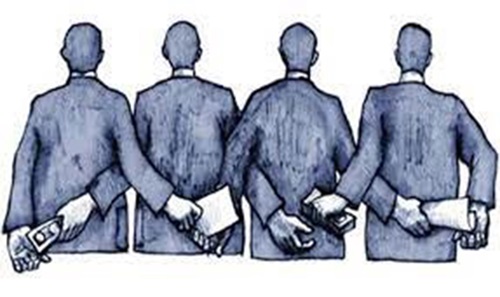
Worsening corruption – both ‘petty’ (paying a bribe to get a public service) and ‘high level’ (stealing taxpayers’ money through exploiting a senior political role) - is seen as evidence of a significant decline in moral standards.
Integrity
Issues of integrity and morality directly impact election outcomes. In the 2024 elections, voters demanded authenticity and accountability, rejecting incumbents who failed to meet these moral expectations. This was a key reason why the New Patriotic Party (NPP) presidential candidate lost the 2024 election, while also contributing significantly to the landslide parliamentary victory of the National Democratic Congress.
The NPP’s eight years in power during the presidency of Nana Addo Dankwa Akufo-Addo were widely seen as years where corruption worsened, with the then-government widely seen to be too timid in tackling it.
I was recently in Ghana undertaking interviews with senior and less-senior Christian figures, researching for a forthcoming book on the relationship between Christianity, politics and development.
Over the course of two weeks and subsequently via Zoom, I interviewed 20 Christian figures. One of the questions I asked was what they see as the most pressing problems facing Ghana. The consensus was that galamsey, corruption and unemployment are the most concerning, requiring swift and conclusive action from those in power.
Social justice
Religious leaders hold significant moral authority in Ghana. Many regularly speak truth to power, standing up for the common good, speaking out on social justice issues and advising on improving political conduct.
Many of the Christians I recently spoke to not only believe that the political class – that is, the group of individuals who hold formal political office, such as elected politicians, distinguished by their shared political interests and activities – but also religious figures – both senior and less senior – often lack moral integrity.
A senior Christian figure expressed it to me like this: “We are all concerned with one main thing: get rich quick.
When someone suddenly acquires a large sum of money, no one asks where they got it from; only they are congratulated for their achievement.”
He believes that this mentality is significantly corroding Ghana’s sense of morality and integrity, which take a back seat in a headlong pursuit of as much money as possible by any means necessary.
In response to perceived moral decline and institutional weakness, civil society organisations such as the Ghana Centre for Democratic Development (CDD-Ghana) and religious bodies have proposed various reforms.
The Church of Pentecost proposes creating a statutory National Morality and Integrity Council to oversee public and private behaviour.
However, critics argue this could weaken democracy and sideline non-Christian perspectives.
In addition, many Ghanaians and international observers believe institutional reform, including strengthening accountability and transparency, is necessary to combat corruption and improve democracy.
The devil, of course, is in the detail: just what steps need to be taken and how would progress be measured?
But the clock is ticking: to do nothing is not an option.
My concluding observation is that the tension between moral ideals and political reality continues to be a defining characteristic of Ghanaian politics.
The pervasive issue of corruption is the most significant manifestation of this struggle, driving public debate and calls for renewal.
The writer is Emeritus Professor of Politics at the London Metropolitan University, UK.
