
Sports Editorial: At last, a Sports Fund built for real transformation
For far too long, Ghana’s sports landscape has run on imbalance, improvisation and survival instinct rather than strategy.
Football—especially the Black Stars—has soaked up attention, emotion and funding, while more than 50 other recognised sports federations have been left to scramble for scraps, surviving on irregular budget releases, goodwill donations and the occasional foreign grant.
Talent has been wasted, infrastructure neglected and athletes abandoned at their most critical moments.
The establishment of the Ghana Sports Fund is therefore not just welcome—it is overdue.
Passed into law by Parliament in December 2025 under Act 1159, the Fund represents the most serious attempt in decades to fix a broken sports financing system.
Its promise is simple but powerful: stable, diversified and accountable funding that ends the annual begging ritual and frees sport from the uncertainty of politics and fiscal roulette.
The timing could not be more revealing. In the 2026 sports budget, football once again dominates the headlines.
The Black Stars alone have been allocated GH¢150 million for preparations and participation in the FIFA World Cup, alongside other major tournaments such as the Women’s Africa Cup of Nations. Yet behind the figures lies an inconvenient truth.
Ghana’s World Cup campaign is largely self-financing, with FIFA providing preparation support and an appearance fee of at least US$10.5 million.
The optics may suggest heavy state spending, but the imbalance remains glaring: while football commands attention, other sports struggle simply to exist.
This is the structural injustice the Sports Fund is designed to correct.
At its core, the Fund aims to close long-standing gaps in athlete preparation, infrastructure, competitions and governance. It promises equity in resource allocation, transparency in disbursement and sustainability in planning—three elements that have been conspicuously absent from Ghanaian sport for decades.
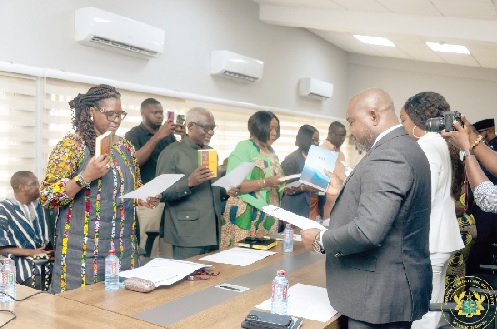
Much credit must go to Sports and Recreation Minister, Kofi Iddie Adams. In an environment where reforms often stall or quietly die, he delivered.
Within a year of assuming office, he pushed the long-awaited Bill through Parliament and inaugurated a governing board, openly admitting that Ghana’s sports financing had been “reactive and uneven.” It was a rare moment of honesty—and one that resonated with athletes and administrators alike.
The Fund’s architecture suggests lessons have been learnt from abroad. Its revenue streams are deliberately diversified, drawing from parliamentary allocations, sports lotteries, betting levies, gate receipts, facility usage fees, sponsorships, athlete transfer fees and international grants—without introducing new taxes on citizens.
This echoes successful models in the UK and Australia, where ring-fenced funding and strict accountability have transformed both elite and grassroots sport.
But here lies the danger. A fund of this scale will only be as effective as its management.
Strong governance, professional financial control, independent audits and ruthless transparency are non-negotiable.
The Sports Fund must never degenerate into a political slush fund or a cash cow for connected interests. If mismanaged, it will deepen cynicism and reinforce distrust. If managed well, it could finally unlock modern infrastructure, meaningful athlete welfare and long-term development across the country.
