


‘A tree crop economy that sidelines women cannot be sustainable’ – Dr Vida Korang
A senior agribusiness expert has called for urgent reforms to reposition women as central drivers of Ghana’s tree crops economy, warning that the sector cannot achieve resilience or competitiveness if female producers remain marginalised.
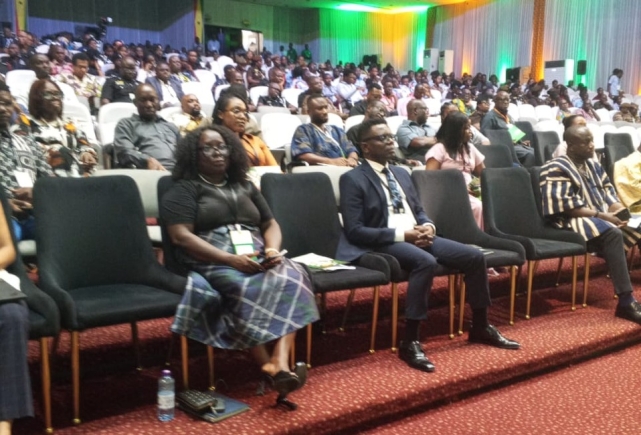
Addressing participants at the Ghana Tree Crops Investment Summit and Exhibition 2026 at the Accra International Conference Centre on 18 February, Dr Vida Korang, former Board Member of the Tree Crops Development Authority (TCDA) and National Treasurer of the National Mango Growers Association, described women as indispensable yet undervalued actors across the country’s major value chains.
Delivering a speech on the theme “Women in Tree Crops – Catalysts for Sustainable Growth and Inclusive Transformation”, she said women form the backbone of production and processing in oil palm, shea, cashew, rubber, coconut and mango.
“In the shea sector alone, women dominate over 90% of processing activities, while in oil palm, coconut, and cashew, women are central to harvesting, processing, and local value addition,” she noted. “Yet, despite their contribution, women remain under-represented in ownership, leadership, financing, and decision-making across the tree crops ecosystem.”
Dr Korang described the situation as a structural imbalance that continues to limit productivity and incomes.
“This brings us to a troubling paradox - The Gender Paradox of high Contribution, Low Returns,” she said, explaining that women continue to face “Limited access to land and secure tenure”, “Restricted access to credit and financial services”, “Low participation in export markets and agribusiness leadership”, and “Inadequate access to technology, extension services, and mechanisation”.
She argued that the consequences extend beyond gender inequality, affecting national output and competitiveness. “Let me state clearly: A tree crop economy that sidelines women cannot be resilient, competitive, or sustainable.”
Drawing on development economics and agribusiness evidence, Dr Korang stressed that empowering women farmers delivers measurable economic returns. “When women farmers have equal access to resources, yields increase by up to 30%,” she said, adding that household incomes improve with positive spill-overs into nutrition, education and health.
“Therefore, investing in women in tree crops is not charity. It is sound economic strategy,” she emphasised.
She urged stakeholders to move women beyond subsistence roles and integrate them more strategically across the value chain, including production, processing, marketing, exports, finance and leadership. She pointed to the need for access to improved seedlings and extension services, modern processing equipment, market intelligence, gender-responsive credit products and stronger representation on boards and cooperatives.
According to her, the Tree Crops Development Authority, working alongside financial institutions, development partners and private investors, is well placed to mainstream gender-responsive investment frameworks across all six priority value chains.
To reposition women “as drivers rather than passengers in the tree crops economy”, Dr Korang proposed five critical interventions: secure land access through gender-sensitive reforms, targeted and blended financing schemes, expanded capacity-building, wider adoption of mechanisation and digital tools, and leadership inclusion measures such as quotas and incentives.
She framed these proposals within Ghana’s broader ambition to revitalise its green economy and agricultural transformation agenda.
“As Ghana seeks to reset and rebuild its green economy, women must not remain at the margins of tree crop investment,” she said.
Issuing a broad call to action, she urged “Policymakers to institutionalise gender-responsive frameworks”, “Financial institutions to design inclusive financing products”, “Investors to see women as bankable partners”, “Development partners to scale successful women-led models”, and “Women themselves to organise, innovate, and lead boldly”.
In closing, Dr Korang delivered a pointed reminder of what is at stake. “The future of Ghana’s tree crop economy is female-inclusive or it is incomplete,” she declared. “When women thrive, value chains strengthen. When value chains strengthen, the economy grows. And when the economy grows inclusively, Ghana prospers sustainably.”
Her remarks formed part of wider discussions at the summit focused on mobilising investment, strengthening regulation and expanding value addition within Ghana’s tree crops sector as the country seeks to enhance export earnings and rural livelihoods.