


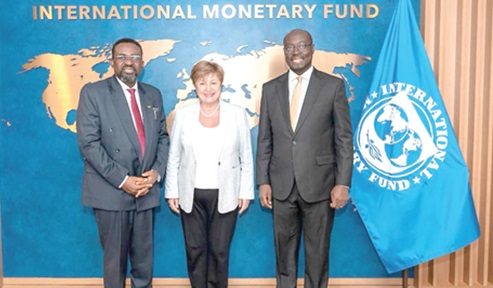
Ghana hits IMF targets as Board releases US$385m tranche
The Executive Board of the International Monetary Fund has completed the fifth review of Ghana’s 39 month Extended Credit Facility arrangement, paving the way for the immediate disbursement of about US$385 million to the country.
The approval brings Ghana’s total disbursements under the US$3 billion IMF programme to about US$2.8 billion since the arrangement was approved in May 2023. The Fund in a statement on its website said Ghana’s performance under the programme has been broadly satisfactory, despite some delays in implementing complex structural reforms.
According to the IMF, macroeconomic stabilisation is gaining momentum, supported by strong growth and single digit inflation for the first time since 2021. The Fund noted that Ghana’s fiscal and external positions have improved significantly, while progress on debt restructuring has boosted investor confidence and strengthened the country’s economic outlook.
Growth through September 2025 exceeded expectations, driven largely by strong performance in the services and agriculture sectors. Inflation has returned to the Bank of Ghana’s target range, while the external sector benefited from robust gold and cocoa exports. The IMF added that reserves accumulation surpassed programme targets, the cedi appreciated, and Ghana’s debt trajectory improved markedly.
The Fund said all quantitative performance criteria and indicative targets for the fifth review were met. It acknowledged that although there were delays in some areas, good progress was recorded on key structural reforms, including measures carried over from previous programme reviews.
On debt restructuring, the IMF said the authorities have made significant headway, signing bilateral debt relief agreements with several members of Ghana’s Official Creditor Committee and finalising Agreements in Principle with other external commercial creditors. Engagements are continuing with remaining creditors to secure restructuring terms consistent with programme parameters.
The IMF said Ghana is on track to achieve a primary surplus of 1.5 per cent of GDP by the end of the year. It noted that the 2026 budget submitted to Parliament aligns with programme objectives and the new fiscal responsibility framework, while accommodating developmental and security needs and protecting vulnerable groups. The Fund stressed that sustaining fiscal discipline will require stronger revenue administration, improved public financial management and better oversight of State Owned Enterprises.
With inflation pressures easing and the recent appreciation of the cedi, the IMF said the Bank of Ghana has appropriately begun a cautious monetary easing cycle, adding that any further easing should remain gradual and data dependent. It also welcomed the introduction of a new structured foreign exchange operations framework aimed at smoothing market volatility and rebuilding reserves.
The Fund said decisive steps have been taken to safeguard financial stability, including reforms to state owned banks, strengthening the crisis management framework and efforts to reduce non performing loans. It also noted progress in governance and public sector efficiency following the publication of the IMF Governance Diagnostic Assessment, while calling for continued improvements in transparency and oversight.
Commenting on the review, IMF Deputy Managing Director Bo Li said, “Ghana’s performance under its ECF-supported reform program has been generally satisfactory. The authorities have shown strong program ownership by decisively implementing ambitious corrective actions after the 2024 policy slippages.”
He added that, “These efforts, coupled with structural reforms, have driven a stronger-than-anticipated recovery in growth, brought inflation within the Bank of Ghana’s target range, and supported robust reserve accumulation.”
Mr Li stressed that continued reform efforts remain essential to maintain macroeconomic stability and debt sustainability, while addressing longstanding structural vulnerabilities. He also underscored the need for sustained fiscal adjustment, stronger revenue mobilisation and improved governance, particularly in the energy sector and state owned enterprises.
On monetary policy and financial stability, he said, “The Bank of Ghana has successfully brought inflation within its target range and rebuilt international reserve buffers, while cautiously easing the monetary policy stance.” He added that strengthening central bank independence and improving bank governance remain key priorities.