
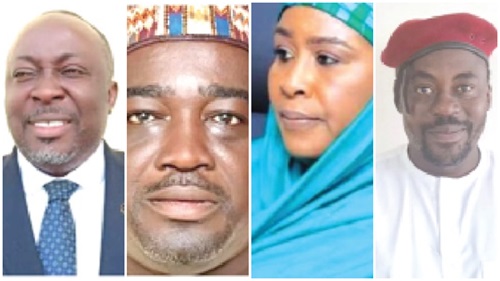
The recent National Democratic Congress (NDC) parliamentary primary in the Ayawaso East constituency, held on February 7, 2026, has reignited intense national debate about vote buying in Ghanaian elections.
Mohammed Baba Jamal Ahmed, Ghana’s High Commissioner to Nigeria, emerged victorious with 431 votes, defeating his closest rival, Hajia Amina Adam, who received 399 votes, along with other candidates who polled far fewer.
However, the victory has been overshadowed by widespread allegations of inducements, including the distribution of cash, 32-inch television sets, food items such as boiled eggs, and other gifts to delegates.
In the immediate aftermath, the NDC issued a statement condemning the reported unethical practices and swiftly constituted a three-member investigative committee, chaired by former Minister of Information Kofi Totobi Quakyi, with a deadline to submit findings by February 10, 2026.
The NDC Majority Caucus in Parliament, led by Majority Leader Mahama Ayariga, went further by calling for the annulment of the results and the disqualification of any candidates found to have engaged in vote buying, emphasizing the party’s commitment to restoring integrity in politics.
The Office of the Special Prosecutor (OSP) has launched formal investigations into these allegations, focusing not only on vote buying and selling but also on the sources of funding for such corrupt acts.
This probe extends to similar claims from the recent New Patriotic Party (NPP) presidential primary and includes examination of an alleged assault on an OSP officer during service of an investigative directive related to the Ayawaso East case.
President Mahama has recalled Baba Jamal from his diplomatic post amid the controversy.
These developments highlight a persistent and deeply entrenched problem in Ghana’s democratic process: vote buying, often executed through direct cash handouts, mobile money transfers, or “souvenirs ” like electronics and consumables.
What was once occasional has evolved into a normalized feature of both party primaries and general elections, distorting voter and delegate choices and undermining genuine competition.
Political campaigns in Ghana demand substantial resources.
Aspirants typically fund their bids through a combination of personal savings and loans, support from wealthy elite financiers and business tycoons who often expect future favors such as appointments or contracts, limited party assistance, minimal grassroots contributions, and in some troubling cases, illicit sources linked to activities like illegal mining (galamsey), fraud, or procurement irregularities.
Studies, including those from the Ghana Centre for Democratic Development, have estimated the enormous costs involved: running for parliament can require hundreds of thousands of dollars, with presidential bids potentially reaching tens of millions.
Without robust public funding mechanisms or strict spending caps, candidates turn to high-stakes inducements to secure delegate support in primaries or voter turnout in general elections.
This creates a cycle where financial power, rather than policy vision, experience, or integrity, determines who advances.
Vote buying erodes the foundation of representative democracy in multiple ways.
It transforms votes from expressions of conviction into commodities traded for immediate gain.
Qualified candidates who lack access to vast resources or elite networks are systematically disadvantaged, preventing merit-based selection.
Elected officials often feel pressured to recover their “investments” through corrupt practices once in office, perpetuating a broader culture of graft.
Public trust in institutions suffers, as citizens grow cynical about leaders who appear more responsive to personal financiers than to the electorate.
Ghana’s legal framework explicitly prohibits these acts. Provisions under the Criminal Offences Act, 1960(Act 29), the Representation of the People Act (as amended), and the Political Parties Act, 2000 (Act 574) criminalize vote buying and selling, with penalties including fines, imprisonment, and disqualification.
Yet enforcement has historically been weak, allowing the practice to flourish despite occasional prosecutions.
To break this cycle and ensure that Members of Parliament and presidents are elected primarily on merit, decisive reforms are essential.
First, enforcement must be strengthened through increased resources and independence for institutions like the Electoral Commission, the OSP, and law enforcement agencies, enabling proactive monitoring, rapid investigations, and consistent prosecutions.
Public awareness of penalties would serve as a strong deterrent.
Second, campaign finance regulations need overhaul.
Stricter disclosure requirements for all funding sources, realistic spending limits, and expanded public funding for parties and candidates
could reduce dependence on private wealth and elite patronage.
Rigorous auditing of financial reports submitted to the Electoral Commission would promote transparency.
Third, political parties themselves must lead by example. Internal reforms should include enforceable codes of conduct for primaries, automatic disqualification for proven offenders, and mechanisms to prioritize policy debates and track records over financial inducements.
Fourth, sustained civic education is vital. Voters and delegates should be empowered to recognize the long-term harms of short-term gains and to evaluate candidates based on competence, integrity, and proposed solutions rather than handouts.
Finally, a cultural transformation is needed, driven by leaders across the political spectrum who model ethical behavior.
The swift condemnations and investigations following the Ayawaso East primary represent a promising moment of self-reflection within the NDC and broader society.
Ghana has earned international recognition for peaceful elections and democratic stability. However, sustaining and deepening that democracy requires confronting vote buying head-on.
When leaders emerge through merit rather than money, governance improves, accountability strengthens, and the public good prevails over private interests. The current outrage offers an opportunity to translate words into lasting change—ensuring that future elections reflect the will of the people, not the depth of their pockets.
