
OPEN LETTER TO:
The President of the Republic of Ghana
His Excellency John Dramani Mahama
Jubilee House, Accra
The Speaker of Parliament of Ghana
Rt. Honourable Alban Sumana Kingsford Bagbin
Parliament House, Accra
Dear Mr President and Mr Speaker,
RENAMING OF KOTOKA INTERNATIONAL AIRPORT AND HARMONISING MARRIAGE ORDINANCES AS A RELIGIOUS AND SOCIOCULTURAL RESPONSE FOR FUTURE GENERATIONS
I write to respectfully draw your attention, as the two arms of government that hold the key to manifesting the reset agenda, to two interconnected national conversations that bear directly on Ghana’s identity, historical foundations and the moral compass we bequeath to future generations. These are:
(1) the proposed renaming of Kotoka International Airport; and
(2) the harmonisation of Ghana’s marriage ordinances, particularly in relation to the longstanding cultural and religious acceptance of polygamy, within the context of ongoing debates surrounding the re-laying of the LGBTQI Bill.
This letter presents these matters within the constitutional, historical, cultural and spiritual framework that has guided Ghana since precolonial times.
1. Renaming Kotoka International Airport
The proposal to rename Kotoka International Airport offers Ghana an opportunity to correct a long-standing historical imbalance. While reverting to “Accra International Airport”, the country’s principal aviation gateway, may appear to restore its earlier designation, such a generic name lacks historical depth and fails to reflect the foundational ethos of the nation.
1.1 Historical and legal context
The current name emerged from the General Kotoka Trust Decree, 1969 (N.L.C.D. 339), paragraph 8(1a), which institutionalised the renaming following political developments during the National Liberation Council era. Earlier historical accounts indicate that Dr Kwame Nkrumah intended the airport to be named after Yaa Asantewaa, thereby embedding the symbolism of traditional matriarchal courage and Ghanaian cultural resilience into the identity of the nation’s primary aviation gateway.
Over time, however, Ghana’s post-independence naming culture shifted towards celebrating political actors, often at the expense of traditional leaders, despite the fact that the pre-independence liberation struggle was decisively shaped by chiefs, queen mothers and traditional authorities.
1.2 Restoring recognition of traditional leadership
The earliest foundations of Ghana’s independence were laid within the domain of traditional leadership. The Bond of 6 March 1844, signed by coastal chiefs, established the first political framework from which modern Ghana evolved. Chiefs continued to assert their authority when they resisted British overreach as early as 1873, protesting colonial encroachments that violated the spirit of the Bond.
The socio-political and economic agitations that erupted on 12 January 1948, led by Nii Kwabena Boni, the Osu Mantse, were direct catalysts for the economic boycotts and civic mobilisation that empowered the political class and precipitated the events of 28 February 1948. These developments are widely recognised as the genesis of Ghana’s independence, achieved on 6 March 1957, but rooted 114 years earlier in traditional resistance.
Furthermore, Ghana’s first National Assembly, established in 1848, was composed primarily of chiefs, affirming their central role in state formation.
1.3 Why Nii Kwabena Boni should be honoured
Renaming the airport Nii Kwabena Boni International Airport (KBA) would:
• restore historical continuity by honouring a traditional leader whose agitation directly shaped modern Ghana;
• formally acknowledge that ancestral socio-political and economic struggles, rooted in culture and tradition, created the soul of the nation;
• uphold the legacy of chiefs whose contributions predate political parties such as the United Gold Coast Convention (UGCC), founded in August 1947;
• demonstrate national unity by recognising a figure whose leadership transcended ethnic boundaries;
• partially realise Dr Nkrumah’s original intention to honour traditional authority through a major national gateway; and
• prevent future politicisation of the airport’s name by grounding it in traditional rather than partisan history.
Such a renaming would declare to future generations and the international community that Ghana’s gateway stands on the foundation of ancestral leadership, cultural identity and historical truth.
2. Harmonising marriage ordinances within Ghana’s religious, cultural and sociological framework
The re-laying of the LGBTQI Bill before Parliament reopens critical questions about Ghana’s definition of marriage, family values, religious plurality and cultural continuity.
This moment presents an opportunity for a comprehensive review of marriage ordinances that are heavily derived from colonial religious frameworks and do not fully reflect Ghana’s indigenous values or the social systems that sustained communities long before statutory law.
2.1 Ghana’s spiritual and cultural basis for marriage
Although Ghana is constitutionally secular, its social identity is deeply shaped by spirituality rather than rigid denominational dogma. Across Christianity, Islam and Traditional African Religion, the acceptance of monogamy, celibacy and polygamy reflects a long-standing pluralistic understanding of marriage.
Historically and theologically, polygamy is recognised in Islamic jurisprudence, and indigenous Ghanaian culture has long accepted polygamous marriage as legitimate and morally grounded.
The Bible does not explicitly prohibit polygamy. Monogamy was recommended for religious leaders rather than ordinary adherents, while divorce is clearly condemned. Jesus Christ’s teachings have, in the author’s view, been misinterpreted through colonial exegetical lenses, particularly with reference to Matthew 19:3–10.
2.2 Aligning marriage policy with national ethos
A harmonised marriage ordinance would:
• repeal outdated frameworks that privilege imported religious interpretations over indigenous cultural systems;
• affirm marriage as a union between a man and a woman, while recognising culturally sanctioned polygamy;
• institute strong protections for women and children to ensure responsible practice;
• establish clear legal accountability for fatherhood and marital obligations; and
• preserve individual choice, allowing monogamy, polygamy and celibacy to coexist as protected pathways.
Such a framework would allow religious bodies to regulate marriage among their adherents while the state ensures justice and protection beyond religious ordinances.
2.3 Marriage reform as a response to societal tensions
A culturally aligned marriage ordinance would provide a more stable foundation for addressing contemporary debates on sexuality, morality and identity, reducing over-reliance on imported moral frameworks, preventing fragmentation of national identity and offering clarity to younger generations.
We affirm our faith in God, grounded in African identity, recognising that Ghana was shaped by ancestral resistance rooted in culture and tradition, values that continue to sustain peaceful religious and ethnic coexistence.
We hope that the reset agenda will be upheld in substance and not merely in rhetoric, for the benefit of future generations.
Respectfully submitted,
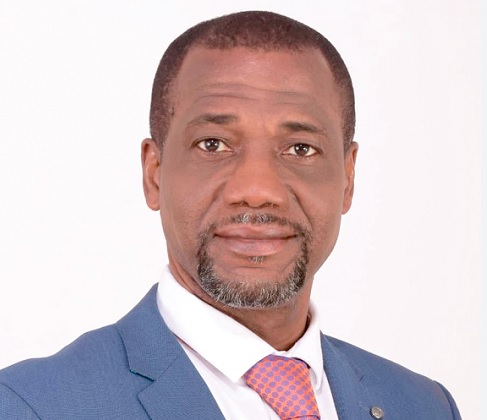
Jacob Osei Yeboah
(Independent Presidential Candidate, 2012 & 2016)
