
The Licensed Cocoa Buyers Association of Ghana (LICOBAG) has called on the government to urgently secure a facility to pay for an estimated 300,000 tonnes of cocoa in a phased manner between now and September.
That, it said, was to prevent the present crisis confronting the cocoa sector in the country from deepening.
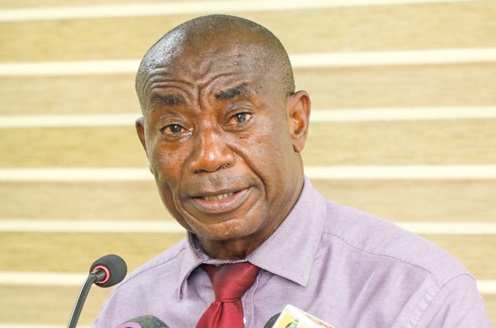
The Executive Secretary of the LICOBAG, Victus Dzah, who made the call at a media briefing in Accra last Thursday, said funds secured for cocoa purchases must be ring-fenced and used for the specific purpose.
“We suggest a review of the current funding model to a hybrid of the old model of securing some syndication facility, be it local or international, to enable real time payment for cocoa purchased and delivered to the port by Licensed Buying Companies,” he stressed.
In a swift response last Friday, the Ghana Cocoa Board (COCOBOD) acknowledged the severe liquidity crisis causing delayed payments to cocoa farmers, and simultaneously outlined plans to permanently abandon the decades-old syndicated loan system.
"We are fully aware of the issues and we take very seriously the concerns raised by the farmers and other stakeholders," the Chief Executive of COCOBOD, Dr Randy Abbey, said at a press conference.
Dr Abbey assured farmers and other stakeholders that COCOBOD was liaising with the Ministry of Finance to find an urgent solution.
Licensed Cocoa Buyers Association
At the buyers association’s press conference, Mr Dzah, who was flanked by other executives of the buyers association, stated that as the core business of the COCOBOD was to purchase cocoa beans produced by farmers, the government must urgently make a determination on the current farm gate price of cocoa to allay the apprehension of all value chain actors.
While it called for greater transparency and stronger communication between LICOBAG and the COCOBOD, Mr Dzah said, Cocoa Marketing Companies (CMCs), the COCOBOD and traders must be more proactive in their sales strategy to yield optimum results.
He further urged COCOBOD to increase oversight supervision on the trading room.
Mr Dzah said there was the need to develop the professional capacity of the Cocoa Marketing Company (CMC) and cocoa traders and also restore a credible succession plan which would give security of tenure and improve professionalism and morale of staff for better outcomes.
“Serious efforts must be made to revamp the cocoa industry beyond rhetorics and theatrics,” he stressed.
In so doing, Mr Dzah said, the COCOBOD must divest itself from non-core business which should be outsourced to the private sector.
Industry collapse
Touching on current developments in the cocoa value chain, Mr Dzah said if the current happenings were not seriously addressed it would collapse the industry.
“We have been expecting the COCOBOD to engage us on these issues but to no avail, hence the need to meet you to set the records straight in the light of recent pronouncements in the press by the COCOBOD Deputy Public Affairs Director,” he said.
Mr Dzah added that the most crucial problems affecting the cocoa industry now were funding the COCOBOD, CMC and trader’s sales strategy, the lack of commitment to revamp the industry and excessive political interference.
Since the 2023/2024 season, the LICOBAG Executive Secretary said the cocoa industry faced serious funding problems for cocoa purchases due to the inability of COCOBOD to arrange for the traditional syndicated facility.
Instead of the usual annual syndication of $1.3 billion and above, he indicated that, COCOBOD was able to raise a paltry $500 million, secured six months after the opening of the season on September 8, 2023.
“LBCs therefore pre-financed crop purchases through facilities raised from various banks at very high interest rates prevailing (Ghana Reference Rate (GRR) 29.8 per cent) at the time.
COCOBOD made the first payment for cocoa deliveries to port on January 26, 2024, six clear months after deliveries while licensed buying companies (LBCs) paid farmers in full," he stated.
Describing the situation as unfortunate, Mr Dzah said it pushed all LBCs into huge debts, leading to the collapse of many companies.
During the 2024/2025 season, Mr Dzah said the COCOBOD could not raise any syndicated facility at all due to its dire financial situation.
He said it was out of the financial distress that a financing mechanism known as 60/40 model was fashioned.
The tenets of the funding model, according to Mr Dzah, required clients to prefinance crop purchases by paying 60 per cent of the value upfront through Bank of Ghana and then COCOBOD to their partner LBCs which were linked to clients through a tripartite agreement involving the client off-taker, CMC and LBC.
“The rest 40 per cent is paid to the COCOBOD upon final delivery of stocks to the terminal point for their administrative and other core functions," he said, adding that most LBCs were left stranded because they did not get access to funding and those that secured funding did not get off-takers to lift their stocks.
He said LBCs which delivered cocoa to the port were not paid early enough hence servicing high interest costs, which eventually led to high incidence of smuggling of cocoa outside the country.
The 2025/2026 season opened in August last year with the continuation of the new funding model of 80/20, with 80 per cent of the upfront payments going to LBCs for farmer payments, and other handling costs with the rest 20 per cent going to COCOBOD on delivery of stocks to terminal points, Mr Dzah explained.
He said most clients stopped buying as early as November, the peak of the season, either for meeting their contract targets or having delivered cocoa which had not been paid for by the COCOBOD while others complained of high cost of Ghana’s cocoa.
COCOBOD pledges new funding strategy
However, at the press conference organised by COCOBOD, Dr Abbey attributed the current predicament to a storm of collapsed international financing, tumbling global cocoa prices, and a legacy debt.
The situation, he said, had left thousands of farmers unpaid for beans already sold and others unable to sell their current produce.
Syndicated loans end
Dr Abbey provided a detailed background, tracing the crisis to 2022 when COCOBOD first struggled to service cocoa syndicated loans.
That, he said, led to a reluctance from international lenders, culminating in the complete collapse of the syndicated loan system for the 2024-2025 crop season, the system which had been used for 32 years, involving securing loans with forward sales of raw beans.
"Buyers holding low-price contracts found it profitable to finance purchases because global cocoa prices were much higher. But this arrangement was not a long-term strategy," the COCOBOD Chief Executive had explained.
Dr Abbey revealed that COCOBOD was forced to rely on a $70 million bridge finance from the Ministry of Finance in the 2023-2024 season after syndicated loans arrived late.
The temporary buyer-financing model quickly unravelled when global prices plummeted from over $6,400 per tonne to nearly $4,000.
With COCOBOD having already committed to paying farmers a higher farmgate price, buyers began delaying purchases and payments, opting for cheaper beans from other origins.
Dr Abbey stated that while COCOBOD had sold over 530,000 tonnes of the current crop, approximately 50,000 tonnes remained unsold, and some delivered beans were yet to be paid for.
New funding model
In response, COCOBOD, he said, was accelerating plans for a new, sustainable funding model originally slated for the 2026-2027 season.
"We, therefore, began exploring a more sustainable funding model, one that does not tie Ghana into selling raw beans as collateral and undermining value addition ambitions," Mr Abbey said.
The old model, he argued, limited beans for local processing by committing most of the crop to export contracts.
