
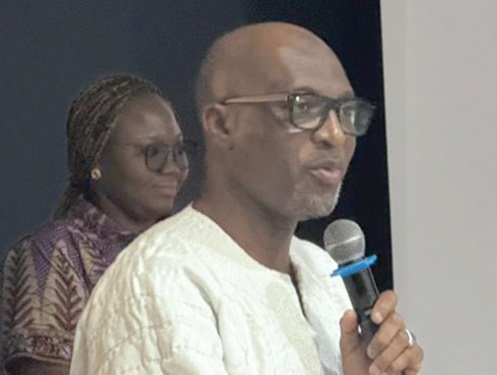
Interior Minister calls for people-centred leadership
The Minister for the Interior, Muntaka Mohammed-Mubarak, has emphasised that effective leadership in the public sector must prioritise people, communication and trust, rather than authority and hierarchy.
He said institutions functioned better when staff at all levels felt respected and listened to, and encouraged others to contribute ideas without fear of intimidation or victimisation.
“Leadership is not about titles or hierarchy; it is about people, communication and trust. When people feel valued and are free to speak, institutions perform better,” he said.
Mr Mohammed-Mubarak made the remarks at the 2025 Annual Performance Review Workshop of the Ministry of the Interior and its agencies in Ada last Friday.
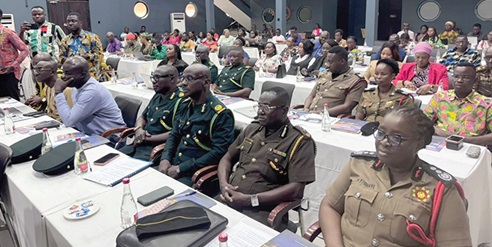
The event, which was on the theme: “Strengthening Security Governance, Accountability, and Service Delivery through Performance Review and Strategic Alignment”, brought together all agencies under the ministry to review their 2025 performance and chart a strategic direction for the year ahead.
Present at the workshop were the Director-General of the Ghana Prisons Service (GPS), Patience Baffoe-Bonney, and the acting Comptroller-General of the Ghana Immigration Service, Samuel Basintale Amadu, among other heads of agencies and senior officials.
The workshop formed part of efforts to assess the ministry’s financial and non-financial performance for the 2025 fiscal year and to draw lessons to improve service delivery and operational outcomes this year and beyond.
Breaking hierarchical barriers
The Interior Minister said leadership was not defined by position or title, but by the ability to inspire confidence and foster collaboration.
He said excessive hierarchy often stifled innovation and prevented junior staff with valuable ideas from contributing meaningfully to decision-making.
“Sometimes the best ideas come from people who feel constrained by hierarchy. Once you break that barrier, productivity improves,” he said.
Mr Mohammed-Mubarak explained that upon assuming office, he adopted an open-door policy and encouraged frank engagement across all levels of the ministry, including junior and support staff.
He said deliberate efforts to build trust within the ministry had significantly improved morale and teamwork.
He cited simple initiatives such as engaging staff directly, encouraging open discussions during meetings and celebrating workers irrespective of rank, as key steps that helped to break down institutional barriers.
“These things may look small, but they make people feel valued and respected, and that reflects in how they work,” he said.
Reforms, innovation
Mr Mohammed-Mubarak further highlighted reforms undertaken by the ministry over the past year, including progress in digitalisation and the introduction of an online portal for service delivery.
He said the digital platform had improved efficiency, enhanced transparency and eliminated cash handling, with payments now going directly into government accounts.
Mr Mohammed-Mubarak said the ministry would continue to strengthen inter-agency collaboration, leverage technology and pursue reforms aimed at professionalism, accountability and improved public confidence.
The workshop
The minister stressed that the performance review workshop was not merely about accounting for expenditure, but about evaluating results, identifying gaps and agreeing on corrective actions.
“This review is about asking the hard questions about what worked, what did not, why certain targets were not achieved and how we can do better,” he said.
He urged heads of agencies under the ministry to approach the process with honesty, strategic focus and collective responsibility.
