

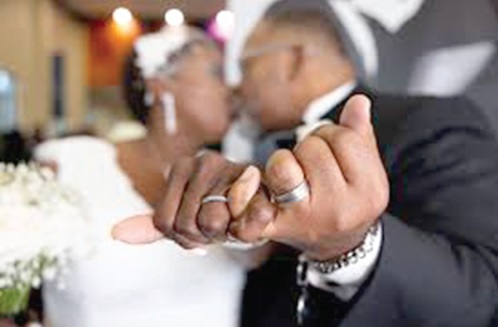
Yesterday, the most common word associated with marriage was love. Today, it is divorce. Global studies indicate that about 60 per cent of marriages break down, cutting across age, tribe, profession, academic qualification, length of marriage and even religious faith.
Marriage today has, therefore, become a risky investment—one that shows no respect for status or background.
It is also estimated that about 88 per cent of adults who divorce or lose a spouse remarry at least once and some many times. The late actress Elizabeth Taylor, for instance, married seven times.
The record among women is held by American grandmother Linda Wolfe, who reportedly married 23 times and was still seeking another marriage. Among men, Stotte Wolfe, a Baptist minister, was married 29 times. His longest marriage lasted eleven years, while the shortest lasted only 19 days.
After the loss of a spouse through divorce, separation or death, some people choose to remain single for life, while others decide to marry again.
Why some decide not to marry again
Many people enter marriage based on passion rather than logic, hoping to live happily ever after. Sadly, romantic love often fades sooner than expected and partners begin to see each other’s weaknesses—selfishness, intolerance, immorality, inequality, dishonesty, constant criticism and poor communication.
The pain from such experiences lingers, leading some to believe that all marriages are the same and that peace is best found in remaining single.
Others believe they are simply unlucky in marriage—if it failed once, it will fail again. Some feel they are too old to marry again or that after raising children, there is nothing left to enjoy in a second marriage.
In many cases, children oppose their parents’ remarriage. When children lose one parent through divorce or separation, they often form a strong emotional bond with the remaining parent.
Any new partner is perceived as an intruder who threatens the bond and some children go to great lengths to prevent their parents from remarrying.
Others choose singleness to preserve the memories of their former spouses, while some worry about the challenges of blended families.
There are also concerns that a new spouse may benefit unfairly from hard-earned investments, possibly at the expense of biological children.
Why some decide to marry again
The most important purpose of marriage is companionship. Companionship provides a positive self-image, security and peace of mind—essential elements for human growth and development.
As the Akan proverb says, “Wiase yɛtra no baanu baanu”—human beings live in pairs. Marriage offers someone with whom to share life in all its dimensions. This need becomes even more relevant with age or after the loss of a spouse, when loneliness sets in.
In Ghana, marriage is also a powerful social symbol. It is often said that the greatest respect a woman receives comes from being married. Unmarried men are sometimes called “so gya ni”—one who fetches fire to cook.
Since cooking is traditionally associated with women, such a man is often viewed with little respect, regardless of his achievements.
Some, therefore, remarry to reclaim social status and affirmation.
Others marry for convenience. A man may remarry to have someone manage the home and care for the children. A woman may marry for financial security, emotional support or a father figure for her children.
The challenges of marrying again
Research shows that second marriages are often more difficult than first marriages and are more likely to fail—and to do so more quickly.
This is partly because partners carry unresolved emotional pain from previous marriages into the new one. Trust and commitment issues often persist, making it difficult to open up fully.
Additionally, every marriage has its own traditions and culture. Creating new traditions becomes challenging when partners are older, set in their ways and bringing children and obligations from previous relationships into the union.
So, does remarriage work?
Second marriages are not fundamentally different from first marriages. At their core, they are still about sharing life with another person for companionship, support, and unconditional love.
If you decide not to marry again, you are right—stand by your decision. If you choose to marry again, go ahead. If you failed the first time, you may try again—but ensure compatibility and examine your motives carefully.
Avoid rushing into another marriage. Take time to heal, cool down, and engage in serious courtship to understand your partner at a deep emotional level.
With a positive mental attitude, commitment, honesty, hard work, effective communication and a forgiving spirit, remarriage can succeed—especially when it is committed to God, the author of marriage, who calls couples to serve Him through love and service to one another.
May your tomorrow in remarriage come with freshness and blessings.
May the glory of your latter days be greater than the former.
0208181861
