


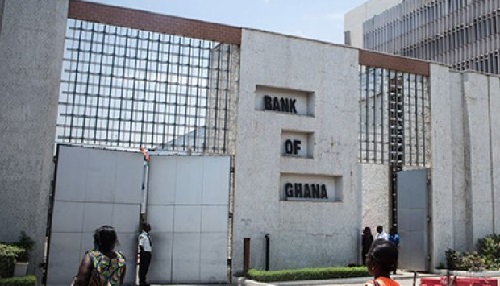
In a move to overhaul Ghana's microfinance landscape, the Bank of Ghana has mandated a new minimum capital of GH¢100 million for any institution seeking to operate as a newly licensed Microfinance Bank (MFB), with a transitional capital requirement of GH¢50 million set for existing firms.
The directive, detailed in a comprehensive new guideline issued on January 27, 2026, is the centrepiece of a sector-wide reform designed to force consolidation, enhance stability, and protect depositors.
The new framework establishes MFBs as "licensed deposit-taking institutions under Act 930," which will "primarily serve Micro, Small, and Medium Enterprises (MSMEs), formal and informal groups, and individual clients as their core market segments." The steep capital requirement is intended to "address weaknesses with capital, governance, and operational efficiency which have undermined the viability of most institutions and threaten depositors' funds," the central bank stated.
Existing institutions, including Savings and Loans Companies, Finance Houses, Deposit-taking Microfinance Companies, and Micro-Credit Companies, have been given until 31 December 2026 to meet the new GH¢50 million threshold and transition into the MFB category. To achieve this, the Bank of Ghana has outlined strict pathways: standalone compliance, consolidation via merger or acquisition, an orderly transfer of assets and liabilities to a qualified institution, or voluntary exit from the market.
Institutions must formally notify the regulator of their chosen path by 30 June 2026. The guideline warns that "failure to meet milestones provided in Notice shall trigger sanctions, including restrictions on business operations."
Complementing the capital demands are new shareholding restrictions aimed at strengthening governance. For MFBs, maximum shareholding is capped at 40 per cent for an individual, 50 per cent for a family or related party, and 70 per cent for a registered group, though corporate bodies may hold up to 100 per cent.
The reform, which the Bank says aims to "enhance its contribution to financial inclusion and development," recasts the entire sector into four distinct tiers: Microfinance Banks, Community Banks, Credit Unions, and Last-Mile Providers.
The ARB Apex Bank will be restructured with an expanded mandate to provide centralised services, such as liquidity assistance and technology platforms, to all categories.