

THERE are award schemes, and then there is the Telecel Ghana Music Awards(TGMA), still the industry’s most revered crown jewel. No debate, no footnotes, no asterisks.
For nearly three decades, it has been the ultimate scoreboard of Ghanaian music’s triumphs, trends, and tantrums. The 27th edition arrives not just with the usual glitz and glamour, but with a swirl of questions, strategic missteps, bright ideas, and a few uncomfortable truths the industry would rather remix than replay.
This year is not just about who wins what. It is also about how the machine itself is running and whether it is hitting the right notes.
Venue
For an event that prides itself on grandeur, this year’s venue situation feels like trying to host a stadium concert in a rehearsal room. Since the 20th edition, the awards have comfortably sat at the Grand Arena, a venue that matched the scheme’s stature. But with ongoing issues at the AICC premises rendering the Arena unavailable, organisers have been forced into tighter quarters. This makes it the smallest venue the event has used in years.
Cue the late PR scramble. Robert Klah, the scheme’s spokesperson, has in recent days amplified concerns about venue unavailability, possibly as a strategic nudge to government authorities. It is a bold move, but also a belated one. By the time the alarm bells were ringing, billboards had already gone up confidently announcing a venue. That contradiction has not just raised eyebrows. It has shifted attention away from the core excitement of the awards season.
Instead of heated debates over nominees, voting patterns, and red carpet expectations, the conversation has moved into logistics.
Red Carpet
If there is one area where the TGMA has been quietly improving, it is the red carpet. Once chaotic and overcrowded, the space has evolved into a more curated and controlled spectacle over the past two years. Invitations are tighter, media access is more structured, and the overall presentation feels intentional.
This year introduces a refreshing twist. A theme. It is a move borrowed from global award heavyweights and one that deserves applause. A themed red carpet elevates fashion from mere appearance to storytelling. It gives designers, stylists, and artistes a shared creative direction.
But timing again affects execution. Announcing a theme barely three weeks before the event is like handing a script to actors minutes before curtain call. Fashion at this level requires planning, sourcing, and craftsmanship.
Voting Campaign
For an awards scheme powered significantly by public votes, the near absence of a strong voting campaign is puzzling. According to Ghana Music Live’s ad monitoring, only Peace FM and Y FM have been actively running voting advertisements. That is not just a dip. It is a drought.
In previous years, voting campaigns saturated radio, television, and digital platforms, turning the process into a national conversation. This year, the silence is noticeable. Silence in a popularity contest is dangerous.
Artiste of the Year: Hunger vs Hype
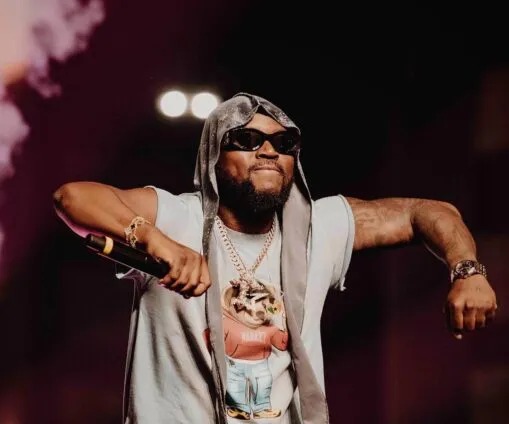
Every year, the Artiste of the Year category delivers drama, debate, and divided loyalties. This year, it is a tight three horse race between Medikal, Wendy Shay, and Black Sherif. Each brings a different kind of momentum.
Black Sherif stands tall on numbers alone. Streaming dominance, radio airplay, and cultural impact all tilt in his favour. On paper, he is the obvious pick. But awards are not won on paper. They are won through presence, campaigning, and sometimes sheer hunger.
Black Sherif does not seem particularly eager. He has already worn the crown and by his own admission believes Wendy Shay deserves it this time. That lack of visible campaign energy could cost him.
Wendy Shay, on the other hand, is all fire. She has been consistent, visible, and vocally invested in the race. Her performances over the year have been solid and her desire is unmistakable.
Then there is Medikal, the strategist. If awards were won on campaign execution alone, he would already be engraving his name on the plaque. From TGMA in Schools to the Xperience Concert, he has been everywhere. Online, offline, and even at the grassroots level in communities like Sowutuom, his campaign is relentless. Banners, PR pushes, and direct voter engagement show he is treating this like an election.
Sarkodie and Stonebwoy, while always formidable names, do not quite fit the narrative this year. Diana Hamilton’s inclusion feels more like a late addition than a central storyline.
In the end, this category may come down to a simple equation. Numbers, narrative, and need. Right now, Medikal’s campaign might just tip the scale.
The Unsung Initiative
If the main categories celebrate established greatness, the Unsung Initiative is where futures are forged. Since MzVee’s breakthrough win, it has become one of the most closely watched.
This year’s lineup includes Siicie, Haeven, Bosoma, Cojo Rae, and Morgan Rae. Each brings a different strength to the table.
Siicie leads in streaming numbers with strong digital presence across platforms. Bosoma dominates radio airplay, with his music echoing across stations nationwide. When it comes to live performance, Bosoma again stands out. His showing at the Xperience Concert was commanding, polished, and clearly star quality.
That performance did not just win applause. It earned him a record deal with BKC Music, signaling industry confidence in his potential.
If voting aligns with visibility and performance, Bosoma looks like the frontrunner. In a category where momentum matters, he seems to have it.
The Guinness Goodies
Corporate sponsorship has always been a backbone of the TGMA, and Guinness Ghana’s contribution this year is significant. The winner of Album or EP of the Year stands to receive GH₵100,000, music video support, and a listening session for their next project.
It is a commendable initiative and reflects genuine investment in the industry. But there is a challenge with the category it is tied to.
The nominees include Black Sherif, Medikal, Gyakie, Stonebwoy, Wendy Shay, and Kweku Smoke. These are already heavyweights. Their performance fees often exceed the cash prize. For them, the reward may not be transformative.
Imagine redirecting that same package to categories like Best New Artiste or the Unsung Initiative. For emerging acts, that level of support could be career defining.
There is also room to rethink accessibility. A non technical, fan driven category tied to such rewards could open opportunities for a wider pool of artistes.
Guinness has set a strong precedent, but there is potential to make it even more impactful.
Applause, Adjustments, and Accountability
The 27th TGMA is shaping up to be a fascinating blend of excellence and oversight. The talent is undeniable, the competition is fierce, and the stakes are high. Alongside the hits, there are lessons about timing, communication, and strategic alignment.
Awards do not just celebrate an industry. They reflect it. This year, the reflection is both flattering and revealing.
The music is still loud. The lights still shine. Behind the spectacle, the system is asking for a tune up.
That might be the most important takeaway of all.
