
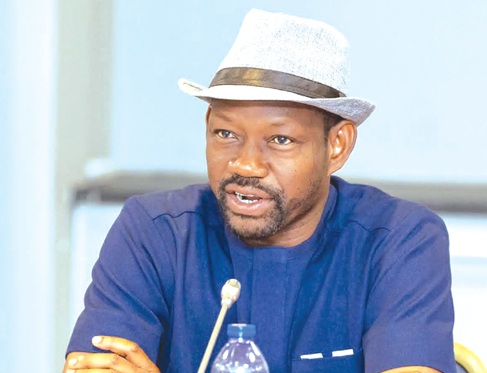
Justice, human dignity principles will guide anti-gay bill consideration - Constitutional & Legal Affairs C’ttee chair assures public
The Chairman of the Committee on Constitutional and Legal Affairs of Parliament, Mahama Shaibu, has assured Ghanaians and the international community that the Human Sexual Rights and Family Values Bill, 2026, will be considered on the floor of Parliament with the “principles of justice, fairness and human dignity”.
“And so nobody, no individual or their rights will be affected,” he said.
Expeditious consideration
In his closing remarks after a two-day consideration of the anti-gay bill in Accra yesterday, Mr Shaibu said Parliament was very mindful of Ghana’s obligations to international communities and treaties.
“But that is subject to the Constitution, and so we are mindful of all these as we consider the bill.
“We hope that the next stage of this bill will be carried out expeditiously,” he said.
The consideration of the bill brought together representatives of non-profit organisations, think tanks, and traditional and religious leaders to make inputs into the clause-by-clause considerations of the new bill.
The committee will now have a closed-door meeting with the Office of the Attorney-General and Minister of Justice to consider some of the clauses the committee had flagged, after which it will submit its report to the plenary.
‘President will assent bill’
The Chairman of the committee assured the public that when the current bill is eventually transmitted to the President, it would not be returned to Parliament unconstitutionally as was previously done.
He, however, said much as the people wanted to push the bill through all the necessary processes on time, there were equally important bills.
“We do not rank bills in order of importance at the Chamber, and so as we process the bills, be rest assured that this bill will be considered when we resume.
“As to whether it will go under a certificate of urgency or not, the important thing is not having a President who will refuse to assent to the bill.
“We have a President who will assent to it, and that is what is important.
It does not matter what time it gets there,” Mr Shaibu said.
The Chairman asserted that all members of the committee from both sides of the House had agreed that “we are good to go on this”.
He thanked the Speaker of Parliament for the effort he had put in to get the bill considered on time.
Give thought to funding
The Director of Human Rights at the Commission on Human Rights and Administrative Justice (CHRAJ), Mary Adjeley Nartey, said as a national human rights institution, most of the commission’s funders were international partners who might be concerned about the bill.
She, therefore, urged the committee, in considering various memos, to consider how best they could put up a clause to cater for the funding needs of the commission, the Ghana Aids Commission and the Ghana Health Service.
Certificate of urgency
The Ranking Member on the committee, Alhassan Tampuli, urged the committee to be mindful that they were making laws for the people of Ghana.
“We are making laws for the people of Ghana based on their history, conventions, lifestyle and their current situation and their future aspirations.
“Whatever it is that we are doing today is just a reflection of what our people want. If our people do not want this bill to pass, we will not be sitting here,” he said.
The MP for Gushegu said when Parliament resumed in May, the committee should ensure that the bill was passed under a certificate of urgency, saying “as a committee, we can make that determination”.
He said the House had passed so many laws under a certificate of urgency, and the current one was fit to be passed under a certificate of urgency to bring finality to the anti-gay issue.
That, he said, would enable the President to also assent to the bill in good time.
Enforcement of bill
A sponsor of the bill, John Ntim Fordjour, urged the Attorney-General and Minister of Justice to take steps to introduce regulations for its enforcement within 12 months of Parliament passing the bill.
That would make the bill fully operational once it receives Presidential assent, the Assin South MP said.
“So within one year, we should have the full bill with the necessary implementation strategies to be able to see it running,” he said.
