
On August 6, 2025, Ghana was jolted by a national tragedy.
Eight citizens—two cabinet ministers, a vice chairman of the ruling National Democratic Congress (NDC), and five others—lost their lives in a catastrophic Air Force helicopter crash en-route to an event in Obuasi, in the Ashanti Region.
The nation mourned, and still, the grief remains raw and poignant. Families are struggling to come to terms with their loss.
Even within political circles, many continue to wrestle with unanswered questions about what truly transpired on that tragic day, despite the conclusions of the investigative committee.
Yet beyond the collective sorrow, the crash laid bare a harsher reality: Ghana’s Air Force fleet is seriously challenged that only a comprehensive renewal can remedy it.
The official investigation confirmed what many within the security apparatus had whispered for years—that the fleet required an urgent overhaul.
The government moved swiftly, allocating funds to renew and modernise the Air Force’s aircraft inventory.
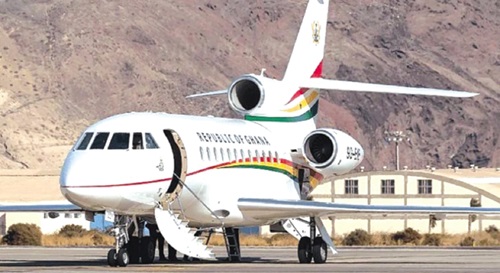
Beginning in 2026, Ghana would, over a four-year span, procure new aircraft, including two jets designated for presidential use, replacing an aging and corroded aircraft long declared unfit for purpose.
Instead of a sober national consensus around a clear security imperative, the conversation degenerated into partisan theatrics.
Although Parliament approved the expenditure, the public debate was poisoned by political bitterness and economic anxieties.
Critics questioned the timing, insisting that a struggling economy cannot prioritise new presidential jets.
Some went further—resurrecting old rivalries and accusing the now-ruling NDC of hypocrisy for resisting a similar purchase when they were in opposition.
But that argument dissolves under scrutiny.
What was Okudjeto Ablakwa’s crime?
For years, the political crossfire over the presidential jet fixated—almost obsessively—on Samuel Okudjeto Ablakwa, then the Ranking Member on Foreign Affairs and now Foreign Minister.
As Parliament approached the final stages of approving the Ministry of Foreign Affairs’ budget, old ghosts resurfaced.
The current Ranking Member on Foreign Affairs, Samuel A. Jinapor, resurrected the controversy with a pointed jab.
He urged the minister to cancel the acquisition of one of the presidential jets and divert the funds to support the chronically under-resourced Foreign Ministry.
It was a tongue-in-cheek remark—yet unmistakably a reminder.
Mr Ablakwa’s own past stance had circled back to confront him; many NPP folks teased.
On the Defence Committee side, Reverend Ntim Fordjour was even more direct, bluntly reminding the minister how his hardline posture years earlier had helped stall attempts to procure a new presidential aircraft.
But what exactly was Mr Ablakwa’s crime? He had no unilateral power to stop the purchase of a presidential jet.
What he did, however, was to expose a disturbing truth: the President at the time was flying in exorbitant luxury—chartering private jets at $14,000 to $17,000 per hour on most international trips.
The accumulated cost of those flights could have bought Ghana a brand-new presidential jet—outright.
That revelation detonated the national mood. It became politically impossible—even suicidal—for the government of the day to attempt purchasing a new presidential aircraft.
Public outrage was so overwhelming that no administration, including the one enjoying the criticism today, could have dared push such an acquisition through without facing mass backlash.
So, again, what was Mr Ablakwa’s crime?
That through his exposés, Ghanaians finally saw how extravagance was bleeding the national coffers?
That he dared to question the prudence of spending astronomical sums on ultra-luxury aircraft when a more moderate, functional, and cost-effective option could have served the nation just as well?
If those are crimes, then they are crimes committed in the national interest.
Extravagance spree
For years, the presidency under the previous administration descended into a spectacle of extravagance.
The President was flown in luxurious private jets, each trip costing the nation tens of thousands of dollars—a waste in a period marked by economic hardship and public sacrifice.
Adding insult to national injury, Ghana’s aging presidential jet—mockingly dubbed “the Flying Coffin”—was routinely handed out for domestic travel to individuals with no official role or standing in government.
This reckless indulgence ignited widespread indignation.
It inflamed passions, hardened emotions, and shifted the country’s mood so dramatically that any attempt to procure a new presidential jet became politically toxic—outrightly rejected before it could even be debated.
Under such circumstances, which Ghanaian would dare support the purchase of a new presidential jet?
The new shift in leadership
Then came the shift in leadership. President Mahama, inheriting the fractured debate, opted for restraint.
Domestically and across Africa, he often used his brother’s private jet to cut state costs.
For long-haul trips to Asia and the UN General Assembly, he flew commercial—an unusual arrangement for a head of state.
This frugality, though admirable, exposed a new danger.
In one instance, a 12-hour layover in Dubai triggered national anxiety about the President’s safety.
Protocol and security experts warned: this was not just inconvenient—it was hazardous.
No modern nation subjects its president to such vulnerability.
Thus, the question confronting Ghana today is not about luxury; it is about state security, presidential safety, and national dignity.
A presidential jet is not a toy for the indulgent; it is a strategic national asset.
It belongs to the Republic of Ghana—not to the man who occupies the office for a term.
President Mahama has three years left in his mandate.
Several presidents will use this aircraft after him.
What the nation acquires is an asset of state, not an extension of personal ego.
Ghana cannot continue to gamble with the safety of its commanders-in-chief or invite ridicule on the international stage.
After years of frivolity, mismanagement, and waste, the argument has shifted.
Today, purchasing a presidential jet is not an act of luxury—it is an act of necessity.
