
At a time when destinations around the world are competing aggressively for global meetings, incentives, conferences and exhibitions, Africa is no longer whispering its ambitions.
It is speaking with clarity and growing confidence.
That message came through strongly at Meetings Africa 2026, held at the Sandton Convention Centre.
Organised by South African Tourism, Meetings Africa has, over two decades, evolved from a relatively modest trade gathering into one of the continent’s most strategic business events platforms.
Its mandate remains clear – to connect African MICE suppliers with international buyers, while positioning the continent as a credible, competitive and creative meetings destination.
The 2026 edition unfolded with deliberate structure.
Business Opportunities Networking Day laid the groundwork for relationships before the official opening.
The exhibition floor then became the engine room for deals, discussions and discovery, supported by networking receptions and knowledge exchanges that extended well beyond scheduled appointments.
In her opening address, South Africa’s Minister of Tourism, Patricia de Lille, reinforced the economic importance of business events, highlighting how Meetings Africa continues to drive jobs, investment and long-term value for destinations.
Her message framed the event not simply as a trade show, but as a strategic intervention in Africa’s tourism and economic development agenda.
From that foundation, three key takeaways emerged
First – Africa is being taken seriously by buyers, not sentimentally.
What was striking on the exhibition floor was the quality of conversations.

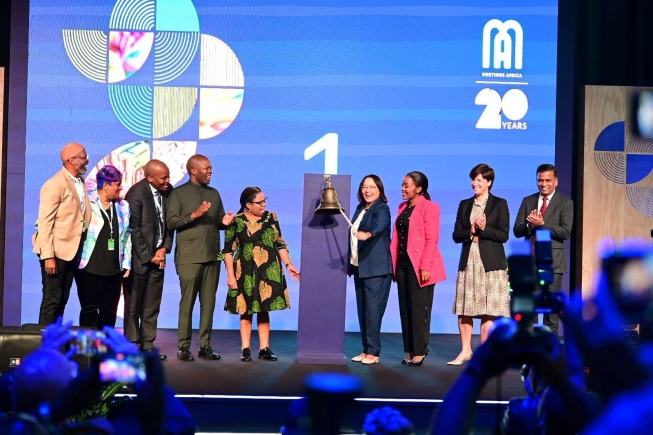
Patricia De Lille (4th from right), South Africa's Tourism Minister, rings the bell to open the trading floor at Meetings Africa last Tuesday
Buyers were not browsing out of curiosity.
They arrived with clear briefs, sector-specific interests and realistic expectations.
African destinations, in turn, responded with confidence and clarity.
There was less over-selling and more focus on fit – what a destination can genuinely deliver, at what scale and under what conditions.
This maturity marks a shift. Africa is no longer positioning itself as an alternative option.
It is positioning itself as a viable one.
The structured matchmaking system and curated appointments ensured that conversations were purposeful, reinforcing trust and credibility on both sides.
Second – connections, not size, defined success.
While South Africa once again anchored the show with the largest presence, Meetings Africa 2026 demonstrated that scale is no longer the sole measure of relevance.
Smaller destinations and niche suppliers used the platform effectively by focusing on the right meetings rather than the most meetings.
Industry leaders reflected on how the earliest editions of Meetings Africa were built on relationships that matured into major business outcomes years later.
That long view remains one of the show’s greatest strengths.
In a sector where trust and track record matter deeply, Meetings Africa continues to function as a relationship incubator rather than a transactional marketplace.
Third – Africa’s MICE future is increasingly collaborative.
Perhaps the most encouraging takeaway was the spirit of collaboration across the continent.
Destinations compared notes.
Event organisers shared insights.
Global associations engaged African stakeholders as peers rather than prospects.
Representatives from international industry bodies reinforced that Africa’s competitive edge lies not in imitation, but in differentiation – unique cultural contexts, emerging infrastructure, adaptable event professionals and a growing pool of skilled organisers.
Increasingly, Africa is telling its own story rather than borrowing someone else’s.
That collaborative mindset extended to conversations about sustainability, skills development and innovation.
There was a shared recognition that for Africa to grow its share of global business events, destinations must work together, align standards and invest in people as much as in infrastructure.
Meetings Africa did not promise an overnight transformation.
What it offered instead was something more valuable – proof that Africa is steadily building the connections, competence and credibility required to be taken seriously in the global meetings industry.
And in the world of business events, that is where real growth begins.
