

FOR many women, pregnancy and childbirth are expected to be natural, even routine. But for many expectant and new mothers in Ghana, the experience is anything but simple.
Between clinical care and emotional support lies a gap — one that is quietly being filled by doulas.
Doulas are trained professionals who provide non-medical support to families during pregnancy, labour and the postpartum period, offering emotional, physical and informational assistance.
In a country where pregnancy is often seen as a natural process that requires little beyond clinical care, seeking the support of a doula may seem a luxury, but this is an assumption one practitioner strongly challenges.
For over a decade, Bobette Ngiedi Lelo has been walking alongside women at one of the most vulnerable and transformative moments of their lives—pregnancy, childbirth, and postpartum recovery.
Her journey began in Belgium, where she studied midwifery. But it was in 2014, after training in Canada with author and midwife Rivka Cymbalist that she chose a different path—one that would shape her life’s work. She became a full-spectrum doula and childbirth educator and founded her company, Uzuri Birth.
For six years, she worked with Montreal Birth Companions in Canada, supporting families through a wide range of birth experiences—from home births to hospital deliveries, birthing centres, and even unassisted births. Over time, she built trust with more than 100 families and healthcare professionals.
Five years ago, when she moved to Ghana with her family, she planned to introduce her services. That plan took off sooner than expected when, at a networking event, an expectant father approached her seeking support for his wife.
“Just two weeks after arriving, I attended a networking event. I introduced myself as a doula, and there happened to be a woman who was eight months pregnant."
"Her husband, who is African American, immediately understood what a doula does and approached me. That connection became my first client. She gave birth about a month later, and from there, everything grew through word of mouth,” she told The Mirror in an interview in Accra last Wednesday.
“It was entirely word of mouth at first. That first client referred me to others, and it just kept growing. I only created an Instagram page and website after I was already actively working,” she added.
Challenging perceptions
She explained that doulas did not replace doctors or midwives but rather complemented them by providing continuous emotional, physical and informational support.
Bobette admitted that introducing doula care into a space where it was largely unfamiliar had not been without resistance. In some circles, the service had been dismissed as unnecessary.
“Some people call it ‘bougie’, but I’ve had to shift that narrative,” she explained.
To her, the work is fundamentally about dignity. Ensuring a woman understands her options, feels heard in decision-making, and experiencing childbirth with confidence is not an added extra but essential.
“If a woman has strong support from her family, she may not need a doula, but not everyone has that. And every woman deserves that level of care,” she added.
Building trust, one birth at a time
Over the past five years, her work has taken her into delivery rooms across Accra—from private hospitals to community clinics. In many facilities, she is welcomed as part of the care team. In others, she still encounters hesitation.
“The role of a doula is still new to some but once people see the impact, they become more open.”
One standout partnership has been with the Ogbodjo Polyclinic in Accra, where staff have embraced not only her presence but also her broader vision.
She is also well received at the Bank Hospital and Sinel Hospital in Accra.
Training a new generation
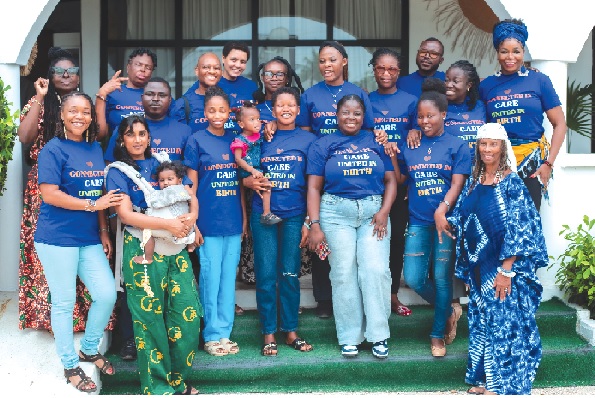
Through her organisation, Uzuri Birth, she is now training a cohort of 15 doulas in Accra, an effort she describes as both urgent and long overdue.
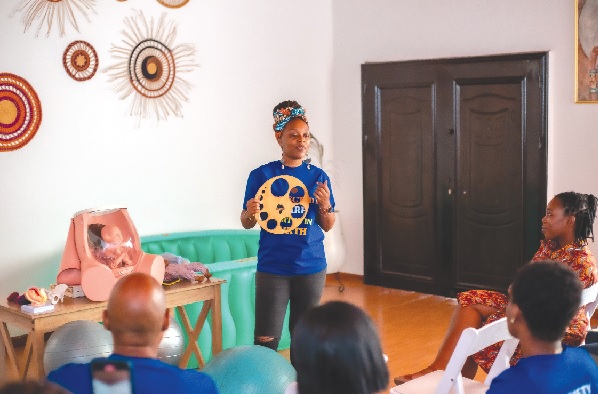
The free training sponsored by HealthConnect One, spans six months and combines weekly sessions with hands-on clinical experience in hospitals.
Unlike short-term courses, this programme is intentionally rigorous.
“I didn’t want something quick. I wanted to train people who are committed—who will stay the course and truly understand the responsibility,” she said.
The initiative is also designed to be inclusive. Trainees receive meals, and childcare is provided for those who need it, removing barriers that might otherwise exclude women from participating.
Her long-term vision extends beyond Accra. Plans are underway to expand training to other regions, translate materials into local languages, and collaborate with traditional birth attendants.
Reaching the underserved
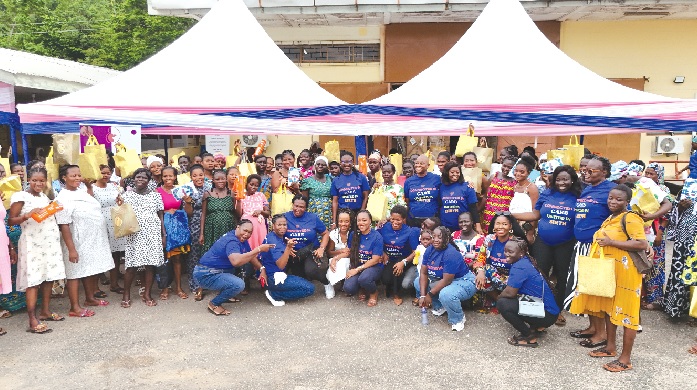
Beyond training and one-on-one care, Uzuri Birth has introduced community baby showers. Such events combine education with tangible support.
Held every few months in different communities, these gatherings bring together dozens of pregnant and lactating women.
Through crowdfunding and partnerships with organisations and donors, the team distributes essential items ranging from reusable diapers and sanitary products to food supplies and baby clothing.
“Thanks to partners such as Faytex, Sacred birthing Village, Winnck and generous friends, we are able to give about 50 to 100 gift bags with essential items. We do this quarterly in Ghana and extended it to Burkina Faso last year,” she said.
But the impact, according to her, went beyond material aid.
“We want to understand what women are going through in different places because the challenges in Accra are not the same as those in more remote areas.
One of my greatest success stories has been seeing mothers return after birth to say they felt stronger, calmer, and more prepared because they had support throughout their journey.
Building partnerships with hospitals and clinics, training new doulas, and organising community baby showers for pregnant and lactating women have also been major milestones.
For me, success is not only in numbers, but in every mother who leaves her birth experience feeling respected, empowered and cared for,” Bobette added.
Writer’s email:
