

When people think about tourism, their minds often go straight to beautiful beaches, ancient monuments, wildlife parks, colourful festivals and luxurious hotels.
Few stop to think about the person who quietly stands between the visitor and the destination, translating unfamiliar sights into meaningful experiences.
Yet, without that individual, many tourism experiences would be incomplete. That individual is the tour guide.
One tourism trade professional group that has recently demonstrated renewed energy and commitment to the industry is the Tour Guides Association of Ghana (TORGAG).
The association, which brings together trained and licensed tour guides across the country, has been actively contributing to tourism development while strengthening its own professional base.
As a member organisation of the Ghana Tourism Federation (GHATOF), TORGAG works closely with stakeholders, including the Ghana Tourism Authority (GTA), the Ministry of Tourism, Culture and Creative Arts and other tourism trade associations.
Beyond advocacy, the association engages in industry development activities, organises familiarisation tours, assists members to renew their operational licences and maintains active regional branches throughout the country.
These efforts remind us of a simple but often overlooked truth: tourism is ultimately about people. Attractions may draw visitors to a destination, but it is human interaction that often determines whether they leave with fond memories or disappointment.
Indeed, the experience and impression tourists form about a destination are heavily influenced by the professionalism of the guide who accompanies them.
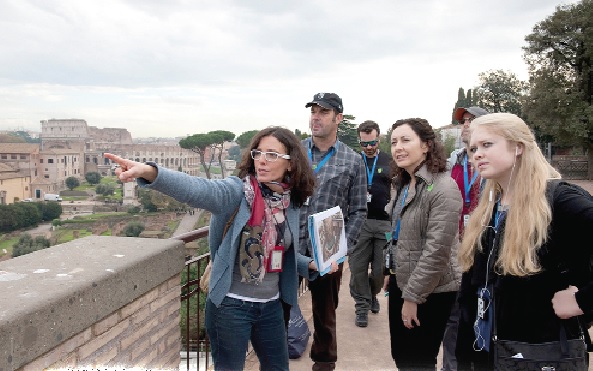
From the moment a guide welcomes a group of visitors, he or she becomes the face, voice and personality of the destination.
The guide is not merely a navigator pointing out landmarks. He or she is an interpreter, storyteller, problem solver, ambassador, safety officer and cultural bridge rolled into one.
Take, for instance, a visitor arriving in Cape Coast Castle, Mole National Park, the Larabanga Mosque, Nzulezu or the Wli Waterfalls. Without proper interpretation, these places remain mere structures, landscapes or attractions.
But in the hands of a knowledgeable guide, they become living stories filled with history, culture, mystery and meaning.
A good guide can transform a pile of old stones into a compelling narrative. He can make visitors understand why a sacred grove matters to a community or why a traditional festival has survived centuries of social change. He connects the dots between what tourists see and what they ought to understand.
That is why tour guiding remains a critical component of tourism development plans across the world.
The professional tour guide acts as the vital link between the visitor and the realisation of the visitor's travel dreams. Whether tourists seek adventure, education, culture, spirituality or leisure, guides help bring those expectations to life.
Yet the responsibilities of a tour guide extend far beyond storytelling.
Tourists often find themselves in unfamiliar environments where language, customs, food, transportation systems and social norms differ from what they know.
The guide helps visitors navigate these uncertainties with confidence and comfort. In many cases, guides become the first point of contact whenever problems arise.
They answer endless questions, calm anxieties, handle complaints, manage schedules and ensure that visitors arrive safely at every destination. They monitor weather conditions, traffic situations and safety concerns.
They coordinate with hotels, restaurants, transport providers and attraction managers. In essence, they become temporary guardians of the visitor's well-being.
This responsibility requires a unique blend of skills.
Professional guides must possess excellent communication abilities, extensive destination knowledge, emotional intelligence, patience and adaptability. They must understand cultural differences and know how to communicate effectively with visitors from diverse backgrounds.
They must be sensitive to customs, beliefs and expectations that may differ significantly from local practices.
Perhaps this explains why some of the most successful guides are also excellent storytellers. Beyond facts and dates, they understand how to entertain, engage and inspire.
A well-timed joke, an intriguing legend or an amusing local anecdote can transform an ordinary tour into an unforgettable experience.
The average tour guide may not know everything, but a good guide certainly knows a great deal. Many spend years reading, researching and learning about history, geography, culture, wildlife, architecture and current affairs.
Membership in TORGAG provides an additional layer of professional development. Through networking opportunities, training programmes and regular interactions, members exchange ideas, share industry updates and collectively address challenges facing the profession. The association also supports members' welfare and promotes professional standards within the industry.
Interestingly, tour guides are among the most active travellers within the tourism sector itself. During familiarisation tours, they inspect hospitality facilities, assess service quality, evaluate attractions and monitor infrastructure conditions.
They note changes in pricing, identify new products and services and observe potential safety concerns.
Every evening and morning, they compare notes and discuss findings, effectively serving as the industry's eyes and ears on the ground.
Their observations often provide valuable feedback that helps improve destinations and visitor experiences.
As Ghana continues to position itself as a leading tourism destination in Africa, the role of professional tour guides will become even more important. Investments in attractions, roads, hotels and marketing are necessary, but they alone cannot guarantee memorable visitor experiences.
