

Dear Mirror Doctor, I have a two-month-old baby boy with right scrotal swelling that reduces in size on its own.
It is usually noticed when he is held in an upright position and improves when he lies down. Please, what causes this condition?
Worried Dad Accra.
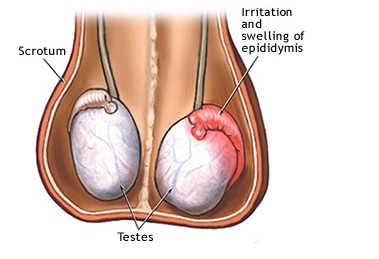
Per the description of the condition, I think your son has a condition called hydrocele. A hydrocele is a fluid collection within the covering of the testis.
This cover, called tunica vaginalis, is made up of two layers, an internal layer and an external layer.
A hydrocele develops when there is a fluid collection between these two layers. The reason for the fluid collection is one of two.
The testis is produced deep within the abdominal cavity close to the kidneys, from where they migrate into the scrotum around 28 weeks of pregnancy.
Sometimes, there may be persistent developmental connections along the pathway of the testis migration, creating a channel which can become filled with fluid, causing a hydrocoele.
It can also be from an imbalance of fluid production versus absorption in these two layers, leaving more fluid in these layers than could be absorbed.
In rare cases, similar fluid collections can develop along a canal called the canal of Nuck in females, even though females do not have testes.
By themselves, hydrocoeles pose little or no risk. However, there is a potential for more than fluid to appear within developmental connections between the abdominal cavity and the scrotum.
Structurally, hydroceles are classified into three principal types - communicating, non-communicating and encysted hydrocele of the cord.
In a communicating (sometimes called congenital) hydrocele, the space between the two coverings of the testis permits flow of fluid from the abdominal cavity into the scrotum.
This allows the fluid to move into the scrotum when the child is upright and drains back into the abdominal cavity when the child lies down.
In a noncommunicating hydrocele, the space between the coverings is present, but no communication with the abdominal cavity occurs.
In an encysted hydrocele of the cord, the closure of the covering of the testis is defective where the abdominal end of the covering closes correctly, but the mid portion remains patent.
The proximal end may be open or closed in this type of hydrocele.
Hydroceles can also occur in adults. These are usually late-onset and may result acutely from local injury, infections and radiotherapy; they may present chronically from gradual fluid accumulation.
Unlike hydroceles in children, those that develop in adulthood can adversely affect fertility.
More than 80 per cent of newborn boys tend to develop hydrocele, but most close spontaneously within 18 months of age.
The incidence of hydrocele is rising with the increasing survival rate of premature infants and with increasing use of the peritoneal cavity for dialysis and renal transplants.
Apart from the scrotal swelling associated with a hydrocoele, other signs characteristic of the condition include:
A bluish discolouration of the skin if the hydrocoele is large. This may be less obvious in a dark-skinned baby. Hydroceles tend to have fluctuation in the size of the swelling (mainly in infants as in your case), and the area of the hydrocoele is clearly defined.
Hydrocoeles are not painful but may cause discomfort if they are large. Aids to diagnosing hydrocoeles include simple tests such as transillumination, where a light source shines brightly through a hydrocele.
In infants, most hydroceles resolve without treatment by the age of one year. If the hydrocoele persists for longer than 18 months, treatment is usually recommended.
In adolescents and adults, treatment may not be required if the hydrocele is small, the testes can be easily examined and the amount of fluid remains constant. Treatment may be recommended, however, if the hydrocoele causes discomfort or embarrassment.
A hydrocoele can be treated by draining the fluid with a needle (aspiration) or by a minor surgical procedure.
Surgical removal of the hydrocoele may be recommended in cases where the hydrocoele is large and painful or has recurred after aspiration. This is a minor surgical procedure performed on a day-stay basis.
The writer is a member of the Paediatric Society of Ghana and the Director of Medical Affairs, Korle Bu Teaching Hospital
