
The Bank of Ghana (BoG) is set to leverage the country’s growing digital transaction data to develop solutions to bridge the annual small and medium enterprises (SMEs) financing gap estimated at $4.8 billion.
The intervention is intended to enable lenders to use SMEs’ transaction histories, cash flows and payment patterns as additional evidence of creditworthiness, particularly for businesses that lack traditional collateral, such as land and buildings.
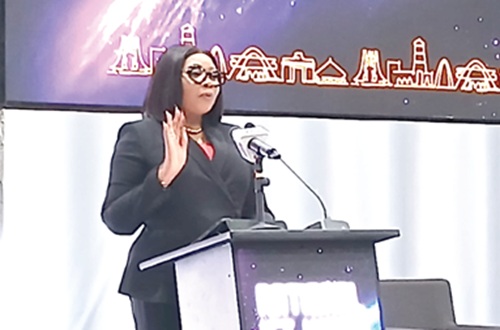
Speaking at a session of the National ICT Week 2026 at the University of Ghana in Accra last Monday, the Second Deputy Governor of BoG, Matilda Asante-Asiedu, said the disconnect between transaction data and access to credit was the country’s single largest unrealised opportunity despite the significant growth of digital payments and financial infrastructure.
“I think the most persistent bottleneck is not technology, not at all.
It is the financing gap facing the various SMEs our digital infrastructure was built to serve, as recent estimates place Ghana’s SME gap at $4.8 billion annually.
“That’s one of the most severe gaps on the continent despite our comparatively sophisticated financial system.
That disconnect between transaction data and credit access, in my view, is the single largest unrealised opportunity in history,” she said.
The event
The National ICT Week 2026 seeks to provide a platform for government, academia, industry players, innovators and young technology professionals to exchange ideas, explore opportunities and strengthen collaboration to accelerate Ghana’s digital development.
Held on the theme: “Innovation at scale: Creating opportunities across Ghana’s digital ecosystem,” the four-day event is expected to promote innovation, digital transformation and the adoption of technology across various sectors of the economy.
The event, which opened last Monday, is scheduled to close tomorrow, with discussions focusing on opportunities and challenges within Ghana’s evolving digital ecosystem.
It is being organised by the National Information Technology Agency (NITA) in collaboration with key technology and corporate partners.
Digital footprints
Mrs Asante-Asiedu said mobile money transaction records could provide lenders with valuable information on the cash flows, payment patterns and income consistency of SME operators and should increasingly be treated as a credit record.
She said the central bank was advancing its Open Banking and Open Finance frameworks to enable businesses to use their transaction histories to access financing from competing providers, while also exploring reforms that would allow contracts, receivables and other forms of future income to support credit decisions beyond traditional collateral such as land and fixed assets.
“An SME owner in Kumasi can receive payments in seconds through instant payment, but they may have to wait three months, maybe more, sometimes up to eight months or a year for a small working capital facility because a credit consideration is not built on the same digital footprint.
“And so, that is just proof that the person has the capacity to receive, and the fact that they operate a business,” she added.
Digital payments
The Deputy Governor said the scale of Ghana’s digital payment ecosystem provided a strong foundation for using transaction data to expand access to finance.
In June 2026 alone, mobile money platforms processed 954 million transactions valued at about GH¢493 billion, with 84.6 million registered accounts, of which 26.4 million were active and supported by more than one million agents.
Mrs Asante-Asiedu said the BoG was also advancing the e-cedi pilot, including work on cross-border settlement and wholesale payments, as part of efforts to deepen digital financial infrastructure.
She said regulation would remain critical, pointing to the regulatory sandbox, the new Digital Credit Service Providers Directive and the Cybersecurity and Information Security Directive, which were intended to support innovation while protecting consumers and strengthening financial-system resilience.
