

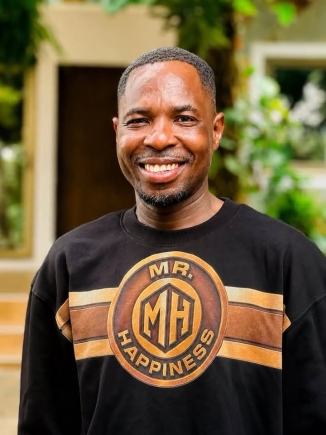
Social media fame can disappear overnight, and no one seems to grasp this better than viral personality Mr Happiness.
He believes the same platforms that turn ordinary people into overnight sensations can just as quickly forget them. For this reason, he refuses to mould his life around likes, views or algorithms.
Mr Happiness, a Ghanaian influencer living in the Netherlands, became an internet sensation after he obtained Dutch citizenship and sparked conversations by saying a Dutch passport is worth more than a Ghanaian PhD.
In a chat with the Graphic Showbiz on Monday, August 10, Mr Happiness, who has close to 200,000 followers on Instagram, explained that his philosophy was not just advice for others, but a guiding principle in his life.
"Honestly, I don't see myself as famous or even as an influencer. I'm simply living my life and sharing with others online how much I cherish and enjoy each day.
“The algorithm may have boosted my videos, but it does not define who I am. That's why I'm building Mr Happiness into a lasting brand through clothing, books, practical ventures and meaningful partnerships. Viral fame is rented land; the algorithm can evict you tomorrow," he said.
Even though he says fame holds little meaning for him, Mr Happiness, real name Kofi Gharbin, who works as a cleaner, says his real goal is to become the best version of himself, someone whose impact outlasts any viral moment.
“In the next 10 years, I want Mr Happiness to be bigger than Kofi's face and bigger than one viral video. If social media disappears tomorrow, the message, businesses and impact must remain. I'm not building my future around an algorithm.
I'm building an ecosystem around a lasting truth: happiness is the essence of life.
“As Jesus said in Luke 15:7, 'There is more joy in heaven over one lost sinner who repents and returns to God than over 99 others who are righteous and haven't strayed away,'" he told the Graphic Showbiz.
He also shared why he is not ashamed to talk about his cleaning job online.
“I worked as a graphic designer in Accra, but when I came to Europe, reality didn't care about my previous title. Bills had to be paid, my children had to be cared for and I had to rebuild my life from scratch.
“Cleaning toilets is legal, honest work. It feeds me, gives me independence, and lets me sleep peacefully. I show my cleaning job because hiding it would mean I'm ashamed of the very work that supports my family.
“I clean toilets, but I'm not a piece of sh*t. Your job is what you do, not who you are. Many people are suffering because they try to protect an image instead of building a life,” he said.
According to him, the shame surrounding cleaning jobs in Ghana comes from people confusing job titles with human value.
“I'm proud of my cleaning job. If you don't clean your home, it becomes dirty. I do it professionally and get paid for it. All workplaces, including hospitals, offices, factories and airports, need to be clean before anyone else can work. Yet, some people look down on the cleaners who make this possible. That's hypocrisy.
“Cleanliness is next to godliness. If you want to work in a clean environment but can't clean it yourself, why disrespect the people who do? Cleaning is honest, essential work; without it, nothing starts.
“To end the stigma, I think we must pay cleaners fairly, protect them and treat them with respect. Parents should stop telling children, "If you don't study, you'll become a cleaner."
“Education should broaden opportunities, not teach disrespect for honest work. A country can't look down on those who keep it clean and then complain it's dirty,” he added.
