
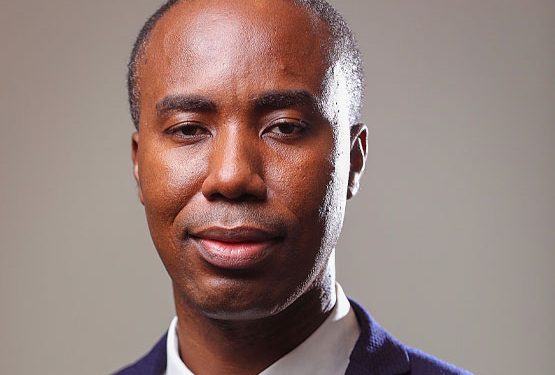
The Accra High Court has adjourned the trial of former Director-General of the National Signals Bureau (NSB), Kwabena Adu-Boahene, and his wife, Angela Adjei-Boateng, to August 25, 2026 until the final determination of an application seeking to restrain the trial court from sitting during the legal vacation.
The injunction application which is before the Supreme Court is expected to be heard on August 20, 2026.
Not guilty
Mr Adu-Boahene and his wife are standing trial in connection with the alleged diversion of GH¢49.1 million meant for the procurement of a cyber-defence system.
Mr Adu-Boahene has pleaded not guilty to charges including defrauding by false pretences, wilfully causing financial loss to the state, using public office for personal gain and obtaining public property by false pretences.
His wife is facing charges of collaboration to use public office for personal gain, conspiracy to launder money and money laundering. She has also pleaded not guilty to the charges filed by the prosecution.
Proceedings
When the case was called today (Aug 17) Peter Osei-Asamoah, who held the brief of substantive defence counsel, Samuel Atta Akyea prayed the court to adjourn the matter.
Mr Osei-Asamoah told the court that Mr Atta Akyea had written to the court on August 14, 2026, explaining that he had other professional commitments which made it impossible for him to attend proceedings during the legal vacation.
He said the request was made to ensure that the accused persons were adequately represented as guaranteed by the 1992 Constitution.
The Deputy Attorney-General (DAG), Dr Justice Srem-Sai, who opposed the request, said the reason given by counsel was the same as that contained in a letter sent to the Chief Justice.
He said counsel had indicated that he had other commitments during the vacation but had not shown why the case could not proceed with other lawyers from his firm representing the accused persons.
Dr Srem-Sai said the court had already ordered that the matter should proceed during the vacation and that counsel could not, from the Bar, determine the pace of proceedings.
He, therefore, urged the court to dismiss the request and allow the trial to continue.
Injunction
Mr Osei-Asamoah subsequently drew the court's attention to the injunction application before the Supreme Court.
He said the application specifically sought to restrain the High Court from proceeding with the trial during the vacation and that the return date was only four days away.
He said the defence was not suggesting that the High Court had already been restrained by an order of the Supreme Court but was asking that proceedings be held in abeyance until the application had been determined.
Dr Srem-Sai disagreed, arguing that the mere filing of an injunction application did not prevent a court from exercising its jurisdiction.
He said an injunction took effect only after the court had made an order.
The Deputy Attorney-General further argued that where a party sought to challenge the validity or propriety of proceedings before a lower court, the appropriate procedure was through judicial review, such as certiorari or prohibition, and not by merely filing an injunction application and expecting the lower court to stop its proceedings.
He, therefore, urged the court to reject the defence's application.
Bench ruling
In a bench ruling, Justice Francis Apangabuno Achibonga rejected the request by the accused persons for an adjournment to the next legal term, saying granting it would mean adjourning the case to October and would defeat the purpose for which he had been issued a warrant to sit as a vacation judge.
The judge also said counsel's absence should not necessarily prevent other lawyers in his firm from representing the accused persons.
On the injunction application, the judge said although the mere filing of an injunction application did not automatically stay proceedings, he was of the view that a lower court should not continue with an action which a superior court had been asked to restrain it from undertaking until the application had been determined.
The judge said once such an application was pending before a Superior Court, the lower court should not continue with the conduct which the application sought to restrain until the application had been determined.
He consequently said he was unable to proceed with the trial while the application for injunction remained pending before the Supreme Court.
The case was adjourned to August 25, 2026, at 9:30 a.m.
