
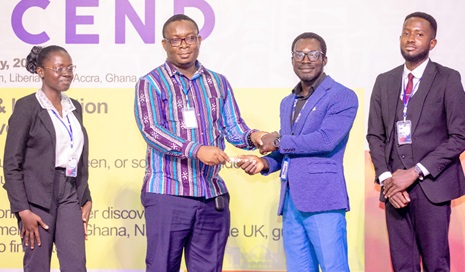
A neonatal health device developed by students at the Kwame Nkrumah University of Science and Technology (KNUST) has won the top prize at the ASCEND Lion's Den, an investor and innovation showcase held at the British Council Auditorium in Accra.
The Automated Neonatal Exchange Transfusion System (ANET), led by Dr Prince Odame and developed by a KNUST student team, was named the standout innovation after pitching to a panel of investors and industry judges — referred to throughout the day's programme as "the Lions" — following months of mentoring, market validation and pitch preparation under the British Council's ASCEND programme.
More than 20 student-led teams from universities across Ghana and Nigeria took part in the finale, presenting ventures spanning climate-smart agriculture, plastic waste recycling, solar-powered health devices and digital platforms for housing, jobs and food delivery, before an audience of investors, university partners, mentors and media.
Winning Innovation
ANET is one of several health-focused innovations to emerge from KNUST teams through the ASCEND programme, alongside a beeswax-powered sustainable neonatal incubator.
The showcase marked the culmination of ASCEND — the African Student Commercialisation and Enterprise Network Development programme — delivered under the British Council's Innovation for African Universities (IAU) Enterprise and Innovation Challenge by ecosystem partners the University of Lincoln and Kumasi Technical University, together with partners across Ghana, Nigeria, South Africa, Kenya and the UK.
The Country Director, British Council Ghana, Nii Doodo Dodoo, in an address read on his behalf by Afia Yeboah Agyeman, Higher Education Project Manager at the British Council, said, "Behind every pitch is a young person with an idea, a solution and a vision.
Your mentorship, partnerships and investment can help transform these ideas into businesses that create jobs, improve lives and contribute to economic growth."
Opening the showcase, an Associate Professor of Sustainable Energy at the University of Lincoln and ASCEND Programme Lead, Dr Aliyu Aliyu, told the assembled teams they had earned their place on stage:
