
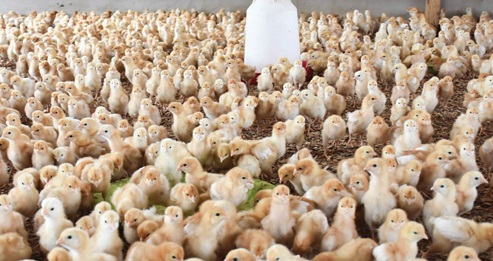
Arresting the decline: Reviving Ghana’s poultry sector
Once a vibrant pillar of national economic development, Ghana’s poultry sector now stands at a crossroads.
In the 1960s and 70s, Ghana proudly met its domestic poultry demand, even exporting processed chicken meat and day-old chicks (DOCs) to neighbouring countries.
The industry supported tens of thousands of livelihoods and contributed to national food security and GDP growth.
Fast forward to 2025, however, and the picture is disheartening.
Today, local production meets less than 10 per cent of Ghana’s poultry consumption, with about 400,000 metric tons of chicken imported annually—mostly from the EU, Brazil, and the USA.
This massive import dependency not only threatens local agribusinesses but also exposes the nation to serious food security vulnerabilities.
The question has been; How did we get here?
Trade liberalisation
The liberalisation of Ghana’s trade regime in the 1980s and 90s opened the floodgates to subsidised poultry imports from industrialised nations.
With no safeguards in place, local producers—already battling high production costs—were edged out of their market.
Rising cost: Feed constitutes about 70 per cent of the cost of poultry production. Local feed prices, driven by the high costs of maize and soya, remain uncompetitive.
Compounding this are poor input financing systems and a lack of forward contracts between farmers and suppliers, making the value chain vulnerable to price shocks.
Weak hatchery: Most hatcheries operate far below capacity. Ghana lacks a national breeder programme to produce fertilised eggs, relying heavily on expensive imports.
Local DOCs are often of inconsistent quality, leading to poor flock performance and higher mortality rates.
Fragmented value chain: From inadequate abattoirs and cold storage to inefficient logistics, the poultry value chain in Ghana remains underdeveloped.
The absence of cohesive linkages between producers, processors, marketers, and regulators reduces productivity and limits competitiveness.
Policy gaps: Government interventions, though well-intentioned, are often fragmented, inconsistent, and politically motivated.
There is no long-term, coordinated national strategy for poultry development. Policies are reactive rather than strategic.
Fragmented farmer associations: One of the most crippling yet under-acknowledged challenges facing Ghana’s poultry sector is the fragmented nature of farmer associations and the near-absence of coordinated value-chain collaboration.
This disunity weakens advocacy, limits access to affordable financing, and deprives the sector of the bargaining power needed to influence national policy.
Without strong, united cooperatives or apex bodies, poultry farmers and farmers in general struggle to secure inputs, access training, enforce quality standards, or pool resources for shared infrastructure such as hatcheries and processing plants.
Even more damaging is the unhealthy rivalry, finger-pointing, and isolated efforts that undermine collective progress.
Rather than pulling together for sector-wide transformation, actors often prioritise short-term individual gains over long-term collective prosperity.
This attitude is self-defeating.
Reviving the poultry industry will require more than just money—it demands unity, vision, and the willingness of industry players to sacrifice short-term personal gains for long-term sectoral growth.
Strong associations can lead the charge toward joint investment, self-regulation, and robust policy influence.
Ghana’s poultry sector can rise again, but only if its farmers learn to act not just as competitors—but as collaborators in a shared future.
Dumping of imports
Exporters from the EU, USA and Brazil benefit from agricultural subsidies and offload surplus by-products, chicken parts—mainly back, thigh, wings, etc—into Ghana at prices well below production cost.
This constitutes economic dumping and threatens the survival of local producers.
Can you believe Ghana has started importing frozen Chicken from China?
A New Vision for Poultry in Ghana
1) Creating competitive local ecosystem
• Feed Production and Input Financing:
Invest in local feed production, expand soya and maize cultivation, and promote input financing schemes tailored for smallholder producers.
• Establish a National Breeding Programme:
Develop a viable national breeding farm to supply fertilised eggs to hatcheries, reducing dependence on expensive imports.
• Strengthen Hatcheries and Brooding Systems:
Certify and upgrade hatcheries: train farmers in biosecurity, brooding, and flock management to reduce mortality and improve productivity.
• Processing and Cold Chain Infrastructure:
Support the establishment of certified abattoirs and cold storage facilities through PPPs. Improve packaging, branding, and certification to meet consumer expectations.
• Skills Development and Innovation:
Build national training programmes in poultry management, veterinary services, and agribusiness. Integrate ICT tools for farm management, disease surveillance, and market linkage.
2) Adopting strategic managed trade policy
• Import controls:
Implement phased restrictions on imports while supporting local capacity development. Introduce tariffs where necessary to discourage dumping.
• Enforce quality standards:
Strengthen food safety, traceability, and labelling laws for imported poultry.
• Public procurement for local chicken:
Mandate public institutions—schools, prisons, hospitals, and military— to procure only locally produced poultry products.
• Establish poultry sector coordination council:
Bring together stakeholders from government, industry, academia, and donor agencies to develop a long-term poultry sector master plan.
3) Financing poultry transformation
• Blended finance mechanisms:
Utilise partial risk guarantees, concessional loans, and matching grants to crowd in private investment into poultry production and processing.
• De-risking investment:
Partner with banks, rural financial institutions, and development finance institutions (DFIs) to offer tailored financial products for poultry value-chain actors.
4) Branding, marketing, and consumer awareness
• “Eat Ghana Chicken” campaign:
Launch a nationwide branding and awareness campaign that promotes locally raised chicken based on taste, nutrition, and job creation.
• Modern market access:
Support producer cooperatives and SMEs to access modern retail channels and institutional markets.
5) Empowering women and youth
• Entrepreneurship Support:
Design specific support programmes for youth and women in poultry agribusiness—covering feed production, hatcheries, vet services, processing, and distribution.
• Access to Land and Finance:
Work with local authorities and financial institutions to ensure equitable access to land, capital, and inputs for youth and women entrepreneurs.
Call to action
Ghana’s poultry sector does not need more short-term political promises or piecemeal interventions. It needs bold, consistent, and coordinated action.
With more than 76 per cent of Ghanaians expressing a preference for local chicken, the market opportunity is evident.
It is time for the government, private sector, development partners, and financial institutions to rally behind a national poultry development agenda.
By reducing import dependency, boosting local production, and creating sustainable jobs, Ghana can reclaim its rightful place as a poultry powerhouse in the sub-region.
The decline of Ghana’s poultry sector is not irreversible.
Through bold leadership, strategic investments, and fair-trade policy, we can transform the sector into a vibrant engine of economic growth, youth employment and food sovereignty.
Let us feed Ghana with Ghanaian chicken—nutritious, proudly local, and economically empowering.
The writer’s email:
The writer is an Agribusiness enthusiast
