
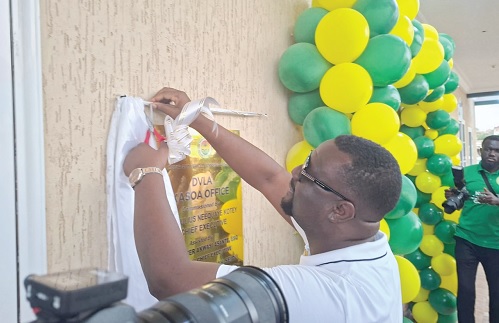
DVLA charges testing stations to stick to vehicle exam regime - Inaugurates 3 centres
The Chief Executive Officer (CEO) of the Driver and Vehicle Licensing Authority (DVLA), Julius Neequaye Kotey, has asked operators of private vehicle testing stations (PVTS) in the country to strictly adhere to the required testing regimes to ensure that only roadworthy vehicles use the road.
He stressed that any PVTS that compromised its testing protocols, as mandated by law, would be immediately closed down.
“We have already closed down six PVTS for compromising the standards for testing the roadworthiness of vehicles, and we will continue to close down those who continue to flout rules and regulations. We do not want to have accidents staring us in the face on our roads because of vehicles that are not roadworthy,” he stressed.
Mr Kotey made the call at the inauguration of the DVLA Kasoa Ultra Centre in the Awutu Senya East Municipality in the Central Region last Monday.
Similar DVLA ultra centres were also opened at Anyaa and Buduburam on the same day.
The DVLA Ultra Centre model is a public-private partnership initiative where private sector actors provide infrastructure, mostly PVTS, while the authority deploys staff, equipment and technology to deliver driver and vehicle services to the community.
Commitment
Mr Kotey said the expansion drive by the DVLA formed part of efforts to increase access to services and improve efficiency.
He said the adoption of the ultra model was meant to leverage public-private partnerships to meet growing demand for vehicle and driver licensing services.
Again, he said the expansion drive was part of the DVLA’s broader strategy to eliminate the activities of “goro boys” in the driver and vehicle licensing system.
"These ultra-centre facilities represent more than infrastructure. It represents access, efficiency and a deliberate effort to bring DVLA services closer to the people we serve," he said.
Mr Kotey said the DVLA remained resolute in its plans to roll out Radio Frequency Identification (RFID)-enabled number plates to enhance vehicle traceability and enforcement across the country.
He said that the initiative would give real meaning to the cocktail of reforms the authority was implementing to strengthen the integrity of the country’s vehicle registration system.
He explained that the number plates would be integrated into a central database to support real-time tracking and enforcement, particularly in dealing with unregistered and cross-border vehicles.
Timely intervention
The Member of Parliament for Awutu Senya East, Phillis Naa Koryoo Okunor, said the inauguration of the Kasoa DVLA Ultra Centre was a sigh of relief to the teeming drivers and people of the area who had to travel long distances for DVLA services.
“The narrative of travelling long distances for DVLA services is now over, and the people of Kasoa can heave a sigh of relief. We can now save precious time to engage in other productive ventures,” she said.
Mrs Okunor urged drivers within the area to adhere strictly to road traffic regulations and also ensure that their vehicles were roadworthy.
She stressed the need for the DVLA staff to maintain a culture of professionalism to deliver world-class services.
She added that the success story showed how the private and public sectors could collaborate to make development possible.
