
Gender inequality remains persistent barrier to social justice — Deputy Commissioner, CHRAJ
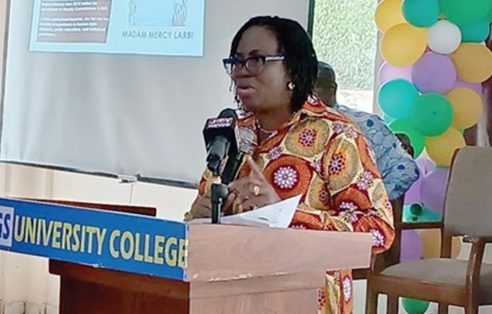
Despite decades of progress in advancing human rights globally, gender inequality remains one of the most persistent barriers to achieving social justice, a Deputy Commissioner of the Commission on Human Rights and Administrative Justice (CHRAJ), Mercy Larbi, has said.
She explained that discrimination based on gender continued to limit opportunities, reinforcing harmful stereotypes and perpetuating violence against individuals, especially women and girls’ ability to fully enjoy their fundamental rights.
She mentioned other barriers to include social and cultural norms that restricted women's autonomy and decision-making power; violence and discrimination, including domestic violence, sexual harassment, lack of representation and voice in decision-making processes.
Ms Larbi said this last Saturday at a colloquium to mark International Women’s Day that was organised by the Kings University College in Accra.
She pointed out that many of the country’s cultural norms and practices were in direct opposition to human rights principles and laws, adding that women as persons or humans were entitled to human rights as enshrined in international instruments and national laws.
“By being human, women are entitled to basic rights such as right to life, right to personal liberty, right to reproduction, right to education, work, health, property, equality and freedom from discrimination,” she said.
Violations
The Deputy Commissioner said discrimination, inequality and gender-based violence against women and girls were among the most widespread and persistent violations of women’s rights globally, with approximately one in three women experiencing it at some point in their lives, adding that securing justice for violations of the rights of women and girls was fundamental to building a society rooted in equality, dignity and safety.
“Justice requires that survivors can report abuse without fear, gain access to legal protection and be treated fairly within the justice system.
Governments and institutions have the responsibility of enacting strong laws and policies that safeguard women and girls from violence and discrimination.
A truly effective justice system must investigate cases swiftly, hold perpetrators accountable and ensure appropriate penalties are applied,” she said.
Beyond legal measures, Ms Larbi said justice also meant providing survivors with essential support services such as quality medical care, counselling, legal aid and protection from further harm, explaining that with proper support, survivors were better able to heal, rebuild their lives and regain confidence.
