
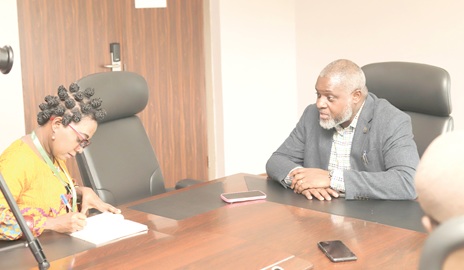
Meeting on finding antibiotics for neonatal sepsis underway in Accra
Some health researchers across the world are meeting in Accra for the progress of a project aimed at identifying the best antibiotics for children affected by neonatal sepsis, a blood-borne infection that affects babies less than 28 days old.
The focus is to identify which antibiotics would work best and under which conditions in order to inform choices of the treatment options to assure the best outcomes.
The project is looking at having more tailored policy regarding how neonatal sepsis is treated in babies so as to reduce the deaths and illnesses associated with them.
Neonatal sepsis is characterised among others, by fevers, vomiting, diarrhea and jaundice in affected babies.
It kills a lot of children every year in Africa, with estimates ranging between 400,000 to almost two million babies dying every year in Africa from the condition.
It accounts for almost 30 per cent of all deaths in babies under 28 days old across Africa.
The infections can be treated only with antibiotics, however, because there is antimicrobial resistance, there is the need to understand which type actually works, for which purpose the Severe Neonatal Infection Adaptive Platform Trials in Africa (SNIP) Africa project was started.
SNIP-AFRICA is a five-year project, funded by the European Union under Global Health EDCTP3. With SNIP-AFRICA, Penta brings together 12 partner institutions across Africa and Europe.
The project, which is being implemented in Africa in Ghana, Kenya, South Africa, Tanzania and Uganda brings together research institutions and hospitals to generate evidence that can strengthen newborn care across Africa.
Penta is an international independent scientific network dedicated to advancing maternal and child health research.
Speaking to journalists at the opening of a meeting of the consortium in Accra today, March 11, the Leader, Global Health and Infectious Diseases Research Group of the Kumasi Centre for Collaborative Research in Tropical Medicine, Professor John Humphrey Amuasi, described neonatal sepsis as very difficult to treat in babies because their immune systems were less developed.
“You need to get the right kind of antibiotics, those that would work against those pathogens, otherwise it's as good as shooting blanks. And so we need to understand what works for what kind of infection. These infections are spread in different ways. Some happen during childbirth, especially if the childbirth is prolonged or if the delivery is not done properly.
Then you have infections being transmitted from around where the delivery is taking place into the blood of the child. Babies have tiny veins that are difficult to find to give them medicines and this is very challenging,” he explained.
Ghana trials
He said the project started last year, however, for Ghana, they would start next week with the recruitment of babies for the trial adding that, the recruitment for trials would continue for the next two or three years depending on how things would go.
Prof Amuasi said after the project implementation, the information would be given to organisations such as the World Health Organisation and Africa CDC, who were responsible for developing and proposing a more regional or global policy.
He advised nursing mothers to desist from applying concoctions on the umbilical cords of their babies since doing that amounted to putting micro-organisms directly into the system of the child.
He further urged them to send their babies to health facilities immediately they noticed that they were sick for treatment to start immediately.
“Otherwise, you will end up with worsening infection and once the infection gets severe beyond a certain point, it becomes more difficult to treat for which reason you will need more antibiotics, more specialized care, and chances of survival becomes even lower,” he said.
Touching on the impact the project would have in Africa, the Project Coordinator of SNIP Africa, Professor Julie Anna Bielicki, said she was hopeful the information to be gathered would equip clinicians in Africa with information that would allow them to be confident when managing babies with neonatal sepsis.
