New energy efficiency initiative to save nation GH¢2.57 bn
The Energy Commission has launched a Public Facility Sustainable Energy Action Plan (PF-SEAP) initiative to reduce electricity consumption and operational costs across public institutions nationwide.
It aims to promote the adoption of renewable energy and efficiency measures in public buildings, water pumping stations and wastewater treatment facilities.
The $182 million programme is expected to generate over GH¢2.57 billion in retained earnings from electricity savings, while supporting the country’s green transition agenda to reduce carbon emissions and improve the financial sustainability of the energy sector.
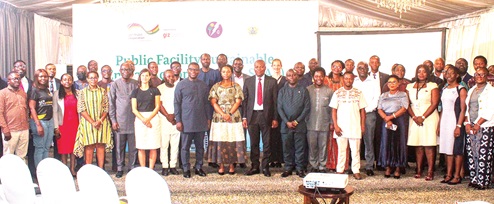
In line with that, an 18-member Institutional Technical Committee (ITC) was inaugurated to provide technical guidance, coordination and oversight for the effective implementation of the action plan across public institutions.
The Deputy Minister of Energy and Green Transition, Richard Gyan-Mensah, announced this in Accra.
The deputy minister said public institutions remained among the largest consumers of electricity in the country, making efficiency measures critical to sustaining the sector.
Significance
Mr Gyan-Mensah explained that the government introduced stricter revenue collection mechanisms, including the migration of public institutions onto prepaid metering systems to improve payment discipline.
He said energy efficiency and the adoption of renewable energy were essential to supporting the nation’s industrialisation drive and the government’s 24-hour economy policy.
“Together, we can transform the public sector into a model of sustainable energetic management and accelerate transition towards a secure, green, industrialised and prosperous future,” Mr Gyan-Mensah said.
Transformation
The acting Executive Secretary of the Energy Commission, Adwoa Serwaa Bondzie, described the initiative as transformational.
She said inefficient energy consumption in public institutions diverted resources that could otherwise have supported healthcare, education and infrastructure development.
Ms Bondzie said the initiative aligned with the Energy Commission’s mandate to promote efficient energy utilisation and complemented ongoing interventions such as a net metering programme and an accelerator solar action plan.
“As the sector regulator, the commission remains committed to driving policies and programmes that strengthen energy security, improve efficiency, enhance sustainability and support Ghana's broader economic transformation agenda,” she said.
Ms Bondzie urged public institutions to lead by example in sustainability by institutionalising energy efficiency and the adoption of renewable energy across ministries, departments, agencies, schools and hospitals.
Savings
The Head of Cooperation at the German Embassy, Johanna Klotz, also said the action plan had the potential to save substantial public funds at a time of limited fiscal space.
She explained that every cedi invested under the programme could return about GH¢2.90 over the project’s lifetime, while overall savings could reach up to GH¢2.5 billion.
Ms Klotz reaffirmed Germany’s commitment to supporting Ghana through concessional financing and technical cooperation to ensure the successful implementation of the programme.