
Public, journalists urged to support fight against human trafficking
Speakers at a three-day workshop on human trafficking have urged the public, institutions, religious organisations and traditional leaders to be vigilant and report suspected trafficking cases to the relevant authorities to support the fight against human trafficking.
They also called on journalists to amplify the voices of survivors, sustain public education and advocacy efforts to address trafficking and other forms of exploitation in the country.
Human trafficking
The speakers said human trafficking was characterised by three main elements, which are the act, the means and the purpose, and urged the public to report situations where such indicators were identified.
They explained that the act involved the illegal recruitment, transportation or harbouring of persons, while the means included the use of threats, coercion, abduction, deception or abuse of power.
The purpose they stated was exploitation, which may take the form of sexual exploitation, servitude or forced labour.
However, they clarified that in cases involving children, the presence of any one of the elements constituted child trafficking, unlike adult trafficking, where all three elements must be established.
Workshop
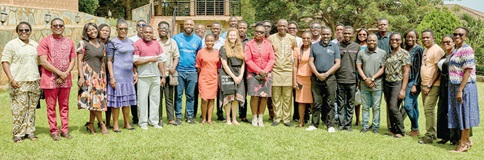
The workshop was organised by the International Justice Mission (IJM) in collaboration with the Ghana Journalists Association (GJA), which brought together more than 30 journalists from various media organisations.
It formed part of broader efforts by IJM and its partners to strengthen media capacity in reporting on human trafficking and to deepen public understanding of the devastating impact of trafficking on victims and society.
Police Service
The Head of Anti-Human Trafficking Unit of the Ghana Police Service, Superintendent William Ayariga, speaking on the Human Trafficking Act, 2005, Act 694, said Section 6 of the Act required any person with information on trafficking to report to the police, while Section 10 mandated police officers to respond to requests for assistance and offer protection to victims, even where the complainant was not the victim.
He said officers who failed to respond to trafficking complaints could face disciplinary action under police regulations, and added that the Human Trafficking Act also prescribed a minimum jail term of five years and a maximum of 25 years for offenders.
Giving some statistics on efforts made by the service, he said the unit recorded 95 trafficking cases and rescued 250 victims in 2024, while cases increased to 127 in 2025 with 1,202 victims rescued.
He said eight traffickers were convicted in 2024 and another eight in 2025.
National priority
The National Director of Advocacy and Partnerships at IJM, Worlanyi Kojo Foster, called on journalists to help make human trafficking a national priority by using their platforms to advocate for more resources for anti-trafficking institutions.
He further called on journalists to advocate trauma-informed court processes for survivors, stressing that the fight against human trafficking required collective responsibility and sustained public awareness to dismantle criminal networks exploiting vulnerable persons, particularly women and children.
Child labour
The Social Services Manager at IJM, Vida Mamley-Selorm Hodinyah, said child labour remained one of the most pervasive forms of exploitation linked to trafficking.
Referencing Section 91 of the Constitution, which defines hazardous work as any activity that poses a threat to a person’s health, safety or morals, she said children must not engage in activities such as mining, carrying heavy loads, handling chemicals, operating dangerous machinery, or working in bars, hotels and entertainment centres where they could be exposed to immoral behaviour.
She advised journalists to ensure anonymity, practice consent-based interviews and use trauma-informed storytelling methods that respected the dignity of survivors.
The Government Relations Specialist at IJM Ghana, Benjamin Brantuo, said human trafficking deprived children of their rights, education, safety and overall well-being, thereby threatening their future development.
