
Stakeholders push for quality in rice value chain
Stakeholders working in the rice value chain have called for reforms in the sector to boost domestic consumption and exports.
They explained that revamping the seed sector, fertiliser subsidisation, mechanisation facilities, packaging and marketing could help revamp the sector and explore the full potential of rice for economic growth.
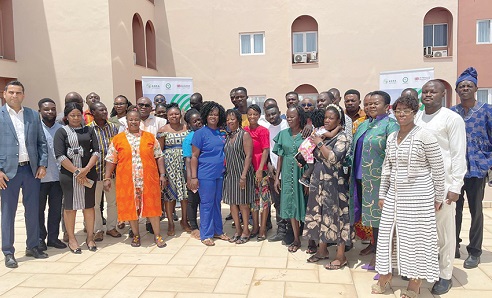
The stakeholders shared their views at a rice dialogue on the theme: "Promoting Ghana rice consumption for national food and economic growth” in Accra last Monday.
It formed part of a broader campaign to promote the consumption of rice produced in Ghana.
It was jointly organised by Alliance for a Green Revolution in Africa (AGRA) and Competitive African Rice Platform (CARP).
Investment
A Senior Programmes Officer at AGRA, Sunil Dahiya, identified production costs, reliance on imported machinery and labour-intensive practices as some of the structural barriers limiting local farmers from pricing their rice at levels competitive with imported alternatives.
He said without sustained investment, Ghanaian rice would continue to lose ground to cheaper imports despite strong output growth.
Aside from that, he underscored the need to ensure that quality and consistency met consumer expectations, saying: "The future of Ghana rice will not only depend on what is produced but what is demanded and consumed”.
"Quality and consistency are critical.
We cannot deliver quality today and fail tomorrow,” he said.
Mr Dahiya said investments in modern processing equipment must also be a priority, alongside the need to scale up production to achieve economies of scale that could bring down unit costs.
Costs
Sewu Kwadzo Abortta, an Associate at Farmer Globale and a rice farmer, said with the right policy and financing support, local farmers could supply a 50-kilogramme bag of rice at between GH¢300 and GH¢350, compared to imported rice currently selling from GH¢450 to GH¢500 for the same quantity.
“Supporting farmers to improve their production strategies and yields will help local rice compete effectively with foreign rice,” he said.
He called for subsidies on critical agricultural inputs, including fertiliser, seeds and agrochemicals, and urged the government to exempt imported agricultural machinery from taxation to reduce operational costs for farmers.
