Govt to prioritise local cocoa processing in sweeping reforms — Ato Forson
The government has signalled a decisive shift in Ghana’s cocoa policy, with sweeping reforms set to prioritise local processing, value addition and job creation, the Finance Minister, Dr Cassiel Ato Forson, has announced.
Dr Forson said the forthcoming cocoa sector reforms would place strong emphasis on assessing and strengthening Ghana’s capacity to process cocoa domestically in order to add value, create employment and generate wealth for citizens.
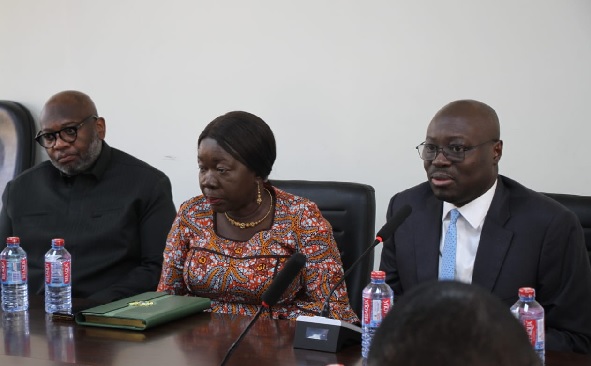
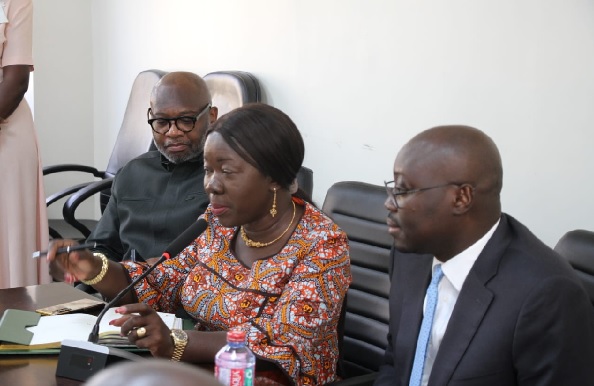
He made the remarks during a meeting in Accra on Thursday, February 12, 2026, with the Minister of Trade, Agribusiness and Industry, Elizabeth Ofosu-Adjare, and key stakeholders in the cocoa value chain, ahead of a scheduled press briefing at the Ministry of Finance later in the day.
The engagement formed part of broader consultations preceding the announcement of a comprehensive reform programme for the sector.
Among those present were the Deputy Minister of Trade, Agribusiness and Industry, Sampson Ahi; the Chief Executive Officer of the Ghana Cocoa Board, Randy Abbey; and the Managing Director of Niche Cocoa, Edmond Poku.
Dr Forson explained that the morning session was the first in a series of stakeholder engagements planned for the day, beginning with cocoa processing companies. He said the objective was to assess their capacity to process larger volumes of cocoa locally and their readiness to scale up operations.
“So this is the first of many meetings that we'll have today. And we have successfully engaged processes, cocoa processes, and just to ascertain from them the ability to be able to process cocoa locally to add value and create jobs and where possible create wealth also for our people. And so you can see the heavyweights with us today, their ability to be able to process significant amount of cocoa.”
He noted that increasing domestic processing was a critical pillar of the broader reform agenda, aimed at reducing the country’s reliance on exporting raw beans while stimulating industrial growth and employment.
Dr Forson acknowledged the historic importance of cocoa to Ghana’s economy, describing it as a long-standing mainstay that has sustained livelihoods and generated national revenue for decades. However, he conceded that the sector is facing challenges that require urgent and strategic reforms.
He assured stakeholders that full details of the reform package would be unveiled later in the day and expressed confidence that the measures would revitalise the industry and position it for sustainable growth.
The Minister urged stakeholders and the wider public to embrace the impending reforms, which he said were designed to secure the long-term future of Ghana’s cocoa industry.
For her part, the Trade, Agribusiness and Industry Minister, Elizabeth Ofosu-Adjare, underscored the central role of value addition in strengthening the national economy.
Hosting the Finance Minister, industry leaders and the COCOBOD Chief Executive, she stressed that processing cocoa locally remained the most effective route to job creation, particularly for the youth, and to building long-term economic resilience.
“And so today, the Minister of Finance is here at the Ministry of Agriculture, Business and Industry, so that we engage industry, know their challenges, and make sure that even before the season ends, they are able to upscale, they are able to process more, and the next season will even be better. We thank you for attending onto us, even on short notice, and we know that at the end of the day, issues of industry will be solved, and the agribusiness sub-sector will have delivered their mandate very well. I thank you very much for coming,” she said.
She explained that the engagement was aimed at identifying bottlenecks limiting local processing and implementing swift solutions to enable processors to expand production before the end of the current season and improve performance in the next.
The Chief Executive Officer of COCOBOD, Randy Abbey, reinforced the government’s intention to redirect the cocoa industry away from heavy dependence on raw bean exports towards value addition.
Mr Abbey described processors as a vital component of the cocoa value chain and said it was essential for government to demonstrate its commitment through direct dialogue and collaboration.
“But just for everybody to know that we intend changing the direction as far as the cocoa industry is concerned. We have over-relied on the export of the raw beans, and so we need to change course if we are really serious about value addition, creation of jobs, getting the farmer better value for their work, and also creating wealth as far as entrepreneurship and business is concerned. Thank you very much,” he said.
He added that a deliberate change in strategy was necessary if Ghana was to maximise the economic benefits of its cocoa resources and ensure better returns for farmers while fostering entrepreneurship and industrial expansion.