


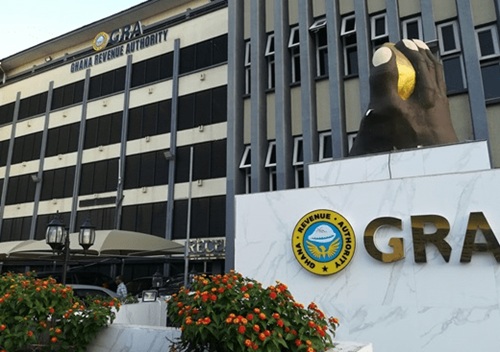
The Ghana Revenue Authority (GRA) has issued a rebuttal to spare parts traders, asserting that their fears over a new tax regime are based on a critical misunderstanding and that, in fact, the changes will reduce prices for consumers and lower costs for businesses.
The response, contained in a press release dated February 10, 2026, comes after public statements by the Abossey Okai Spare Parts Traders Association warning that the shift to a new Value Added Tax system under Act 1151 would lead to higher prices, market distortion, and an unfair burden.
"The GRA takes the concerns of all taxpayers seriously and remains open to constructive engagement. However, the claims made in the Association’s statement reflect a fundamental misunderstanding of how the new VAT system operates," the authority stated.
At the heart of the dispute is the mechanics of input VAT—the tax paid on business purchases.
The GRA explains that under the abolished Flat Rate Scheme, traders paid a non-recoverable 21.9 per cent input VAT, which became a permanent part of their costs. The new standard VAT regime, while charging a 20 per cent output tax on sales, allows businesses to fully deduct the 20% input VAT they paid, claiming it back from the tax authority.
To illustrate, the GRA provided a detailed comparison. For an item with a base cost of GH¢500 and a 20 per cent profit margin, the final price to the customer under the old system was GH¢760.66. Under the new system, after deducting input VAT, the final price calculates to GH¢720.
"When input VAT deductibility is properly accounted for, the customer’s final price under the new regime (GH¢720) is GH¢40.66 lower than under the old regime (GH¢760.66)," the release asserted. It blamed the perception of higher prices on traders incorrectly applying the new 20 per cent output VAT on top of a cost base that still includes the old, non-deductible input tax.
The GRA also addressed concerns that the increased VAT registration threshold—raised to GH¢750,000—would create an uneven playing field, arguing it is "a deliberate relief measure" for smaller traders. It contended that for a given item, the final consumer price should be identical whether sold by a registered or non-registered trader, as the registered trader's ability to claim back input VAT offsets the output tax they charge.
Listing the benefits of the new regime, the GRA highlighted a lower overall tax rate, the abolition of the COVID-19 Health Recovery Levy, and the "elimination of cascading taxes."
It concluded that the reform leads to a "reduced cost of doing business," estimating that on a GH¢500 purchase, a trader's cost base drops by nearly 18%.