
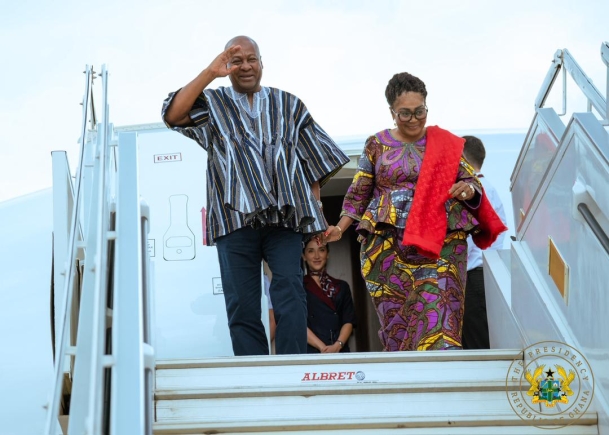
A few days ago, President John Dramani Mahama, together with the First Lady of Ghana, wrapped up what many would comfortably call a historic state visit to Zambia.
The truth is, Ghana and Zambia are not strangers. Long before our current diplomatic standing, the two countries shared the harder moments of history. They stood together during the independence struggle, and later stood firmly against apartheid during challenging times. For years, Zambia had expressed the desire to renew that closeness.
Zambian President Hakainde Hichilema’s invitation therefore was really an old friendship being given a new chapter. And Zambia welcomed the delegation exactly that way — warmly and sincerely. The kind of welcome you give when friends you have not seen in years finally arrive at your doorstep.
Zambia prepared for the occasion. From the resplendent guard of honour to the carefully choreographed ceremonies, every detail carried a message: "you are welcome here, not merely as a visitor, but as family". It quickly became clear that both sides were eager to move beyond handshakes and photographs to real cooperation.
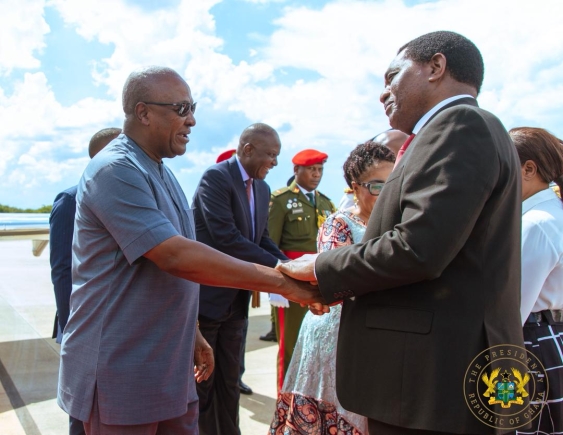
The conversations were practical and forward-looking.
What was discussed? Cooperation!
What was agreed? Real commitment and facilitation.
What was the goal? Shared prosperity for both countries and their people.
The two countries agreed on visa-free travel arrangements and an air services agreement designed to make movement between Accra and Lusaka easier. In total, ten bilateral agreements were signed as working tools meant to open doors for trade, tourism, business opportunities and investments.
There was also a moment of deep reflection. A wreath-laying ceremony in honour of Zambia’s founding fathers and fallen heroes reminded both delegations that the diplomatic relations of both countries was borne out of the sacrifices made by earlier generations.
The high-level meetings that followed covered agriculture, digital communication, education, gender cooperation, tourism and social services. But both leaders openly admitted something important: trade between Ghana and Zambia is still far lower than it should be. If two friendly nations with complementary economies are not trading much, then something is missing. And if not now, when should that needed change to fix things begin?
President Mahama later addressed the Zambia National Assembly, where the visit took on a deeper meaning. He thanked President Hichilema for the warm hospitality extended to the Ghanaian delegation and invoked the shared legacy of Zambia’s Kenneth Kaunda and Ghana’s Osagyefo Dr. Kwame Nkrumah — leaders who believed Africa’s independence would only truly matter when Africans worked together economically.
He suggested that the present generation must not only celebrate the founders but complete their unfinished project. He also noted that Ghana and Zambia could serve as a practical example of African cooperation. The African Continental Free Trade Area (AfCFTA), he emphasized, will succeed only if countries actually trade with one another. Continental integration, after all, begins with strong bilateral partnerships.
One of the most important engagements was the Ghana-Zambia Business Forum hosted by the Zambia Development Agency. Discussions focused on investment, financial inclusion, digital innovation and especially fintech. Ghana’s experience attracted strong interest. The country’s expanding digital financial ecosystem now contributes roughly 4% of GDP and has created thousands of jobs, showing that Africa’s next economic breakthrough may come as much from innovation as from traditional industry.
But interestingly, the visit produced a highlight no one planned — and it did not happen inside the meeting rooms.
When President Mahama arrived wearing a traditional northern Ghanaian smock, the conversation quickly moved from policy to culture. The outfit sparked debate across the media and among the public. Some expressed curiosity. Many admired it. Everyone talked about it. Soon people understood the message.
The smock was not about fashion. It was about identity — a respectful gesture of an African leader embracing African heritage while visiting another African nation.
The discussion spread beyond Zambia. In Ghana, demand for smocks reportedly surged and social media even launched an exciting “smock challenge.” In a telling moment, President Hichilema himself reportedly expressed interest in acquiring some smocks and actually granted tax exemptions on the now famous smock.
In the end, the visit will be remembered not only for agreements signed but for connections made. Long after the documents are filed away, people will remember a friendship renewed — and a simple woven garment that will remain a strong testament of this friendship.
The Writer is a Presidential Adviser and Special Aide to President John Dramani Mahama
