
Between June 1983 and January 1986, my parents lived in Kitwe, in Zambia’s Copperbelt, along with three of my younger brothers. 58 Freedom Avenue was their home. Dad worked as an Inspector of Mines, while Mum worked as a nurse.
They relocated to Masvingo in neighbouring Zimbabwe for a year before returning home. On their return, they spoke fondly of the country that had been their home for three years and of the friendly natives. My three brothers had picked up the Zambian accent, which I found amusing. They lost it with time.
They spoke of ‘nshima’, a Zambian staple made from maize meal. They spoke of weekend trips to Victoria Falls and of a large expatriate community, including many Ghanaian professionals who had made Zambia their home.
They noted with pride the Kwame Nkrumah University in Kabwe, with its famous, prominent statue of Osagyefo.
In Zimbabwe, the Ghanaian expatriate community was well-respected because of the country’s much-loved First Lady at the time, the late Mrs Sally Mugabe, a Ghanaian from Sekondi.
A blouse? Huh?
At the risk of boring you, I undertook this detour into family history to underline my soft spot for Zambia, not just because it was once home to my parents and siblings for three whole years, but also because of the towering panafricanist credentials of its founding president, Kenneth Kaunda, along with his trademark white handkerchief and iconic smile.
His inspirational 1962 political autobiography, ‘Zambia Shall be Free’, was one of my favourite books in the African Writers Series.
However, like many Ghanaians, I did bristle when some Zambians mocked President Mahama’s fugu that he donned on arrival in Lusaka for a state visit last week.
They called it a blouse. Some even said it looked like a parachute. What?
That stung. Hard.
Soon, the ‘war drums’ on social media (Ghana chapter) began to roll, for indeed this mockery of a cardinal item in our cultural heritage amounted to a declaration of war.
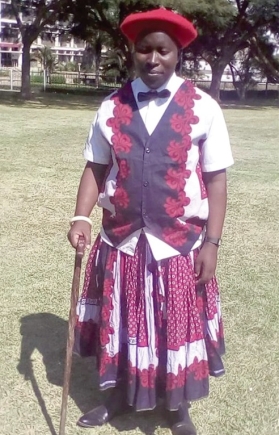
Thanks to Google, it was easy to rustle up Zambian traditional wear for comparison.
The Siziba came up. Ah!!
Then the clapback followed.
The ‘beef’ was on – full scale, and it was as delicious as it was vicious.
This could not be taken lying down.
For once, partisan politics took a back seat and we were united in our annoyance.
Suddenly, social media platforms erupted, with Ghanaians digging up and posting ancient images of themselves in fugu, rocking it in style, as if to rub it in the face of Zambia.
I managed to salvage one from my archives.
Almost spontaneously, Friday was declared Fugu Friday, and it was thus celebrated, with no fiat from officialdom.
As a tool of pushback against mockery, the fugu had been spun around suddenly and furiously to become an unwavering, powerful symbol of Ghanaian patriotism.
More ancient beef
Before anyone accuses Ghanaians of being overly sensitive to a spot of ‘trolling’, perhaps it must be emphasised that we are not averse to it at all.
On the trolling score, we have our traditional sparring partners – Nigeria, with which we have a longstanding love-hate relationship.
We have been trolling and beefing since the beginning of time – over literally everything – football, music, power supply, accent, politics, you name it.
Of course, the fiercest is the unending ‘Jollof War’, which continues to rage and will probably rage until the Second Coming of Christ, with Ghana emerging victorious with the tastier jollof, naturally.
Nobody quite expected any beef with Zambia because we are not classmates on that score.
Already, I have seen posts by some Zambians literally waving the white flag of surrender, claiming that those who were trolling did not speak for all Zambians.
By some interesting coincidence, earlier on, Nigerians were embroiled in a social media beef with Namibians.
The jabs shot back and forth with the fury and speed of poisoned arrows from the quiver of an ancient warrior.
That war is far from over, and its intensity makes the Ghana-Zambia version look like a cosy pillow fight between a loving husband and wife.
I am confident that pretty soon, Ghana and Nigeria will resume our usual West African hostilities over everything and nothing, once we are each done with the little distraction of the Southern African beef.
Changing perspectives
Amidst all the banter and the light jokes and the barbs of the smoky, delicious fugu beef, important issues emerge.
First, this is not an issue on the scale of a diplomatic incident that can threaten the relations between the two countries, but in the wider sense, it exposes the yawning cultural knowledge gap between African nations.
Following colonialism and the balkanisation of the African continent, a huge chasm remains in the post-colonial era, particularly in intra-continental trade and travel, so that many Africans know more about European foods, clothing, music and dance than they know about other countries on the continent.
Even with modern telecommunications and technology, the willingness and inclination to learn about each other is woefully lacking, and often, perceptions about cultural practices of fellow African states are formulated through the prism of westernised mindsets, so that we see each other as francophone, anglophone or lusophone, instead of fellow Africans.
I would like to believe that just as many Ghanaians have never come across an image of the Ohorokova attire of the Herero people of Namibia or the Shuka attire common among many ethnic groups in East Africa, it is quite understandable that a number of Zambians may not have heard of our fugu, kente or the Senagalese boubou.
But that does not make it acceptable.
We must do more not just to know more about each other, but also to exude respect and a willingness to learn and broaden our horizons. Culture is meant to be explored, not mocked.
This is where our education system across the continent must become more relevant, recalibrated right from the basic level to broaden our knowledge base with a strong Afrocentric bias.
Silver lining
While it is understandable to be peeved at having an important cultural icon mocked, a thin skin does not achieve anything.
Instead, this is the opportunity to market fugu to the world.
Whatever it is worth, the furore has created awareness on a huge scale, thanks to the power of social media, and we must leverage it with confidence through the same platform.
Already, this is yielding some dividends.
The Zambian President, Hakainde Hichilema, made some light-hearted, complimentary comments about the fugu during the state visit.
Two of the country’s ministers happily donned the outfit for the cameras.
That is a huge statement and I believe many Zambians now have better awareness of the outfit.
Maybe it is time to explore the prospect of setting up a fugu store on Freedom Avenue in Kitwe to cash in, leveraging on my family’s past links with the city.
Forty years after leaving Zambia, my three brothers can’t seem to remember a word of Bemba, the lingua franca of the country’s Copperbelt, so I might have to find an innovative way of taking a crash course in the language in preparation for my new business venture.
Wish me luck.
Rodney Nkrumah-Boateng.
E-mail:
