
Galamsey, sustainable development, and the failure of leadership
Artisanal mining is a significant livelihood source for many in rural Ghana.
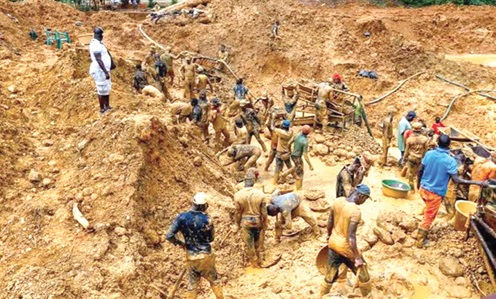
The number of Ghanaians working in ‘galamsey’ (illegal artisanal and small-scale gold mining) is difficult to determine precisely, although recent estimates range from over 1 million to as many as 3 million people.
Given that around 15 million people are estimated to comprise the country’s workforce, then up to 20 per cent of working age Ghanaians may be involved in galamsey.
Unregulated mining activities result in severe land degradation, biodiversity loss, pollution of water bodies, and acidification of soils, all of which are extremely damaging to the biophysical and socio-economic environment.
Galamsey not only wreaks havoc on Ghana’s environment but also fatally damages the chances of sustainable development.
Sustainable development is development that meets the needs of the present without compromising the ability of future generations to meet their own needs.
This concept has a key component: the concept of needs, especially the essential needs of Ghana’s poor.
Ghana’s poverty rate varies by definition, with World Bank data showing around 23-24 per cent living below national poverty lines, while the Multidimensional Poverty Index (MPI; details at https://ophi.org.uk/global-mpi) estimates suggest closer to 45-48 per cent multidimensionally poor (that is, lacking in health, education, living standards), especially in rural areas and the north of the country.
Leadership failure
Galamsey is a hot topic and traditional and social media are filled with stories about it.
Many discuss galamsey in the context of perceived deficiencies of democracy and the failure of Ghana’s leaders to deal with it.
The Daily Graphic recently published two articles about the newly-established National Anti-Illegal Mining Operations Secretariat (NAIMOS).
Working under the Ministry of Lands and Natural Resources, NAIMOS was established in July 2025 to combat galamsey by coordinating nationwide operations, reclaiming degraded land, and restoring polluted water bodies.
One of the Graphic’s NAIMOS stories identified chiefs as one of the main factors in galamsey, while another mentioned Asian foreign nationals as being involved.
Beneficiaries
Does the involvement of chiefs and foreign nationals amount to the full list of those benefitting from galamsey?
Sadly not: apart from the 1-3 million Ghanaians working in the industry, research has also identified that some churches, while officially condemning galamsey for harming the environment and communities, also benefit indirectly from the gold money or participate in the practice.
Some mainstream religious bodies (for example, Catholic, Anglican, Presbyterian) actively lead protests and advocate its cessation, viewing it as a moral and national crisis, not a source of benefit.
Then there are the politicians and political elites who personally benefit significantly from galamsey and the political parties that may rely on galamsey for an income, especially at election times. Running for president in Ghana now requires around $200 million, a price tag that risks turning politics into the preserve of the wealthy elite.
The involvement of politicians and political elites is a major reason why efforts to stop galamsey have largely failed.
Dr Emmanuel Dei-Tumi, founder and Executive Director, Africa Future Leaders Institute of Global Affairs (AFLIGA) and Fellow of the Frimpong Manso Institute (FMI), Leadership and Governance thematic area, recently wrote in the Graphic that across Ghana ‘there is a growing cry for leadership that does more than manage systems —leadership that inspires trust, restores hope, and unites people around a moral and non-partisan national vision.
From boardrooms to pulpits, from the corridors of government to the classrooms that shape the minds and character of our youth, it has become clear that progress without principle is fragile’.
Dr Emmanuel Dei-Tumi does not mention galamsey.
Yet, successive governments in Ghana claim, as he notes, to do more than merely ‘manage systems’; they also seek to project leadership that ‘inspires trust, restores hope, and unites people around a moral and non-partisan national vision’.
But many Ghanaians believe that they have failed: Ghanaians generally express low levels of trust in government and its key institutions.
Recent data from Afrobarometer and other studies indicate that concern is driven by anxieties about corruption, economic mismanagement, and a perceived lack of leaders’ accountability.
In addition, as Dr Dei-Tumi asserts, ‘from boardrooms to pulpits, from the corridors of government to the classrooms that shape the minds and character of our youth, it has become clear that progress without principle is fragile’.
Recent research indicates that young Ghanaians often trust mentors, successful peers (those who have ‘made it’, that is, got rich quickly), community figures, and faith-based organisations, alongside seeking reliable information from digital sources.
In addition, there is growing scepticism towards institutions, including government, due to unmet promises, leading many young Ghanaians to value tangible support from non-governmental organisations, some international groups, and locally led initiatives that offer real skills and opportunities, especially for sustainable careers in the digital and green economies.
Conclusion
In conclusion, Ghanaians are generally aware of who benefits from galamsey: up to three million workers, some foreign nationals, chiefs, politicians and political elites, and churches.
Thus, a wide range of people are beneficiaries, ranging from individuals seeking economic survival to powerful political and traditional elites and international players.
There is significant public frustration with the government’s perceived failure to resolve the galamsey crisis.
Leadership is found wanting.
What to do about galamsey is a crucial issue both for now and for the future of sustainable development in Ghana. It cannot be ignored or marginalised.
The writer is an Emeritus Professor of Politics, London Metropolitan University, UK
