
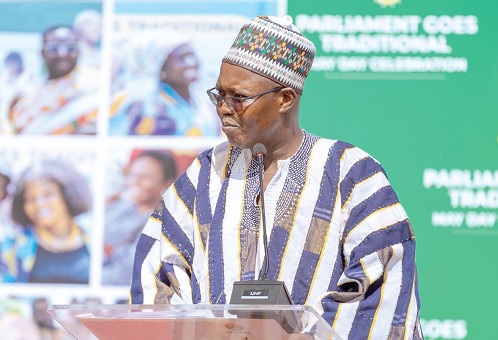
The First Deputy Speaker of Parliament, Bernard Ahiafor, has called on the citizenry to focus on teaching their children local languages at home to protect indigenous languages from extinction.
He further implored the Ministry of Education and the Ghana Education Service to intensify their efforts in teaching local languages in schools.
He explained that currently, out of the 70 Ghanaian languages, only 11 Ghanaian languages were taught in schools.
They included Akan, Akuapem, Asante, Fanti, as well as Dagaare, Dagbani, Ewe, Dangbe, Ga, Nzema and Gonja.
“This is commendable but inadequate; more must be done to ensure that these languages do not just thrive and escape extinction,” he said.
Foreign language
Speaking on behalf of the Speaker of Parliament at the second edition of Parliamentary Service May Day celebration in Parliament last Monday, Mr Ahiafor said, “Our local languages must become an integral part of our daily lives, interwoven into our education, work and socialisation.
“When we abandon what makes us unique, we risk erasing the visible and lived expressions of our identity.
“Societies or countries do not develop using foreign languages; they do so on the solid foundation of their mother tongue or national languages,” he said.
Cultural displays
The event, which was held on the theme: “Welcome home”, was set aside to celebrate the dedication, resilience and invaluable contributions of the workforce that sustain Parliament.
Legislators, senior management members and staff of the Parliamentary Service Board belonging to various ethnic groups were adorned in their indigenous attire, sang and danced joyfully to folklore songs to mark the occasion.
The atmosphere was characterised by cultural displays that saw various ethnic groups showcasing not only their cultural heritage but also the strength of diversity in unity and progress.
Besides, the event allowed the participants to also prepare traditional meals and drinks of various ethnic groups to be served out.
Languages are soul of our nation
Mr Ahiafor said Ghana was blessed with a rich history of over 70 indigenous languages, such as Akan, Nzema, Ewe, Ga, Dagbani, Dagaare, Gonja, Hausa and Wale.
These languages, he said, carried the history, wisdom and worldview of the Ghanaians and they “are the very soul of our nation”.
“Yet, if indigenous language proficiency were a criterion for getting employed in the Parliamentary Service, how many of us would be seated here today as staff of Parliament?
“If BECE, WASSCE or university examinations were conducted exclusively in our local languages, how many of us would have scored pass marks?” he quizzed.
To remedy such lapses in parliamentary business, Mr Ahiafor said Order 63 of the Standing Orders of Parliament captured the use of local languages as an option in the House’s deliberations.
Go extra mile
The Clerk-to-Parliament, Ebenezer Ahumah Djietror, commended the staff of the service for their devotion and dedication to duty.
He, however, challenged them to go an extra mile, particularly those with varied expectations, to strive to leave indelible impressions that would convey legacies that “we can all be proud of”.
