
Partisan politics and environmental sustainability
Who will lead the NPP into the next general elections in December 2028?
Will the NDC’s 24-hour economic policy lead to more jobs for the youth? Such questions are indicative of a key fact of life of Ghana’s post-independence political system: during periods of democracy, the country has a de facto two-party system: one party to the left, the other to the right.
Around the world, political systems are undergoing radical change.
For example, Britain has had a de facto two-party system for decades – but no longer: Labour and the Conservatives languish in the polls while the far-right Reform UK and the notably left of centre Green Party make headway.
The decline of the two-party system in Britain is indicative of a wider disillusionment with the political status quo.
In Ghana, the ossified two-party system is also critiqued – yet third parties fail to break the mould.
Environmental sustainability is not yet a key political issue in Ghana.
Environmental crisis
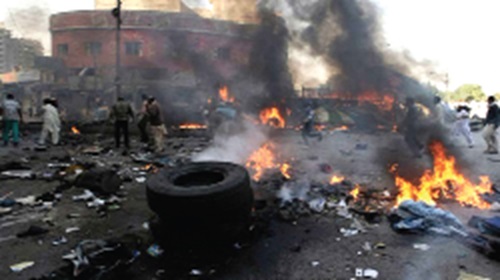
This is surprising, given that the country is grappling with a deepening environmental crisis.
Widespread pollution—air, water and plastic waste—alongside illegal mining (galamsey) and poor waste management, has led to contaminated rivers, serious health risks and extensive deforestation.
Compounding these challenges is accelerating climate change, marked by recurrent flooding and erratic rainfall, which continues to undermine agriculture, water security and human health.
Air pollution is the leading environmental risk to public health and ranks as the country’s sixth overall risk factor for mortality out of 19.
Household and ambient air pollution together account for an estimated 16,000 premature deaths each year, with infants and the elderly bearing a disproportionate share of the disease burden.
Plastic waste continues to choke drains and waterways—hardly surprising given that more than 3,000 metric tonnes of plastic waste are generated daily, amounting to about 1.1 million metric tonnes annually.
An estimated 86 per cent of this waste is mismanaged, contributing to environmental disasters, particularly flooding and recurrent cholera outbreaks.
The impact on air quality is also significant, as about 11 per cent of Ghana’s waste is burned.
The burning of plastics releases toxic substances and greenhouse gases, worsening air pollution and contributing to climate change.
Pollution and policy
The quality of naturally occurring surface waters and groundwater in Ghana was, until quite recently, generally good. Today, water pollution causes significant damage (equivalent to three per cent of GDP) due to the ill health effects of inadequate water supply, poor sanitation, and inadequate hygiene (around 11,000 early deaths annually), as well as the discharge of solid waste, industrial effluents, and toxic substances into water systems.
Ghana does not lack constitutional and policy frameworks to address pollution.
Several bodies exist to deal with environmental management, although the institutional framework is incomplete.
The Ministry of Lands and Natural Resources reports a combination of potentially conflicting mandates within single institutions – policy coordination, regulation, and management – as impeding improvements to environmental governance.
In addition, the Ministry regards the wording of the 1992 Constitution as ambiguous in defining the relationship between sector agencies and parent ministries.
To deal with these concerns, agencies need stronger policy direction from parent ministries to operate efficiently within the national policy framework.
In addition, many institutions are not properly equipped with the legal capacity to monitor and enforce actions.
Are government efforts enough?
The governing party, the NDC, had a section in its 2024 election manifesto entitled: ‘Sustainable Environment and Extractive Sector Management’.
The manifesto points to Ghana’s rich biodiversity, vast natural resources, and resilient people.
The country faces environmental challenges requiring bold and innovative solutions, including a strong commitment to environmental sustainability.
The manifesto highlights that the government must do more to protect the environment for the benefit of present and future generations.
The NDC promises to accomplish this by ‘reasonable legislative and administrative measures’.
However, in power for a year, progress is slow, and the government may be in danger of not fulfilling manifesto pledges in relation to the natural environment.
Democracy functions effectively only when those in power are held to account by opposition parties and an active civil society, particularly in the implementation of election manifesto commitments.
To compel the government to protect Ghana’s natural environment and confront the destructive impacts of climate change, both civil and political society must speak loudly and clearly in urging President Mahama to make environmental protection a top national priority.
A well-led, well-organised and adequately financed Green Party, supported by strong and effective civil society organisations, would help spotlight Ghana’s severe environmental challenges and apply sustained pressure on those in power to address them.
Improving Ghana’s environmental sustainability requires tough political measures.
The focus must be on strengthening climate governance, enforcing strict environmental laws (like the new Act 1124), promoting green energy and sustainable resource use, improving waste management through legislation and infrastructure, and integrating climate action across all government ministries, supported by public participation and international partnerships.
Key actions should include legislative reform, phasing out of fossil fuels, boosting renewables, including solar, enhancing monitoring systems, and tackling pollution sources like black carbon (soot) from cooking.
The writer is Emeritus Professor in Politics, London Metropolitan University, UK.
