
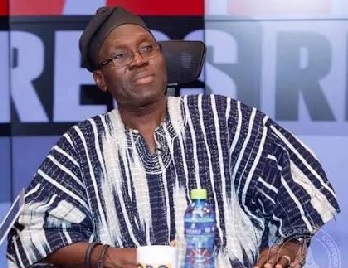
Former Member of Parliament (MP) for Tamale Central, Inusah Fuseini says the proposal to extend Ghana's presidential term from four to five years will not necessarily improve the efficiency of government.
To him, a focus on how to improve on efficient of government was more important than lengthening its time in office.
In a position paper on the Constitutional Review Committee's report, the government has proposed a five-year one term tenure as one of the amendments to the 1992 Constitution.
But reacting in a radio interview with Accra-based Citi FM, Mr Fuseini said a four-year term gives a focused and committed government sufficient time to implement its policies and fulfil campaign promises.
He argued that extending a president's tenure would not address the structural challenges affecting governance.
He cited President John Dramani Mahama's current administration as evidence that governments can achieve meaningful progress within a short period clear objectives and purpose.
Mr Fuseini dismissed the argument that governments spend their first year settling into office while the final year is consumed by election campaign.
"No, I don't. John Mahama's second coming has dispelled that idea. It just means that a government, when you come with intention, purpose, and deliberateness, you'll be able to achieve so much even in your first year," he said.
Mr Fuseini argued that extending the presidential term risks encouraging complacency rather than improving governance. Instead, he called for measurable performance benchmarks to assess how quickly governments appoint officials, establish institutions and begin implementing policies.
"The amendment is not talking to efficiency. It's talking to lethargy. You are elected to work for the benefit and welfare of the people," he said.
He also urged the introduction of clear standards for evaluating governments from the moment they assume office.
While opposing the proposal, Mr Fuseini welcomed the broader constitutional review process, saying the Constitution should continue to evolve to meet Ghana's changing needs and governance challenges.
