
A gallant defeat: Why the Black Galaxies deserve more than last-minute faith
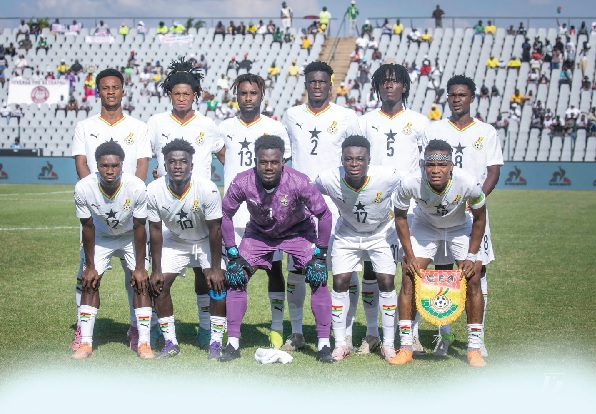
On a cool Tuesday evening in Soweto, Ghana’s Black Galaxies walked off the pitch at the Dobsonville Stadium with heads held high — despite a narrow 1–0 defeat to Bafana Bafana of South Africa.
The scoreline told only a fraction of the story.
Against a well-drilled South African side and with barely enough time to properly prepare, the Black Galaxies delivered a performance that rekindled belief in Ghana’s local-based national team.
It was a display full of discipline, courage and flashes of the authentic Ghanaian football that once earned the nation the proud tag: the Brazil of Africa.
For head coach Kassim Mingle Ocansey, the result mattered less than the message his players sent.
“The players performed very well against a tough opponent and I believe we have a bright future ahead,” he said — words that resonated with fans who watched a team short on preparation but rich in character.
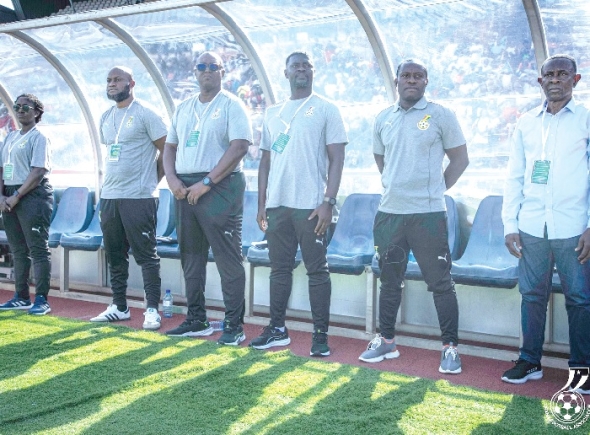
The irony of the Galaxies’ performance in Soweto was impossible to ignore. With limited time to train together due to the ongoing domestic league, the team still showed tactical discipline, collective spirit and confidence on the ball.
One could only imagine what might be possible if these players were afforded the luxury of time — time to build chemistry, understand roles and grow into a cohesive unit.
Too often, the Black Galaxies are assembled in haste, sent into battle underprepared and judged harshly when results fall short. When elimination comes, fingers immediately point at the local league — a convenient scapegoat that ignores deeper structural issues.
There is no denying that Ghana’s local league has its shortcomings. Yet, fairness demands balance. When the Galaxies struggle, the league is blamed. When they perform admirably, praise is fleeting.
Comparisons are frequently made with local-based national teams from South Africa and North Africa — regions where domestic players thrive on the continental stage. What those comparisons often fail to acknowledge is structure.
In those countries, systems exist to support local players: better remuneration, stable calendars, long-term planning and national teams that are not treated as emergency projects.
In Ghana, one of the most persistent challenges remains player welfare. Poor remuneration has made it increasingly difficult to retain top-quality talent. The moment a player shows promise in the domestic league, the search for greener pastures abroad begins — not out of disloyalty, but necessity.
The result is a revolving door of talent and a national team that rarely enjoys continuity.
A familiar warning
As Ghana prepares for qualifiers for the African Nations Championship (CHAN), expectations will once again rise. But history warns against repeating old mistakes.
Veteran football administrator Nyaho Nyaho-Tamakloe, a former GFA chairman and current board member of Accra Hearts of Oak, has long advocated a practical solution: a permanent local-based national team camped throughout the year.
His argument is simple but powerful. Continuous camping allows players to bond, understand one another and seamlessly transition into competitive action — rather than scrambling days before crucial matches.
It is a proposal rooted in foresight, one that challenges Ghana’s entrenched culture of last-minute preparation.
Coach Ocansey echoed this reality after the South Africa game, admitting that limited preparation time played a role in the defeat.
“Because the league is ongoing, we didn’t have much time to prepare, but the work was intensive. This game was an eye-opener and I believe we are building a strong CHAN team,” he said.
That admission should not be dismissed. Instead, it should serve as a call to action.
If Ghana truly desires success at CHAN and beyond, preparation must begin now — not weeks, not days, but months ahead. Proper camping, mental conditioning and clear planning will leave players with no excuses and administrators with no hiding place.
