
Why AFCON is taking place in December
The Africa Cup of Nations (AFCON) will take place between December 21, 2025 and January 18, 2026 in Morocco.
The 2025 edition was originally due to be a mid-year tournament, to reduce scheduling conflicts with European clubs and competitions.
The summer event was supposed to boost tourism and highlight what Morocco has to offer, before the country co-hosts the 2030 World Cup with Spain and Portugal.
But it was shifted to December to make way for FIFA's expanded Club World Cup, held in the summer.
The move to a start in December rather than January will avoid conflicts with the Champions League and Europa League, which restart on 20 and 22 January respectively.
It will be the first time AFCON has been held at this time of year, with matches played in Rabat, Casablanca, Marrakech, Agadir, Tangier and Fez.
There will not be matches on 25 December.
Players participating in AFCON were released from clubs on 15 December.
This means teams have only had a week to prepare before the tournament begins, sparking anger from coaches who have been left with a short window in which to prepare their teams.
Angola's coach Patrice Beaumelle said the situation was "nonsense" and that "you can't prepare a serious team in just two or three sessions".
The last time AFCON was held in summer was the 2019 edition, hosted by Egypt.
In recent years, the tournament has been played between January and February.
Why is AFCON traditionally held in the winter?
AFCON is traditionally held in the winter months, primarily in January and February, because of the variable African climate.
Summer in some nations can include rainy seasons and extreme heat conditions, which can affect football pitches and playing conditions.
The winter period instead provides drier conditions and stable temperatures, making for ideal playing conditions.
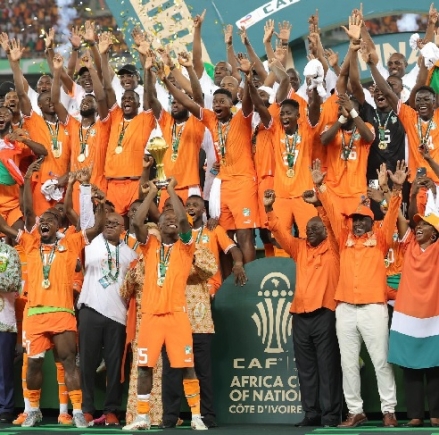
The 2023 edition held in the Ivory Coast was due to be held in the summer of 2022, but it was moved to early in the following year because of the weather conditions.
Being held in winter also means AFCON can avoid clashes with other international football tournaments that traditionally take place in the summer.
But this has caused conflict with European clubs who now have to release players mid-season.
Why has AFCON been staged every two years?
The Africa Cup of Nations has traditionally been held biannually. When it first began in 1957, a place at the World Cup was not guaranteed for African teams.
Over the years, more African nations have participated in the World Cup.
But the regularity of AFCON ensures there has been a consistency in revenue from tournaments and tourism.
It also provides regular opportunities for teams and players to compete.
However, in future AFCON will take place once every four years instead of every two years, to fit in with other international football tournaments.
In 2020, FIFA president Gianni Infantino proposed this idea to the Confederation of African Football (CAF).
He also suggested streamlining AFCON to be held between September and November.
On Saturday, 20 December, the eve of this year's AFCON, Confederation of African Football president Patrice Motsepe announced the tournament will be held every four years from 2028.
