
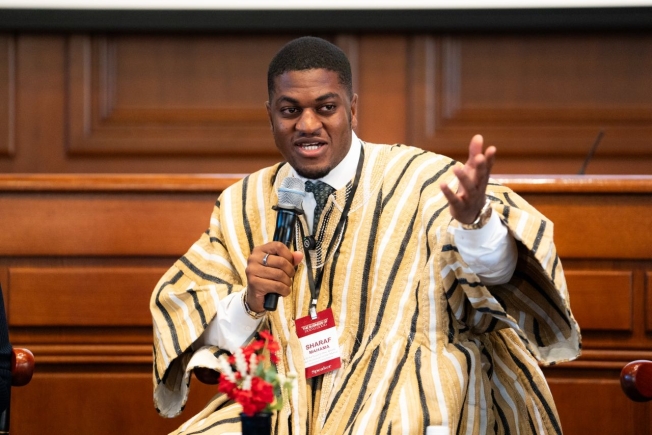
Sports Editorial: Sharaf Mahama saving Ghana boxing from the brink
For decades, boxing was one of Ghana’s most powerful sporting symbols, producing world champions such as D.K. Poison, Azumah Nelson, Ike Quartey, Joshua Clottey and Joseph Agbeko, among others.
These icons once placed Ghana firmly on the world boxing map. Sadly, that proud tradition has steadily faded, with the nation losing its grip on world titles and repeated attempts to reclaim its former glory proving unsuccessful.
The image of the sport further suffered a devastating blow recently following the tragic death of Nigerian boxer, Gabriel Oluwasegun Olanrewaju, who collapsed during a light heavyweight bout and later died after the contest at the Bukom Boxing Arena.
The tragedy sent shockwaves through the boxing fraternity and raised serious concerns about safety standards in the sport.
Barely had the nation begun to recover when another tragedy struck. Ghanaian boxer Ernest Akushey, popularly known as Bahubali, died in September 2025, just days after a bout with Jacob Dickson.
His death sparked national outrage and concern, leading to a temporary suspension of boxing activities in the country. These incidents combined to deal Ghana boxing its worst reputational damage in history.
Since then, restoring pride and credibility to the sport has become a major concern for many Ghanaians and boxing lovers. It is against this troubling background that the Chief Executive Officer (CEO) of Legacy Rise Sports, Sharaf Mahama, has emerged as one of the few individuals making deliberate efforts to revive the sport.
Last Saturday, he staged one of the most successful boxing events seen in the country in recent years, assembling top local fighters alongside quality international opponents.
This was not his first bold move. Earlier this year, he promoted another major event that attracted global attention and marked the first-ever visit to Ghana by boxing superstar Anthony Joshua.
Fans who watched the bouts live at the University of Ghana Sports Stadium would agree they received full value for their money. Those who followed the action from home were equally impressed by the world-class production, ringside announcing, commentary and overall presentation.
For once, Ghana showcased a boxing event that met international standards and projected the country in a positive light to the world.
Sharaf Mahama deserves commendation, not cynicism. His efforts go beyond entertainment; they are creating jobs, restoring confidence, and rebuilding a broken boxing ecosystem.
Unfortunately, his earlier promotion was dragged into a political debate, with critics questioning the source of funding for the event. While accountability and transparency are important, turning such initiatives into political battles risks discouraging young entrepreneurs who are genuinely trying to revive the sport.
Constructive criticism must be encouraged, but politicisation serves no useful purpose. When boxing is uplifted again, the benefits will not accrue to one individual but to the entire nation.
It will create opportunities for young boxers, restore hope, and inspire them to keep working hard with the belief that there is light at the end of the tunnel.
If Ghana is serious about reclaiming its place in world boxing, then genuine efforts aimed at rebuilding the sport must be supported, protected and encouraged. The revival of boxing is not a favour to one man—it is a national cause.
