


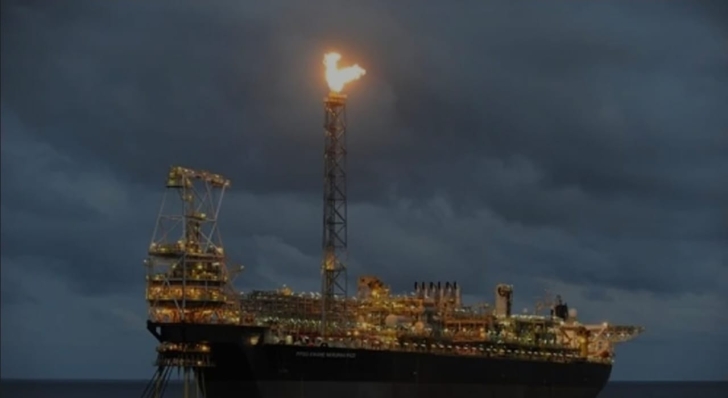
The country's upstream offshore oil and gas sector is at a turning point after more than half a decade of falling output, as the government and partners roll out new drilling programmes and licence extensions to stabilise and grow production.
In an update from the lead operator of the Jubilee field and the country's second major deep-water oil and gas development, the Tweneboa, Enyenra, and Ntomme fields, encouraging outcomes have emerged.
At the Jubilee field, following an ongoing drilling campaign, the lead operator acknowledged that this year's drilling campaign remains on track and that five out of the six planned Jubilee wells have now been completed successfully.
Current production
Production at the Jubilee field is currently above 94,000 barrels of oil per day, with the final well expected onstream in September.
Aside from Jubilee, the TEN fields continue to outperform expectations, currently producing more than 14,000 bopd. It is expected that combined production from Jubilee and TEN now inches above 100,000 bopd.
In support of the sustainable supply of gas to the upstream power sector from the country's own fields, the lead operator said it will continue to supply an average of 115 million standard cubic feet per day of Jubilee gas to Ghana National Gas Company at a reduced price of $2.50 per MMBtu, down from the previous price of more than $3.08 per MMBtu.
The Jubilee and TEN partners assured the country and stakeholders that operational performance remains strong, with average facility uptime of over 99 per cent from January to May 2026.
$2-Billion investment
The recently approved Greater Jubilee Plan of Further Development supports the drilling of up to 20 additional wells, backed by an estimated $2-billion investment in both fields, helping to sustain production and maximise recovery.
The partners hope that there would be more prospects and that stakeholders would be duly updated on all activities and progress.
Industry players welcomed the development and the direction of the partners operating in the country's upstream sector. The resolution to reduce the price of natural gas will significantly reduce overall energy bills for households and businesses, lower operational costs for manufacturing and transport, and act as an affordable bridge fuel that accelerates the transition away from dirtier energy sources like coal while promoting long-term economic stability.
To them, energy is the lifeblood of a 24-hour economy, requiring an uninterrupted, affordable power supply, and they commended the partners for being part of the process.