
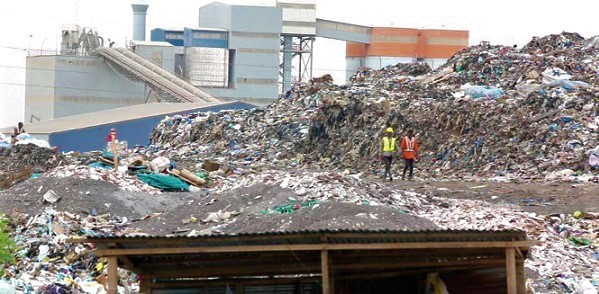
Landfill sites in Ghana are filling up faster than expected because organic waste is being dumped instead of being handled in a way that will turn it into compost for agricultural purposes, a senior environmental researcher at the University of Ghana has said.
Compost is decomposed organic matter used as a natural fertilizer and soil conditioner. It helps improve soil structure, aeration, and moisture retention while returning vital nutrients to the earth. It is created by balancing carbon-rich "browns"
Dr Ted Yemoh Annang, who is a senior research fellow at the Institute for Environment and Sanitation Studies at the University of Ghana, speaking in a radio interview monitored on Accra based Joy FM on Monday said metropolitan, municipal and district assemblies should establish composting centres to divert degradable waste from landfill sites and reduce the pressure on existing disposal facilities.
He said Ghana's waste management system had largely been reduced to waste collection, transport and disposal, with little attention given to treatment and waste diversion before final disposal.
Dr Annang explained that landfill sites were intended to receive only waste that could no longer be treated, recycled or recovered. Instead, he said, large volumes of organic waste and recyclable materials that could be composted or reused were ending up at landfill sites.
He also called for an investigation into why compost and sewage recycling plants established to process waste were not operating as expected.
Dr Annang said operational treatment plants would reduce the amount of waste sent to landfill sites while producing organic manure to support agriculture.
As a longer-term solution, he proposed that every MMDA establish a composting centre using simple methods to process organic waste from markets and households. He said the centres would also create jobs for local communities.
He said more than three-quarters of Ghana's waste was biodegradable and could be diverted through composting.
Using a typical market as an example, Dr Annang said more than 90 per cent of the waste generated was organic.
He said separating organic waste, plastics and other recyclable materials would leave only a small amount for final disposal.
