


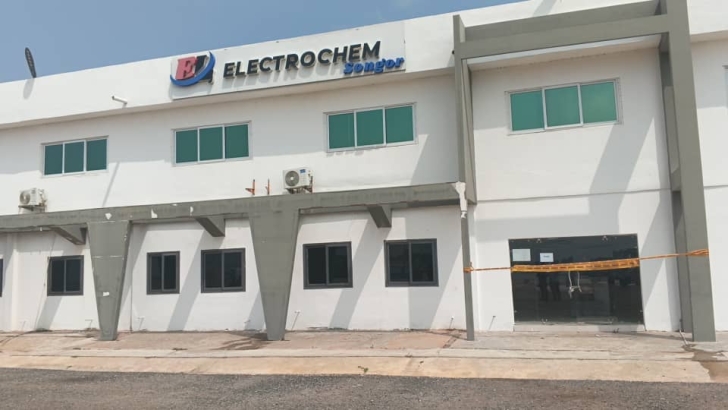
The Ghana Revenue Authority (GRA) has sealed the administrative block of Electrochem Ghana Limited as part of an enforcement exercise to recover an outstanding tax liability of GH¢8.6 million accumulated since 2021.
The exercise, led by the Area Enforcement Manager for Accra Central of the GRA, Joseph A. Annang, forms part of the Authority's ongoing efforts to improve tax compliance and recover outstanding government revenue from defaulting taxpayers.
Addressing the media after the operation on Wednesday, July 8, 2026, Mr Annang said the company had been served with several demand notices over the years but had failed to settle the tax liability despite repeated engagements.
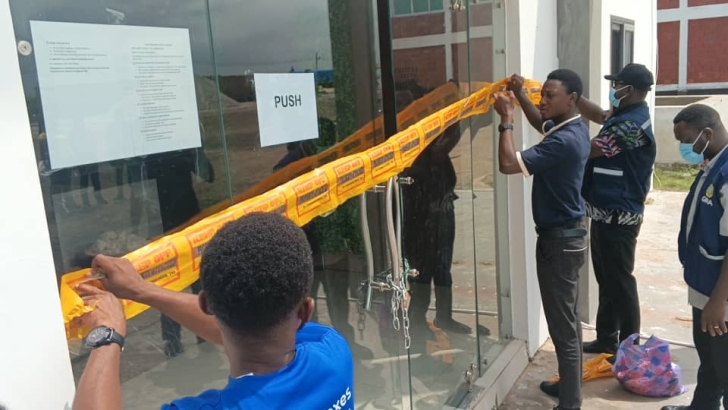
He said the amount involved was GH¢8.6 million, adding that despite serving the company with an immediate demand notice on January 7 and a final demand notice on February 13 this year, the debt remained unpaid.
Mr Annang explained that although the GRA had the legal authority to seal the company's main entrance and halt all operations, it decided to adopt a more measured approach after considering the potential impact on employees, customers and suppliers.
He explained that the company was an indigenous Ghanaian company and that the Authority sought to balance tax enforcement with the need to protect local businesses and preserve jobs.
"We listened to management's explanation, including the impact of the recent floods on their operations. While we appreciate their challenges, these are historical tax obligations and must be honoured. As a concession, we have sealed only the administrative block while allowing production and business activities to continue," he stated.
Mr Annang said the company made an immediate payment of GH¢200,000 during the exercise and has been granted a seven-day grace period to either clear the outstanding debt or reach an acceptable payment arrangement with the GRA.
He warned that failure to comply within the stipulated period would compel the Authority to return and seal the company's main entrance, effectively preventing workers, customers and suppliers from accessing the premises.
Mr Annang stressed that enforcement actions were always a last resort and were undertaken only after all avenues of engagement with taxpayers had been exhausted.
"We have always tried to be friendly to taxpayers. When you see us carrying out enforcement like this, it means all the friendly approaches have been exhausted. We follow due process by serving the necessary notices before taking enforcement action," he said.
He also cautioned taxpayers against the growing practice of filing tax returns without making the corresponding payments, explaining that interest continues to accrue on unpaid taxes.
Mr Annang urged businesses with outstanding tax liabilities to voluntarily settle their debts or engage the GRA to agree on payment arrangements before enforcement teams are dispatched, adding that the Authority remains committed to promoting voluntary tax compliance while ensuring that all taxes due the state were collected.
During a meeting with the enforcement team, management of Electrochem Ghana Limited pleaded for an extension of time to settle the outstanding tax liability.
However, GRA officials declined to grant any further extension, explaining that the company had already been given sufficient opportunities to honour its tax obligations.