


THE Institute of Public Policy and Accountability (IPPA), a policy think tank, has raised concerns about the ambition, credibility, and implementation readiness of the 2026 Budget and Economic Policy presented to Parliament by the Minister for Finance, Dr Cassiel Ato Forson.
It described the fiscal outlook as modest and insufficiently transformative to generate the scale of economic activity and jobs the country urgently requires.
This, according to the institute, reflected gaps in policy direction, weak expenditure performance, and the absence of concrete frameworks to drive the government’s flagship initiatives.
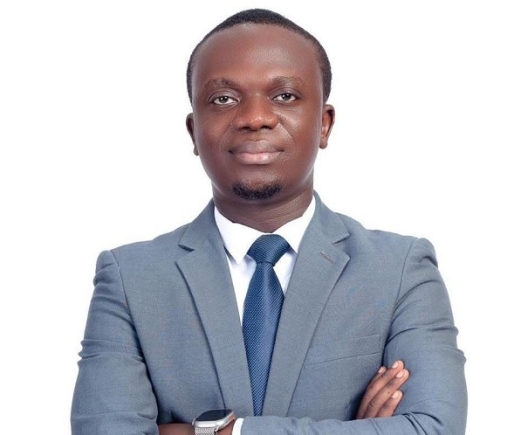
A statement signed and issued by the Director of Research and Policy, Dr Kwasi Nyame-Baafi, said the budget falls short of the bold measures needed to accelerate economic transformation.
The IPPA said although the Finance Minister attributed recent macroeconomic improvements to ongoing reforms under the IMF-supported programme, the recovery began before 2025.
It said data captured in the 2026 Budget and the Bank of Ghana’s statistical reports showed that the public debt-to-GDP ratio declined from 78.5 per cent in 2021 to 61.8 per cent in 2024 while inflation fell from 31.9 per cent in 2022 to 22.9 per cent at the end of 2024, while gross international reserves improved from $4.8 billion in 2016 to nearly USD 9 billion by December 2024.
The institute further indicated that real GDP growth rebounded from 0.5 per cent in 2020 to 5.7 per cent in 2024, driven by earlier fiscal consolidation and monetary policy coordination.
It cited a January 2024 IMF statement confirming that Ghana was “making important inroads to stabilise its economy,” stressing that the recovery trajectory predates the current administration.
Despite these improvements, the IPPA said the 2026 macroeconomic targets showed limited ambition, adding that the projected real GDP growth of 4.8 per cent and non-oil growth of 4.9 per cent fell below the 2025 performance of 6.3 per cent.
Other indicators, the institute said, including the inflation target of eight per cent and reserves covering three months of imports, remained unchanged from 2025.
Total expenditure on commitment basis was projected at GH¢302.5 billion, while primary expenditure was expected to reach GH¢244.7 billion.
Weak implementation plan
The IPPA expressed serious concern over the lack of a credible implementation framework for the 24-Hour Economy Policy, which the government presented as a major job-creation programme during the 2024 election campaign.
It said although the National Coordinator of the policy, Goosie Tanoh, estimated its full implementation cost at $4 billion (approximately GH¢48 billion), only GH¢90 million had been allocated in the 2026 Budget, representing 0.18 per cent of the requirement.
The institute said the allocation underscored the “absence of measurable targets, clear timelines, institutional arrangements and a sector-by-sector rollout strategy.”
On capital expenditure execution, the IPPA pointed out that the government had released only about 34 per cent of capital expenditure projected for 2025.
Out of the GH¢13 billion approved for the Big Push Infrastructure Programme, it said GH¢9 billion was disbursed, raising doubts about the feasibility of executing capital-intensive initiatives in 2026, including infrastructure projects and the proposed Women’s Development Bank.
The IPPA warned that the persistent gap between budget allocations and actual disbursements undermined fiscal credibility and reduced the transformative potential of the government programmes.