

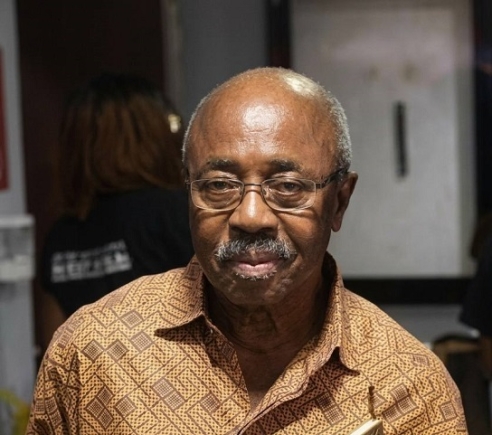
Film classification not censorship —Kwaw Ansah tells Filmmakers
VETERAN Ghanaian filmmaker Kwaw Ansah has called on industry players to stop confusing the introduction of film classification as a form of censorship, arguing that the two are fundamentally different and that understanding that distinction matters enormously for the future of Ghana’s creative industry.
He explained that classification is to strengthen standards, protect audiences, guide how content is produced, distributed and consumed across different audience groups, as well as improve credibility in the country’s growing creative space.
Speaking at the recent launch of the Film Development Fund in Accra, where key stakeholders gathered to discuss financing, regulation, and the road ahead for Ghanaian film, Ansah said classification is not about restricting what filmmakers can create. It is about responsibility.
“Classification is not censorship. Classification is about guidance, responsibility, audience protection and ensuring that content is appropriately positioned to defend audiences while preserving community peace and equality,” he said.
The legendary filmmaker, who has contributed to the growth of Ghana’s audiovisual industry for decades, reflected on the long-standing struggles of filmmakers in the country, including limited funding, weak distribution systems, inadequate infrastructure, rampant piracy, and audiences that have been difficult to reach consistently.
“Many of us in the Ghanaian film industry have long hoped, advocated and waited for several decades. As someone who has dedicated his life to filmmaking and storytelling, I understand firsthand the challenges filmmakers have endured over the years.”
Despite these difficulties, he noted Ghanaian filmmakers have remained resilient.
“We have continued to tell our stories. We have continued to preserve our identity, culture and heritage through film,” he added.
Ansah described the Film Development Fund introduced by the government through the Ministry of Tourism, Culture and Creative Arts and the National Film Authority as a long-term financing mechanism, a structural intervention the industry has needed for a long time. (Read Toy Story 5 shows 'terror' of children's screen addiction, says Tom Hanks)
“The Film Development Fund has the potential to become a transformative vehicle for the industry. It has the capacity to support production, strengthen distribution systems, improve exhibition infrastructure, encourage innovation, develop talent and create sustainable jobs for thousands of young people across the country.”
But he was equally clear that the government alone could not carry this. The fund’s long-term success, he argued, depends on genuine participation from a much wider circle.
“This growth cannot come from the government alone. The private sector must participate. Financial institutions must participate. Telecommunication companies must participate. The diaspora must participate,” he stated.
He also praised the National Film Authority’s efforts to expand audience access through initiatives such as the Ghana Cinema Programme and community exhibition projects, describing them as essential steps in the right direction.
Kwaw Ansah also advised members of the Film Development Committee to serve with integrity and fairness, warning them to remain firm against external pressure.
“Stand your ground. If there is pressure from above or below, remember that this money is not free lunch. Pressure does not help tell good stories.”
Ghana, he reminded the room, has waited far too long for this kind of structural support to allow it to be undermined by interference or poor governance.
He closed with an encouraging word for young creatives to stay committed to their craft despite challenges.
“To the young creative people, continue to create, continue to dream and continue to believe in your craft and your voice,” he advised.
