

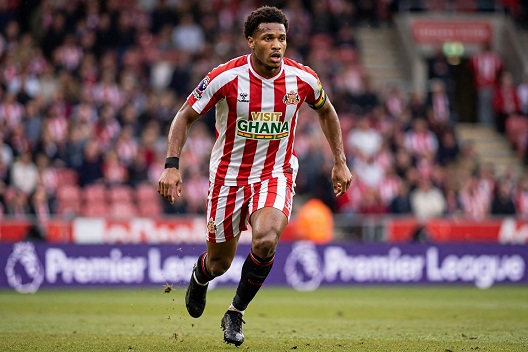
GHANAIANS love football. We also love spending money we do not have, arguing about money we do not understand and demanding accountability after the money has disappeared.
So the reported £10 million deal to put Visit Ghana on Sunderland’s Premier League shirt was always going to cause a national stir.
The outrage is predictable. So is the defence. Supporters call it visionary global marketing. Critics see another government with champagne ambitions and a taxpayer budget.Both sides, however, may be missing the bigger point. The question is not whether Ghana should advertise itself internationally. Of course it should.
The real question is whether Ghana is about to spend GHS 153.9 million buying attention, or whether it is buying an actual economic return. Because there is a very expensive difference.
Whose Money Is It?
Before anyone starts converting £10 million into hospitals, schools, ambulances and roads, there is a rather important question. Who is paying?
If it is private money, the investors can take the commercial risk. If taxpayers are footing the bill, the public deserves full disclosure on the cost, duration, terms, expected returns and accountability measures. Transparency is not anti-tourism. It is the foundation of credibility.
A Jersey Does Not Magically Create Tourists
Putting Visit Ghana on a Premier League shirt creates visibility, but visibility alone does not bring tourists. Unless the campaign connects that exposure to compelling experiences, easy travel information, competitive packages and actual bookings, Ghana risks spending millions for little more than brand awareness. Tourism begins with attention, but success comes when attention turns into arrivals.
And Why Sunderland?
The key issue is commercial value, not Sunderland’s prestige. Ghana should use the partnership to access Sunderland’s Premier League audience and generate measurable benefits such as:
• Tourism campaigns and visits to Ghana.
• Airline, hotel and travel partnerships.
• Promotion of Ghanaian music, food, fashion and culture.
• Increased travel by Sunderland and English football fans.
• Exposure for Ghanaian businesses.
• Youth football exchanges.
• Tangible outcomes such as flights, hotel bookings, investment and jobs.
If the £10 million partnership generates these commercial benefits, it could be valuable. If not, Ghana risks spending £10 million on little more than an expensive advertising billboard.
Ghana Should Learn From Rwanda, Not Copy Its Shirt
The Rwanda example is impossible to ignore. Visit Rwanda has used major European football partnerships to dramatically increase the country's international visibility. But Rwanda's real lesson is not that African countries should throw logos onto football shirts. The lesson is that sports sponsorship must be connected to a wider economic strategy.
The shirt creates curiosity, the campaign creates desire, the travel industry creates packages and the destination delivers the experience.
That is how marketing becomes money.
Ghana should be careful not to copy the most visible part of Rwanda's strategy while ignoring the less glamorous machinery underneath it. Buying advertising is easy. Converting advertising into tourists is the hard part.
Could GHS 153.9 Million Be Spent Elsewhere?
Absolutely. Some of that money could improve roads leading to tourist attractions. Some could upgrade visitor centres, improve sanitation, train hospitality workers and strengthen local tourism businesses.
Some could aggressively market Ghana's festivals, beaches, castles, food, music and December tourism to international audiences. Some could make the tourist experience better.
But this argument should not become the usual false choice between development and marketing.
Ghana needs both.
There is no point building excellent tourist attractions nobody knows about.
There is equally little point inviting the world to Ghana if visitors arrive to broken infrastructure, poor customer service and avoidable frustration.
You cannot sell paradise and deliver potholes.
The Bigger Problem Is Trust
Ultimately, this debate is not about Sunderland. It is about whether Ghanaians trust the people spending their money. Too many public projects begin with impressive announcements and end with vague explanations.
That cannot happen here.
If Ghana is spending millions on international tourism marketing, the targets should be brutally clear.
The key questions are: How many people will be reached, visit Ghana’s tourism platforms, make bookings and ultimately arrive in Ghana; how much will they spend, how many jobs will be created, what is the expected return on investment, and will the results be publicly published after the campaign?
Those are not hostile questions.
They are adult questions.
Think Bigger Than the Shirt
The smartest way to approach Sunderland is to treat the shirt as the beginning, not the achievement. Imagine Sunderland fans coming to Ghana for December. Imagine Ghanaian musicians performing at football events in Britain.
Imagine travel agencies selling Ghana packages alongside Sunderland fixtures. Imagine documentaries telling Ghana's football story while showcasing Cape Coast, Accra, Kumasi and the Volta Region. Imagine Ghanaian companies finding new British customers through the partnership.
That would be ambitious, strategic and would justify serious money.
A logo alone does none of that.
So, Is GHS 153.9 Million Too Much?
Maybe.
Maybe not.
The price cannot be judged without knowing the product. If Ghana is buying visibility, it is expensive.
If Ghana is buying a comprehensive platform that delivers tourists, investment, business, cultural influence and measurable economic returns, it could be a bargain.
But here is the uncomfortable truth:
The scandal would not be spending GHS 153.9 million. The scandal would be spending it and having no idea what came back.
Ghana wants the world to visit. Fine. Then Ghana must learn to market itself like a serious tourism destination. But if Ghana wants to be taken seriously, it must also account for every cedi it spends telling the world to come.
So put Ghana on the shirt. Put Ghana everywhere. But for heaven's sake, make sure there is something behind the logo.
Because the ultimate test of Visit Ghana is not whether millions of football fans see the words. It is whether they see the words, search for Ghana, book a ticket and actually arrive.
Visibility is not victory. Tourists are.
