
NPHC West Africa, The Divine Nine and Black Greek Life: Heritage Tourism Impact in Ghana
January’s Black Greek charterings illustrate how organized diaspora networks drive off-season tourism, social investment, and long-term economic engagement in Ghana.
Black Greek-letter organizations have contributed to Ghana for decades through education, healthcare, water access, youth development, and cultural exchange. As outlined in Ghana Gives Birth: How Black Greek Life Found Its Home on African Soil, Ghana is increasingly positioned not only as a site of return, but as a destination for structured, repeat, and investment-oriented heritage travel.
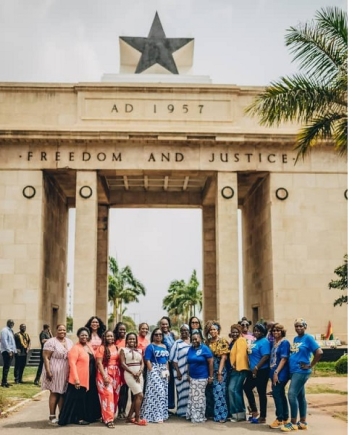
In January, two historic milestones brought this model into focus. On January 16, Alpha Kappa Alpha Sorority, Incorporated chartered the chapter Alpha Delta Psi Omega in Accra, informally known as the Black Star Pearls.
The chartering aligned with Ghana’s Black Star Experience and reinforced Accra’s role as a popular center for diaspora institutional life. As part of its service activities, the sorority donated fifty thousand dollars to the Korle Bu Teaching Hospital Maternity Ward, supporting maternal debt relief and essential medical equipment.
On January 20, the National Pan-Hellenic Council West Africa (NPHC West Africa) was formally chartered in Accra, extending Ghana’s already cohesive and active Divine Nine network across the sub-region.
The charter did not initiate collaboration in Ghana, where Black Greek organizations were already well organized and engaged. Rather, it connected Ghana’s established network to sister chapters across West Africa, positioning the country as a coordinating center for regional Black Greek engagement and leadership.
January service activities further reinforced the social and economic value of this engagement. Zeta Phi Beta Sorority, Incorporated marked its Founders Day with service to Motherly Love Orphanage, while Sigma Gamma Rho Sorority, Incorporated commemorated the NPHC West Africa anniversary on January 23, 2026, with forty-one thousand dollars in community investments supporting healthcare access, water infrastructure, girls’ protection, and menstrual health initiatives.
Professional and knowledge-based service also formed part of January’s impact. Emmanuel Agbeko Gamor, a member of Iota Phi Theta Fraternity, Inc., curated Ghana’s largest convening of artificial intelligence professionals through The AI Collective, contributing to skills exchange, youth participation, and capacity-building in emerging industries. This form of engagement reflects a growing model of diaspora service that supports Ghana’s innovation and creative economies.
The intergenerational dimension of this unofficial Black Greek Week was reflected in the presence of Jamille Brown Shuler, who traveled to Ghana with her mother, Bettye Richardson Brown, and sister, Jorielle Brown Houston.
Their visit represented a family pilgrimage rooted in service and participation rather than symbolic tourism. Jamille’s long-standing professional ties to Ghana, including her prior role as Director of Management and Operations for Peace Corps Ghana, and subsequent confirmation of her Ghanaian lineage through DNA research, illustrate how return increasingly unfolds as sustained presence, contribution, and belonging.
As scholar S. M. Vines notes, “approximately four million African Americans, representing nearly ten percent of the total African American population, are affiliated with Divine Nine organizations” (Vines, 2023). Members are largely professionals with strong travel and spending capacity. During January, more than one thousand visitors supported hotels, transportation services, restaurants, artisans, tailors, and cultural producers during a traditionally low tourism period.
What makes this model durable is the presence of named, visible communities on the ground. Groups such as the Ghana Alphas, Black Star Pearls, representatives of Kappa Alpha Psi Fraternity, Incorporated, Ghana Ques, the West Africa Alumnae Chapter of Delta Sigma Theta Sorority, Inc., Ghana Sigmas, Ghana Zetas, West African Poodles,and representatives of Iota Phi Theta Fraternity, Inc. demonstrate a permanent diaspora footprint that encourages repeat visitation, longer stays, and deeper investment..
It is important to Ghana’s national narrative that Afrodescendants, including members of the Divine Nine, are understood not as visitors from outside the story, but as woven into Ghana’s story itself, a reality increasingly expressed through the idea of the diaspora as Ghana’s 17th Region.
As Ghana’s role as an Afrodescendant hub deepens, another significant Black Greek-led initiative on the horizon is Africa Greek Week, a large-scale convening originally planned for Ghana in 2020 but interrupted by the global pandemic.
Its anticipated return represents a next phase of heritage tourism, moving beyond single events toward sustained, multi-day engagement rooted in culture, service, professional exchange, and regional travel. Designed to draw participants from across the African continent and the global diaspora, Africa Greek Week positions Ghana to host extended stays and coordinated economic activity across hospitality, cultural, and creative sectors. .
Together, these developments show how heritage tourism, when anchored in organized institutions, service, and regional coordination, can contribute to year-round tourism growth, diaspora and Afrodescendant engagement, and national development.
Ghana’s experience with Black Greek life and NPHC West Africa offers a replicable model for leveraging diaspora networks as long-term partners in economic and cultural development.
NB: The writer is a Ph.D Student, University of Ghana-Kwame Nkrumah Institute of African Studies and former Recording Secretary of the West African Regional National Pan-Hellenic Council.