
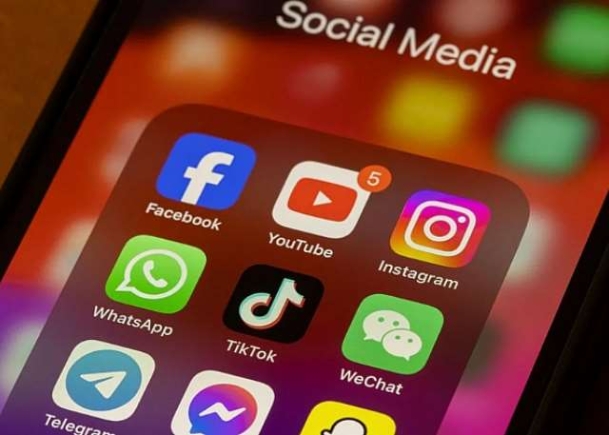
Ghana cannot continue to treat children's exposure to social media as a private family matter.
What was once regarded largely as a question of parental supervision has rapidly become a national child-protection, education, cybersecurity, and public-policy concern.
The scale and sophistication of the digital environment have changed, and Ghana's response must change with it.
I am therefore calling on the Parliament of Ghana, the Government, the Ministry of Communication, Digital Technology and Innovations, the Cyber Security Authority, and relevant regulatory institutions to urgently begin work towards a comprehensive national framework regulating children's independent access to social media.
At the centre of this national conversation should be a serious consideration of 16 years as the minimum age for independently creating and maintaining personal accounts on designated social-media platforms.
This is not a call to disconnect Ghanaian children from the internet It is a call to protect them from an online environment that can expose them to cyberbullying, grooming, sexual exploitation, scams, harmful content, manipulation, excessive and addictive engagement, privacy violations, and other forms of digital abuse before they are sufficiently equipped to deal with them.
This is no longer a distant concern
The reality is that a child can now encounter an online predator, scammer, stranger, or harmful content from the privacy of their bedroom.
A child does not have to leave home to be exposed to danger. The smartphone has effectively brought the outside world into the home, the classroom, and the child's private space.
The challenge is that many children are entering this environment without the maturity, experience, or digital literacy required to understand its risks.
We must therefore ask ourselves a difficult but necessary question: Are we doing enough as a country to protect Ghanaian children from an online environment that was not necessarily designed around their safety and developmental needs?
My answer is no. And waiting until the consequences become more visible before acting would be a failure of prevention.
Ghana already has laws. But the digital environment has changed.
Ghana should not be portrayed as having no laws protecting children online. We have constitutional protections under Article 28 of the 1992 Constitution. We have the Children's Act, 1998 (Act 560). We have the Cybersecurity Act, 2020 (Act 1038), which contains specific
protections against forms of online child exploitation, including grooming and sexual exploitation. We also have the Data Protection Act, 2012 (Act 843). These are important safeguards. But the question before us is whether they adequately address the specific problem of children independently participating in social-media environments at increasingly young ages. That is the policy gap Ghana should now examine.
Our laws cannot remain static while technology, platform design, and children's online behaviour continue to evolve.
The world is moving—and Ghana must pay attention Ghana is not alone in asking these questions.
Australia has already taken one of the strongest approaches in the world. Since 10 December 2025, age-restricted social-media platforms have been required to take reasonable steps to prevent Australians under 16 from creating or maintaining accounts. The obligation falls
principally on platforms, rather than imposing penalties on children or their parents.
Greece has introduced restrictions for children under 15, with platform compliance measures scheduled to be enforced from 2027.
Indonesia introduced restrictions on under-16 access to designated high-risk platforms in 2026. Malaysia has also moved to prevent under-16s from registering social-media accounts, while Türkiye has legislated against social-media use by children under 15.
Spain has proposed raising the minimum age for opening social-media accounts to 16, while Poland and Slovenia are developing proposals for stronger restrictions on younger users. New Zealand is also pursuing an under-16 framework.
France has pursued an under-15 approach, although its proposed national ban has encountered constitutional and legal obstacles. That experience is equally important because it demonstrates that child protection legislation must be carefully designed to respect fundamental rights and withstand legal scrutiny.
Africa must not be left behind
This conversation is also reaching Africa.
Gabon has emerged as an important African example. In April 2026, the country established a digital age of majority of 16 and introduced requirements for age verification on social-media platforms. The framework provides for restrictions on accounts held by younger users and gives platforms a period to implement the requirements.
Europe has now raised the stakes
What happened in Strasbourg this week should command Ghana's attention.
On 16 September 2026, European Commission President Ursula von der Leyen, speaking before the European Parliament in Strasbourg, announced a major new European initiative aimed at protecting children from online harms.
The proposed approach would prevent social-media platforms from accessing children under 13, establish 15 as the proposed minimum age for independently opening an account, and provide more restricted and supervised arrangements for younger teenagers.
Then, on 17 September 2026, the European Commission formally adopted the proposed EU KIDS Act.
The proposal would place greater responsibility on technology companies to demonstrate that services used by children are safe by design. It also proposes restrictions on addictive design features, personalised advertising, and unsolicited contact, alongside stronger age-assurance requirements.
What should Ghana do?
I am calling for an urgent national process involving Parliament, Government, the relevant Ministries, and regulatory institutions to examine the establishment of a Ghanaian minimumage framework for independent social-media accounts.
The framework should seriously consider 16 years as the minimum age, but it must be intelligently designed:
1. Focus on independent social accounts: It should regulate independent social media accounts rather than prohibit children from using the internet.
2. Protect access to education: It should not prevent children from accessing educational websites, digital learning platforms, research resources, or legitimate services that are necessary for their development.
3. Target companies, not children: It should place the principal compliance obligation on social-media companies, rather than criminalising children or penalising parents.
4. Privacy-preserving age verification: Working closely with the Data Protection Commission (DPC), it should establish effective, privacy-preserving age assurance mechanisms that safeguard children’s identity and personal data against unauthorized tracking or surveillance.
5. Address circumventive technologies: Regulations must account for technical realities, ensuring age-assurance controls are robust enough to address common workarounds, such as Virtual Private Networks (VPNs) or altered birth dates.
6. Eliminate harmful features: It should strengthen safeguards against grooming, exploitation, cyberbullying, harmful content, and manipulative platform design choices (e.g., infinite scrolling, aggressive algorithm recommendations, and
targeted ads).
Regulation alone will not be enough
A minimum age will not solve every problem. Ghana must invest simultaneously in digital literacy. Parents need better tools to understand the online environments their children are entering. Teachers need greater awareness of digital risks affecting students. Children
themselves must be taught how to identify scams, grooming, manipulation, cyberbullying, and other forms of online abuse.
Technology companies must also be required to take child safety seriously at the design stage rather than responding only after harm occurs.
The principle should be simple: Children should not have to be harmed before the system takes their safety seriously.
I am therefore calling for an urgent national policy and legislative process towards stronger protection of children online, including serious consideration of a minimum age of 16 years for independent social-media accounts. I intend submitting a petition to Parliament in the future .
This is not about taking technology away from our children. It is about ensuring that Ghanaian children can enter the digital world at an age and under conditions that give them a better chance of being protected from its most serious risks. The children are Ghana’s future.
Protecting them online is therefore not merely a social responsibility. It is a national responsibility.
The writer, Bright Ofori is Ghanaian citizen
