
For over three decades, Ghana’s energy sector has stood at the centre of national frustration — a story of power outages, rising debt and public sacrifice.
From the days of President Jerry John Rawlings to today, electricity has often been more political than practical, more talked about than fixed.
Yet, amid this storm, one truth shines bright: we now have a unique opportunity — not just to repay energy debt but to rewrite Ghana’s energy story forever.
This is a turning point. And how we respond — as leaders, as policymakers, as citizens — will determine whether we remain stuck in cycles of failure or become a model for African energy transformation.
Courageous beginning
Let us begin by acknowledging what must be said plainly: President John Dramani Mahama made one of the most courageous fiscal decisions in Ghana’s democratic history.
When the energy crisis threatened to swallow the nation, he did not ignore it or pretend it would pass. He confronted it.
Through the Energy Sector Levy Act (ESLA), he introduced a GH¢1 per litre tax on fuel to start paying off Ghana’s crippling energy debt — debt that had been quietly piling up under multiple administrations.
It was unpopular, yes. But it was honest. It was necessary. And most importantly, it was a rare moment of political maturity in a landscape often dominated by short-term populism.
Some called it harsh.
Others called it lazy. But in truth, it was a foundation.
And now, the responsibility lies with us to build upon that foundation — to not just repay debts, but to fix the system that caused them.
Beyond the debt
Let’s speak the truth: Ghana doesn’t just owe money. Ghana owes its people a functional, fair and future-ready energy system.
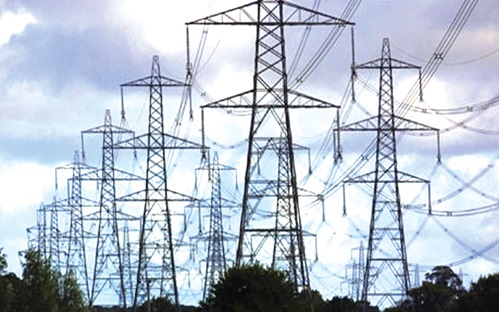
Why do we lose more than 25 per cent of our generated electricity? It’s not because Ghanaians are lazy or incapable. It’s because our transmission and distribution systems are relics of the past.
Outdated lines, ageing transformers and a lack of digital monitoring have turned what should be national pride into national loss.
And that is where the real opportunity lies.
Imagine a Ghana where no child studies by candlelight. No business owner loses profits to random blackouts.
No public hospital goes dark in the middle of surgery.
No citizen is taxed to fund energy losses caused by inefficiency or theft.
Ghana is not far away. But we must be bold enough to build it.
From recovery to renewal
If we are to turn this crisis into a legacy of transformation, we must shift in three major ways:
1. From temporary fixes to permanent infrastructure: President Mahama started with financial honesty. Now we need infrastructure bravery.
Ghana must invest in modern, efficient and theft-resistant grid systems.
This includes replacing outdated transmission lines, installing smart meters, automating energy monitoring and building decentralised renewable energy systems in rural areas.
Let’s stop plugging holes. Let’s build a new pipe.
2. From tax burden to shared ownership: Yes, the people have paid through fuel levies. But now they must see dividends.
The next phase of energy reform must include community energy ownership models where citizens and local governments co-own solar microgrids, mini hydro stations or wind farms — turning every community from a consumer into a stakeholder.
When citizens have a stake, they protect the system.
They stop illegal connections.
They become watchdogs. Let’s turn burden into empowerment.
3. From political fear to policy continuity: The energy sector is not a four-year project. It’s a generational commitment.
No nation builds a modern grid in one term.
But many African countries fail to continue what their predecessors began — out of pride or politics. That must end.
Mahama began a difficult conversation.
The current and future administrations must not fear the continuation.
True leadership is measured not by what you start, but by what you sustain.
Ghana must lead the African energy identity
Across Africa, the energy debate is shifting.
From South Africa to Kenya, from Nigeria to Egypt, nations are looking to blend renewables, technology and indigenous leadership to shape a future where blackouts become history.
Ghana is uniquely positioned to lead this revolution.
We have the sunshine. We have the rivers.
We have the minds. We have the youth.
We have the memory of what went wrong — and the desire to get it right.
Now is the time to launch a Ghana Energy Renaissance — not just a technical overhaul, but a national reawakening.
One that turns homes into mini power hubs.
One that links agriculture to solar-powered irrigation.
One that trains thousands of young Ghanaians in green energy jobs.
One that powers both the cities and the villages — sustainably, affordably and proudly.
Hope is not naivety — it is strategic. Some will say this vision is unrealistic.
That it will take too much money. That Ghana has too much debt. The system is too corrupt.
But let us be clear: It is not naive to want reliable power. It is not foolish to demand efficiency from leaders.
It is not impossible to power a nation with justice, innovation and vision. Hope, when matched with strategy, becomes transformation. And Ghana is ready for it.
Legacy greater than blame
We can spend the next 10 years blaming each administration — Rawlings, Kufuor, Mills, Mahama, Akufo-Addo — for what they did or didn’t do. Or we can step into legacy thinking.
President Mahama laid a financial foundation, not a final solution.
Now is the time for the next generation of Ghanaian leadership — in politics, business, academia and grassroots communities — to take it further.
Let us not be the generation that only complained about darkness.
Let us be the generation that brought the light — and kept it on.
